


Turkey’s justice minister said authorities have launched a review of 638 unsolved murder files across 75 provinces, a move that comes as the country’s justice system faces criticism over impunity, stalled investigations and the selective use of criminal law.
Justice Minister Akın Gürlek said the review covers 693 victims and will be carried out by a new unit under the Justice Ministry’s Directorate General of Criminal Affairs.
Gürlek said the unit, called the Department for the Investigation of Unsolved Crimes, was established to examine unsolved killings and identify gaps in past investigations. He said cases involving women and children would be prioritized.
The announcement followed remarks by Gürlek on CNN Türk on April 21, when he said some cases had “wounded society” and cited the disappearances of Gülistan Doku and Rojin Kabaş as examples.
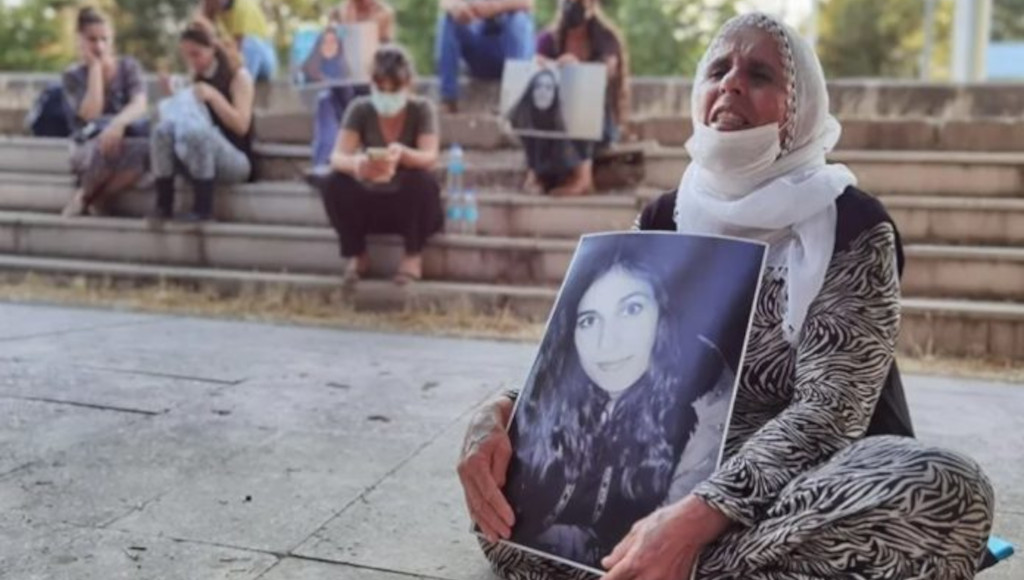
Doku, a university student, disappeared in January 2020 in the eastern province of Tunceli. Her case became a symbol of public distrust in Turkey’s justice system after years of little progress and repeated complaints from her family that authorities failed to investigate the case with urgency.
Gürlek said new evidence emerged in 2025, including testimony from a secret witness. He said the witness’s account was consistent with other evidence and that authorities were working to locate Doku’s remains and a weapon allegedly buried with them.
Gürlek said the Justice Ministry was not conducting the investigation directly and that the case remained under the authority of prosecutors. He said the ministry’s team was only providing technical support.
He also said authorities had issued an INTERPOL Red Notice and filed an extradition request for Umut Altaş, whom he described as a friend of Doku who legally traveled to the United States and obtained residence there.
The review comes against the backdrop of a broader collapse in confidence in Turkey’s judiciary. Critics say the justice system has come under executive control since a failed coup in 2016, after which the government dismissed or arrested thousands of judges, prosecutors, police officers and civil servants in a purge that reshaped state institutions.
The debate over unresolved cases has intensified after several high-profile investigations sparked criticism over alleged gaps, mishandling of evidence and cover-up allegations.
A documentary released on April 11 by the Turkish digital media outlet 140journos examined the investigation and trial in the killing of 8-year-old Narin Güran, whose body was found in a river in the southeastern province of Diyarbakır in 2024 after she had been missing for 19 days.
The documentary, titled “Şeytantepe,” focused on alleged inconsistencies in the investigation, changing testimony and the role of media coverage in shaping public perceptions before the court process was complete. It has drawn more than 1.6 million views on YouTube.
In December, a court in Diyarbakır sentenced three relatives of Narin to aggravated life in prison over her killing. But the court did not establish a clear motive or determine which defendant carried out the murder, prompting criticism from legal experts and the public.
Gürlek also addressed politically sensitive investigations during his CNN Türk appearance, including the case against former İstanbul Mayor Ekrem İmamoğlu, a leading opposition figure who was removed from office after his arrest.
The minister said prosecutors had drafted an indictment of 407 defendants and that the case was now up to the court.
He also rejected criticism that criminal investigations have targeted municipalities run by the main opposition Republican People’s Party (CHP) while avoiding municipalities governed by President Recep Tayyip Erdoğan’s ruling Justice and Development Party (AKP).
“The fact that there has not been an operation against AKP municipalities does not mean there will not be one,” Gürlek said.
According to a March survey by the GÜNDEMAR research company, only 36 percent of respondents in Turkey said they trust the judiciary.
The survey, conducted on 2,200 people across 60 provinces, found widespread distrust in institutions meant to ensure democratic oversight and uphold the law.
International indicators point to similar concerns. Turkey was ranked 118th out of 143 countries in the 2025 Rule of Law Index published by the World Justice Project, placing it near the bottom globally and among the lowest in its region and income group.
The country has seen a sharp decline in the rule of law over the past decade, falling from 80th place in 2015 by nearly 40 positions. This drop accelerated after a failed coup in July 2016, pushing Turkey down 19 places in a single year.
Critics have long claimed that politically sensitive cases are not handled impartially and that judicial action is often shaped by public pressure or political motivations.