

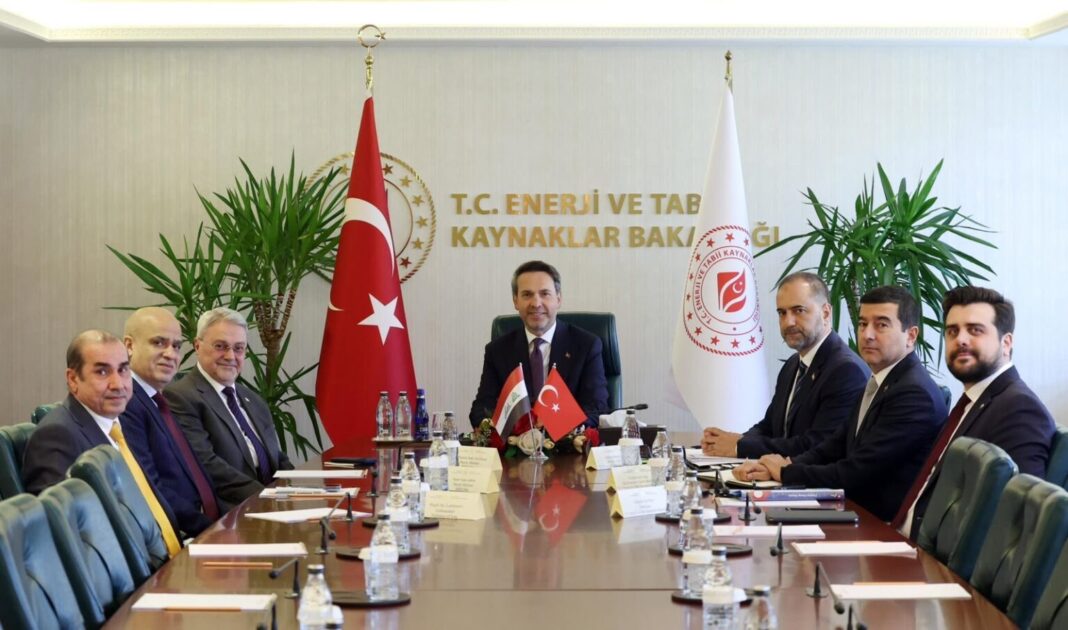

Iraq and Turkey are preparing a temporary protocol to keep Iraqi oil exports flowing through the Turkish port of Ceyhan while the two countries negotiate a new pipeline agreement, Iraqi and Kurdish officials said.
The protocol is expected to cover exports for one year after the current pipeline deal expires on July 27, giving Baghdad, Ankara and the Kurdistan Regional Government (KRG) time to work on a new framework.
The current agreement governs the pipeline route that carries crude from northern Iraq to Ceyhan, a Mediterranean export terminal that gives Iraq access to global markets without relying on the Persian Gulf.
An Iraqi delegation visited Ankara on Wednesday and Thursday for talks on the future of the pipeline and energy cooperation, Iraq’s Foreign Ministry announced Friday.
The delegation included officials from Iraq’s foreign and oil ministries as well as representatives from the Kurdistan Region’s Ministry of Natural Resources.
The two sides agreed to continue technical and legal work and are expected to sign an executive protocol to ensure the continuation of Iraqi oil exports, including crude from the Kurdistan Region, the ministry said.
Khazal Hostani, director general of contracts at the KRG Ministry of Natural Resources, said the temporary protocol would keep more than 200,000 barrels per day flowing through Ceyhan, Kurdistan24 reported.
Hostani said the talks in Ankara covered financial, legal and technical issues and included senior officials from Turkey’s Energy Ministry.
The agreement marks an attempt to avoid a new disruption on a route that has been at the center of disputes among Baghdad, Ankara and Erbil for years.
The pipeline was shut for more than two years after a 2023 arbitration ruling by the International Chamber of Commerce in Paris, which found that Turkey had violated its agreement with Iraq by allowing independent Kurdish oil exports without Baghdad’s consent.
The ruling ordered Turkey to pay Iraq some $1.5 billion in damages for exports between 2014 and 2018. A second arbitration case covering later years and a related enforcement case in a US court are pending.
Oil flows resumed late last year but have remained far below the route’s capacity. The pipeline can carry nearly 1.5 million barrels per day, while exports from Kirkuk to Turkey stood at 177,000 barrels per day in April, Reuters reported, citing shipping data.
Baghdad had asked Ankara in June to extend the existing agreement for at least one year to allow time for further talks.
Turkey rejected an extension under the current terms, saying the old framework no longer suited the pipeline’s legal and commercial realities.
Ankara wants a new deal that would ensure fuller use of the pipeline and could include new connections, including a possible extension toward southern Iraq.
The Ceyhan route has taken on greater importance for Iraq because of pressure on southern exports through the Persian Gulf. The Basra terminal, Iraq’s main export outlet, has faced disruptions linked to the regional war that halted shipping through the Strait of Hormuz.
The deal also matters for the Kurdistan Region, whose oil sector depends on access to the Ceyhan route and has been hit by years of stoppages, payment disputes and disagreements with Baghdad over control of exports and revenue.