


Orhan Sait Berber, Amsterdam
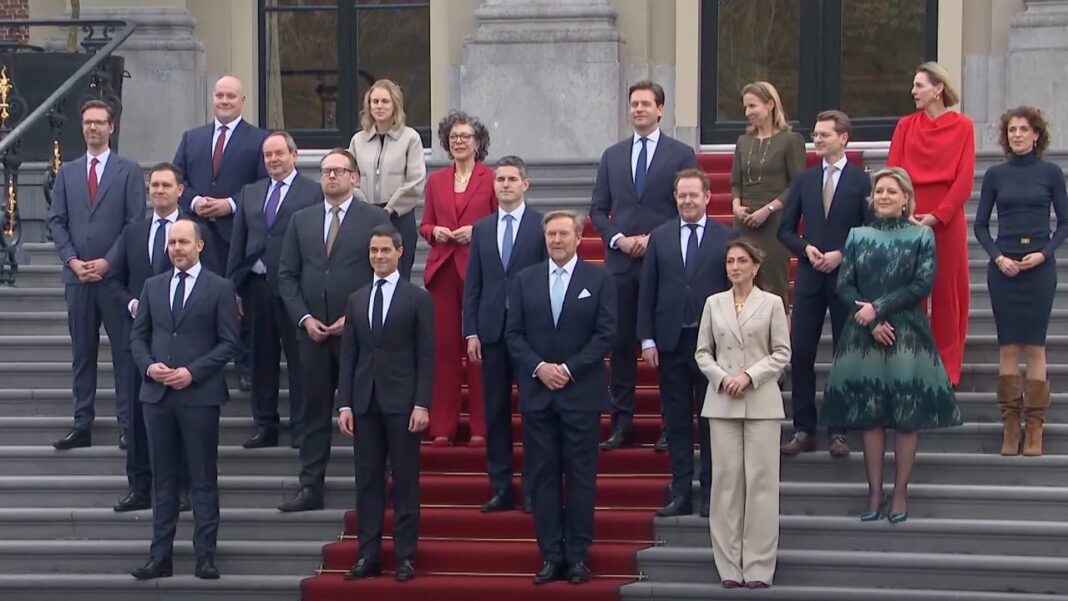
The new Dutch government, formed after months of coalition negotiations, officially took office on Monday. The cabinet, led by 38-year-old Rob Jetten, the youngest-ever Dutch prime minister, plans a significant increase in defense spending while governing without a parliamentary majority.
The formation of the Jetten cabinet took approximately 115 days, a relatively short period of time compared to previous governments. The cabinet led by Dick Schoof was formed in 223 days in 2024, while the record, nearly 300 days, belonged to the fourth cabinet led by Mark Rutte in 2021.
The coalition, comprising Jetten’s centrist D66, the People’s Party for Freedom and Democracy (VVD) and the Christian Democratic Appeal (CDA), will lead the country for the next four years.
Minority government on fragile ground
To pass legislation in the 150-seat Dutch House of Representatives, the government needs the support of at least 76 lawmakers. However, the new coalition has only 66 seats. As a result, it will depend on opposition parties to pass key legislation.
Basri Doğan, a Turkish-Dutch journalist who has covered Dutch politics for more than 20 years, described the new period as “an important political beginning” in remarks to Turkish Minute.
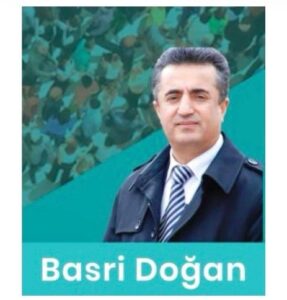
“A phase is beginning that has the potential to respond to the Netherlands’ current social, economic and cultural dynamics. In Europe’s rapidly changing political climate, inclusive and balanced governance is more important than ever in a multicultural and pluralistic society like the Netherlands,” Doğan said.
19 billion euros for defense
Under the coalition agreement, the government plans to allocate an additional 19 billion euros to defense. Following decisions at the 2025 NATO summit, the Netherlands committed to raising core defense spending to 3.5 percent of gross domestic product by 2035, potentially reaching 5 percent when broader security-related expenditures are included.
The coalition has said it intends to enshrine the 3.5 percent target in law, making it binding for future governments.
Officials cite the deteriorating geopolitical environment and growing security risks as justification for the increase.
Turkey-born Yeşilgöz leads defense
One of the most notable figures in the new cabinet is Turkey-born Dilan Yeşilgöz-Zegerius, who has taken office as one of the deputy prime ministers and defense minister. She also continues to serve as leader of the VVD.
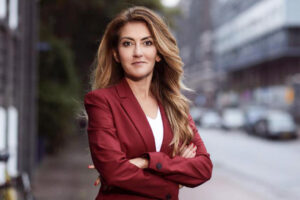
Born in Ankara in 1977 to a Turkish-Kurdish family, Yeşilgöz arrived in the Netherlands as a child after her father left Turkey in the early 1980s due to activism on labor rights and minority issues.
She has previously said that at the age of 7 she crossed from the western town of Bodrum to the Greek island of Kos in a makeshift boat with her mother and sister.
“If the Netherlands had not had its asylum policy, I would not be here today,” Yeşilgöz had said.
In recent years, however, she has supported stricter migration policies. Previously serving as justice and security minister, she advocated reducing asylum applications and tightening family reunification rules. She was one of the key figures representing the VVD’s position during the 2023 cabinet crisis triggered by disputes over migration policy.
Emphasis on social balance and youth
Beyond defense and economic policy, journalist Doğan said the durability of the new government will depend on its ability to strengthen social cohesion in an increasingly diverse society.
His remarks come at a time of demographic shifts in the Netherlands. The country’s population barely grew last year, rising by less than 0.05 percent. At the end of 2025, the Netherlands had 18,131,238 residents, an increase of 87,211 compared to the start of the year. It marked the third consecutive year in which population growth slowed, and according to figures from Statistics Netherlands (CBS), overall growth is now driven entirely by immigration.
Against that backdrop, Doğan argued that inclusive governance must remain a priority.
“An approach that embraces all segments of society and upholds equality among different ethnic and religious groups must be adopted. The Netherlands’ social diversity is a great asset when managed properly. However, this requires dialogue, transparency and mutual trust,” Doğan said.
He added that policies focused on education and employment opportunities for younger generations would be particularly important. Ensuring that young people can maintain their identities while developing a strong sense of belonging to the country, he said, is essential for long-term stability.
Doğan also stressed the need for close cooperation between the central government, local authorities and civil society, saying participatory democracy should extend beyond election periods.
“Policies that strengthen economic stability, prioritize social justice and reinforce social harmony will further advance the Netherlands’ democratic values,” he said.
Cuts to social spending
To finance defense investments, the Dutch government plans to introduce cuts in health and social security spending. The retirement age will increase, and some welfare mechanisms will be scaled back.
According to an assessment report by the Netherlands Institute for Social Research on the coalition agreement, lower-income groups may be disproportionately affected by these changes.