

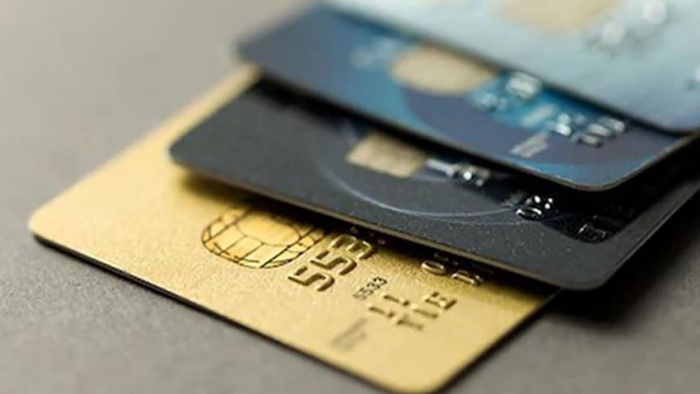
 using Turkish-issued credit cards abroad in May, up 67 percent from a year earlier, according to data released by the Interbank Card Center (BKM), Turkey’s payment systems infrastructure provider, as persistent inflation continued to push shoppers toward overseas purchases.)
Turkish consumers spent a record 93.1 billion lira ($2 billion) using Turkish-issued credit cards abroad in May, up 67 percent from a year earlier, according to data released by the Interbank Card Center (BKM), Turkey’s payment systems infrastructure provider, as persistent inflation continued to push shoppers toward overseas purchases.
The increase far outpaced spending in Turkey with foreign-issued credit cards, which rose 18 percent year-on-year to 48.4 billion lira ($1 billion), suggesting Turkish consumers are increasingly turning to overseas retailers and travel while foreign demand in Turkey is growing more slowly.
Separately, Turkish consumers made 43.6 billion lira ($920 million) in purchases through foreign e-commerce websites, according to BKM. The number of overseas credit card purchase transactions rose 29 percent from a year earlier to 52.1 million.
Services accounted for the largest share of online spending abroad at 17.2 billion lira ($360 million), followed by travel agencies and transportation. Electronics and clothing were among the leading retail categories.
Caner Özdurak, an associate professor of economics and finance at İstanbul Nişantaşı University, said the increase reflects consumers’ efforts to avoid rapidly rising domestic prices rather than greater demand for luxury goods, in comments to Deutsche Welle’s Turkish edition.
“The record in overseas card spending is not driven by luxury consumption but by a rational economic response to the gap between domestic inflation and the exchange rate,” Özdurak told DW.
He said consumer prices have risen much faster than the exchange rate under Turkey’s current economic policies, making many goods and services abroad relatively cheaper despite the lira’s long-term depreciation. Products such as clothing, footwear, electronics and cosmetics, along with tourism services, have become more expensive in Turkey than in several nearby European countries, encouraging consumers to shop or vacation abroad, according to Özdurak.
The trend was also evident in online shopping. Purchases made with Turkish-issued cards on foreign websites totaled 43.6 billion lira in May, while purchases made with foreign-issued cards on Turkish e-commerce sites totaled 19.5 billion lira ($412 million).
Sinan Öncel, chairman of the United Brands Association of Turkey (BMD), which represents more than 500 retail brands in Turkey, said the country has lost much of its price advantage over competing tourist destinations, in comments to DW Turkish.
“Four or five years ago, people came to Turkey to shop. Now people are leaving Turkey to shop elsewhere. We never imagined we would reach this point,” Öncel told DW.
He said rising costs have forced retailers to raise prices but added that foreign visitors often find the same products on overseas websites at lower prices than in Turkish stores.
Turkey has experienced years of high inflation that has driven up the cost of goods and services faster than the pace of depreciation in the lira. Economists say the gap has made many products and tourism services more expensive than in neighboring countries, encouraging Turkish consumers to spend more abroad while weakening Turkey’s competitiveness as a shopping destination.