

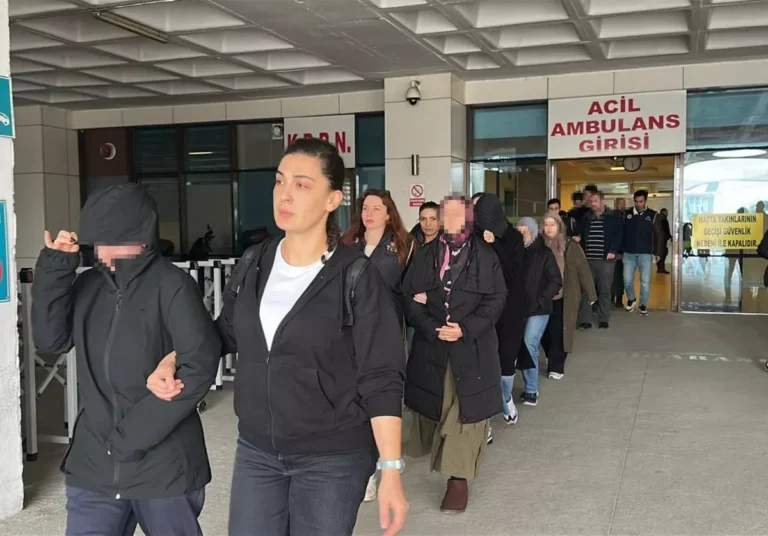

A court in Turkey’s northwestern Edirne province has ordered the arrest of six people, including university students, over alleged links to the faith-based Gülen movement after coordinated police raids in five provinces.
The case is part of an investigation by the Edirne Chief Public Prosecutor’s Office that targets what authorities call the movement’s “current student structure.”
Police carried out raids in Edirne, İstanbul, Bursa, Bilecik and Çanakkale and took 12 people into custody, including students and graduates of Trakya University. After questioning, six were jailed on terrorism charges, while the other six were released under judicial supervision.
Phones and computers were seized during house searches, in line with a pattern seen in many Gülen movement cases, where everyday digital material and contacts are treated by authorities as evidence of “membership in a terrorist organization.”
Rights groups and legal experts have long argued that such cases often rest on routine activities such as having bank accounts, school ties or messaging applications rather than any proven involvement in violence.
Turkish President Recep Tayyip Erdoğan has been targeting followers of the Gülen movement, inspired by the late Muslim cleric Fethullah Gülen, since corruption investigations in December 2013 implicated him as well as some members of his family and inner circle.
Dismissing the investigations as a Gülenist coup and a conspiracy against his government, Erdoğan began to target the movement’s members. He designated the movement as a terrorist organization in May 2016 and intensified the crackdown on it following an abortive putsch in July of the same year that he accused Gülen of masterminding. The movement strongly denies involvement in the coup attempt or any terrorist activity.
According to the latest figures from the justice ministry, more than 126,000 people have been convicted for alleged links to the movement since 2016, with 11,085 still in prison. Legal proceedings are ongoing for over 24,000 individuals, while another 58,000 remain under active investigation nearly a decade later.
In addition to the thousands who were jailed, scores of other Gülen movement followers had to flee Turkey to avoid the government crackdown.
With reporting by the Stockholm Center for Freedom