

 over a column alleging that the regulator’s database containing the credentials of all electronic signature holders nationwide had been hacked.)
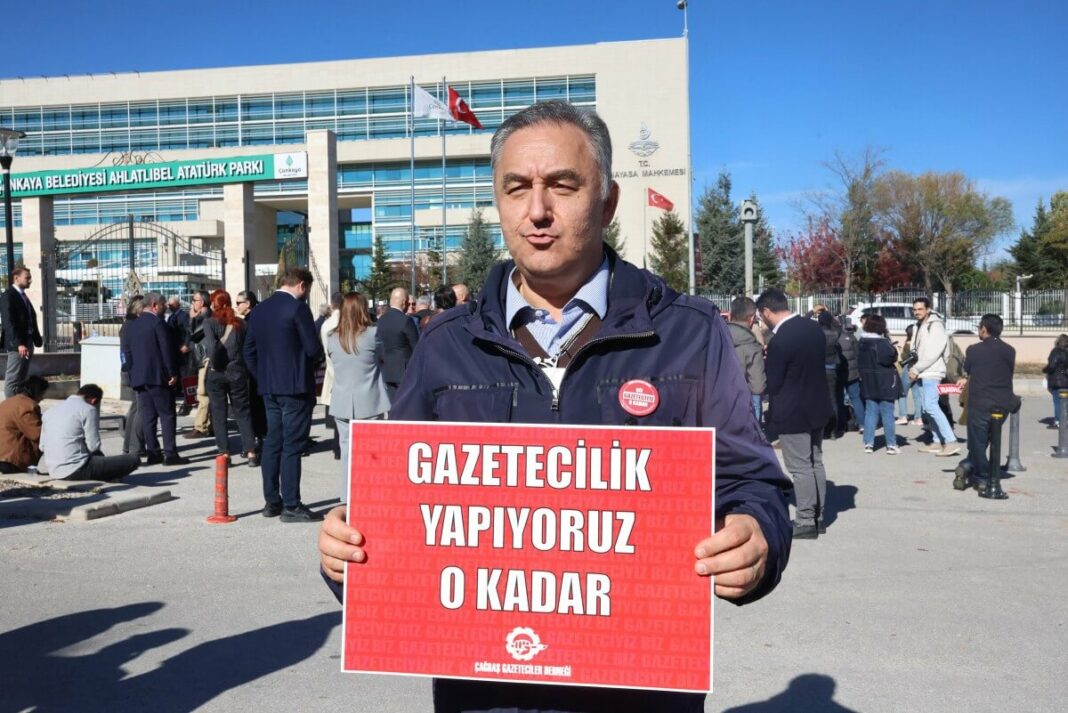
Turkish journalist Tolga Şardan has been hit with a travel ban following a criminal complaint by the Information and Communication Technologies Authority (BTK) over a column alleging that the regulator’s database containing the credentials of all electronic signature holders nationwide had been hacked.
Şardan said in his column on Tuesday that he was taken to the Ankara Courthouse under police escort last Friday after being transported to a hospital for a medical check. Following his testimony, prosecutors asked the court to impose a travel ban, which the judges approved.
On September 5 Şardan’s reporting had claimed that all e-signature credentials stored in a central database operated by the BTK had been compromised and that no user who had performed transactions with their e-signature could consider themselves secure. BTK immediately denied the claims as baseless and announced that it had filed a criminal complaint against him.
The journalist said he insisted in his testimony that he stands by the accuracy of the information in his piece despite the agency’s rebuttal.
The case adds another layer to what experts have described as one of the most serious breaches of Turkey’s digital infrastructure in recent memory. Prosecutors have indicted 220 suspects, accusing a 35-member network, of obtaining and cloning the electronic signatures of public officials to access government systems. With those credentials, the group allegedly produced valid-looking state documents, from diplomas and driver’s licenses to ID records and procurement contracts.
Experts warn that e-signatures in Turkey are the legal equivalent of handwritten signatures and can authorize state spending, tenders, personnel appointments, policy directives and overseas travel.
The development, which illustrates the risks faced by journalists investigating the scandal, comes amid Turkey’s deteriorating press freedom climate. According to Reporters Without Borders’ 2025 World Press Freedom Index, the country ranks 159th out of 180 countries, making it one of the most repressive environments for independent journalism in Europe. Rights advocates say the use of charges such as “misleading information” and “threatening the president” has become a routine tool to silence dissenting voices.