

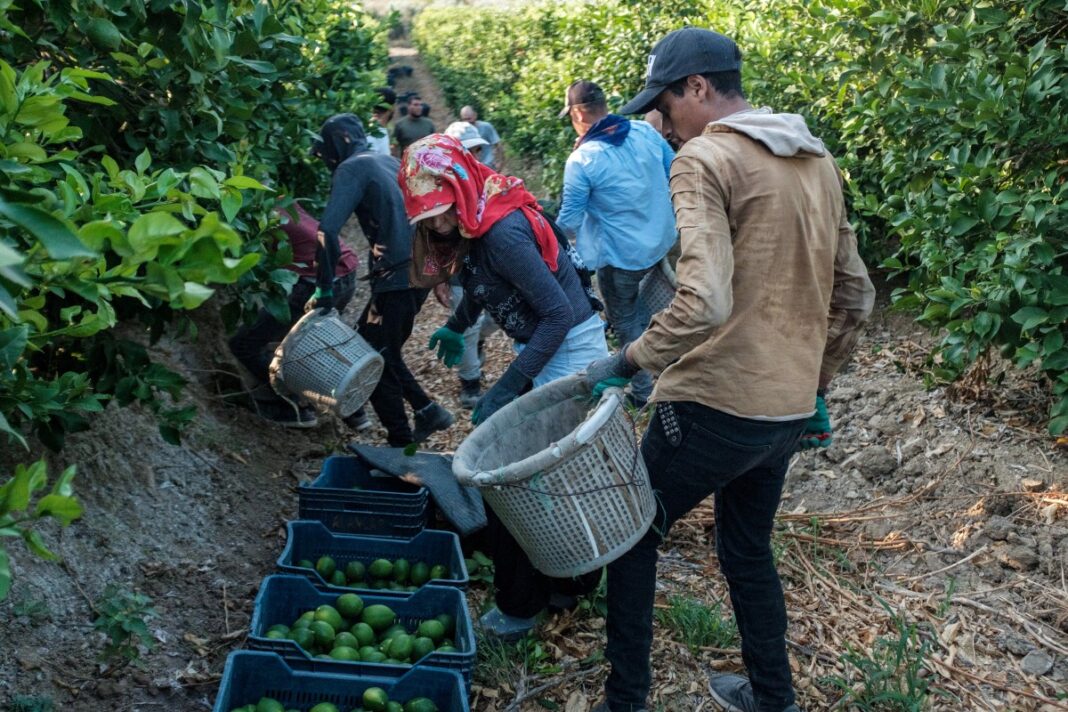

“At first, there was the frost and we lost a lot of blossoms. Then we had a very severe hailstorm when the fruit was small,” said Turkish citrus farmer Aleaddin Çoğal.
“Next, we were hit by a heatwave and the sun was so intense that it literally boiled the fruit, killing it,” says the 42-year-old, describing a series of extreme weather events that have ravaged his lemon plantation in southern Adana province, one of Turkey’s most important agricultural areas.
“We lost nearly 40 percent of our produce due to these three disasters,” he says, his trees laden with green fruit, their skin split open or showing ugly brown blisters from August’s withering heatwave.
Kemal Sığa, one of the laborers who was working when temperatures peaked last month, said it was as if the crop had been ravaged by fire.
“I’ve never experienced a day like this — it felt like there was a wildfire. It ruined the groves,” he told Agence France-Presse.
Like many of its Mediterranean neighbors, Turkey has seen a growing number of extreme weather events in recent years, with rural farming communities particularly vulnerable.
Mehmet Akın Doğan, head of the Yüreğir Chamber of Agriculture, said farmers were under increasing pressure in the fertile Çukurova valley around Adana, which produces about 40 percent of Turkey’s citrus crops.
“Çukurova is one of Turkey’s most important agricultural regions, making a significant contribution to food production and food security. But in recent years, the growing effect of climate change has started threatening our agricultural activities,” he told AFP.
“We have been exposed to very strong frosts and very powerful heatwaves, the likes of which we’ve never seen before.”
From severe frost to severe heat
The severe frost in late February saw temperatures plummet to -8C, with another frost hitting in April.
Then in early August, Adana saw its “hottest day in the last 95 years” clocking up a record 47.5°C, Doğan explained, saying farmers also experienced hailstorms and even tornadoes.
Temperatures the world over have soared in recent years as human-induced climate change creates ever more erratic weather patterns, with Turkey seeing its average July temperature of 25°C — a constant between 1991-2020 — rising to 26.9°C this year, the country’s weather service said.
The extreme weather also impacted other crops, with apricot farmers despairing over the damage in a country that is the world’s top exporter of dried apricots.
“I’ve been growing apricots for 40 years, and I’ve never seen anything like this. Farmers are no longer trying to save their harvest but rather their trees,” said Orhan Karaca, who heads a chamber of agriculture in eastern Malatya province, describing the effects of the frost as “harsher for us than the earthquakes” of February 2023.
It also hit the hazelnuts — a strategic crop for Turkey that supplies 70 percent of the world’s production — with Agriculture Minister İbrahim Yumaklı saying the frost caused damage worth some 2.3 billion lira ($56 million).
“We’ve faced all kinds of disasters, the only thing that hasn’t happened is a meteor hitting. Now that the effects of climate change have made themselves visible, farmers don’t know what to do anymore,” said Doğan.
‘Lemons cheaper in Finland’
Last month President Recep Tayyip Erdoğan said the extreme weather had caused an estimated 23 billion lira in damage for 50,000 farmers covered by the state’s TARSİM insurance but said the government would also offer another 23 billion lira in support to 420,000 producers “who don’t have any insurance coverage.”
Climate change has put increasing stress on Turkey’s farmers who have seen their profit margins crumbling, with many struggling to keep up with insurance premiums.
Producers say the disastrous weather will force prices up.
“Lemons will be the biggest shortage this winter, and we’ll be paying very high prices. Right now in Çukurova where that citrus is grown, the price is higher than in Finland: there you pay around two euros per kilo. Here it’s three,” Çoğal said.
“It’s a loss for Turkey. I was going to export this crop, and money would have come into our country, but now it’s not happening because global warming is messing with the climate.”
© Agence France-Presse