


Two children and their parents were killed after a seven-story apartment building collapsed early Wednesday in the northwestern province of Kocaeli, near İstanbul, the state-run Anadolu news agency reported, citing officials.
The collapse occurred around 7:30 a.m. in the Mevlana neighborhood of Gebze, about 50 kilometers (30 miles) east of İstanbul. The family of five, a mother, father and three children, lived on the building’s second floor, officials said.
Rescue teams working in the area for about 11 hours recovered the bodies of 12-year-old Muhammet Emir Bilir and 14-year-old Hayrunnisa, officials said. The family’s 18-year-old daughter, Dilara, was pulled out alive from the rubble. She was taken to a hospital for treatment, while the parents’ bodies were retrieved from the rubble Wednesday night.
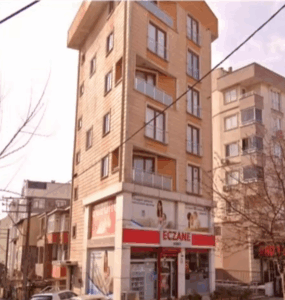
Interior Minister Ali Yerlikaya said the building “collapsed on its own,” with no explosion or external cause immediately identified.
Nine surrounding buildings were evacuated as a precaution. Footage broadcast on local television showed excavators lifting slabs of concrete while rescue teams used sniffer dogs and sound-detection devices to locate survivors.
Officials said 147 workers, including 80 from the national disaster agency AFAD, were deployed to the site, along with 52 vehicles, two search dogs, eight acoustic devices and two drones.
The building was reportedly constructed in 2012. The cause of the collapse remains under investigation, but residents suggested that ongoing construction on the nearby Gebze–Darıca metro line, roughly 10 meters from the site, might have weakened the ground.
Others speculated that the collapse could be linked to a magnitude-6.1 earthquake that struck western Turkey’s Balıkesir province on Monday and was felt in İstanbul and neighboring cities.
Local pharmacist Uğur Aydın, who operated a pharmacy on the building’s ground floor, said he noticed a “sagging” in the marble-covered entrance the day before the collapse but saw no cracks in the columns. He said the issue had been reported to authorities, who found “no cause for concern.”
Aydın’s pharmacy was closed on Wednesday due to a national holiday.
Gebze Mayor Zinnur Büyükgöz said two families lived in the building, but one was away for the national holiday when the structure fell. “We believe only one family of five was inside at the time,” he said.
Ömer Faruk Gergerlioğlu, a pro-Kurdish Peoples’ Equality and Democracy Party (DEM Party) lawmaker from Kocaeli, expressed outrage over the collapse of the building in Gebze despite repeated warnings about unsafe construction practices.
“Just five days ago, I made a statement in front of the Gebze-Darıca metro station, stressing the environmental damage and pollution caused by the construction,” he said on X.
“Today, a building near the metro collapsed and people trapped under the rubble have not yet been rescued. Those responsible for this negligence must be held accountable,” Gergerlioğlu said.
Daha 5 gün önce Gebze-Darıca Metro durağı önünde açıklama yapmıştım.
İnşaatın çevreye verdiği zararı ve çevre kirliliğini gündeme getirmiştim.
Bugün metroya yakın bir bina yıkıldı ve enkaz altındaki insanlar henüz çıkarılamadı.
Bu ihmalin sorumluları hesap vermelidir! pic.twitter.com/8eYGY6DQqm
— Ömer Faruk Gergerlioğlu (@gergerliogluof) October 29, 2025
Turkey has faced repeated building safety crises in recent years, often blamed on poor construction practices and weak enforcement of regulations, particularly in earthquake-prone regions.
Although Turkey frequently experiences building collapses following earthquakes, structural failures unrelated to seismic activity have also caused major disasters in the past.
The most notable case occurred on February 2, 2004, when the 11-story Zümrüt apartment building in central Konya province suddenly collapsed due to structural flaws. Ninety-two people were killed and 30 injured. The incident, which took place “under vertical loads” rather than from quake damage, shocked the nation and prompted renewed scrutiny of construction standards.
Turkey’s building regulations have been criticized for being weakly enforced, despite updates to codes after a 1999 earthquake in the Marmara region that claimed more than 17,000 lives.
Experts point to a history of government amnesties that allow builders to pay fines instead of meeting standards, weak oversight and the failure to retrofit old buildings, leading to widespread collapses during major earthquakes.