

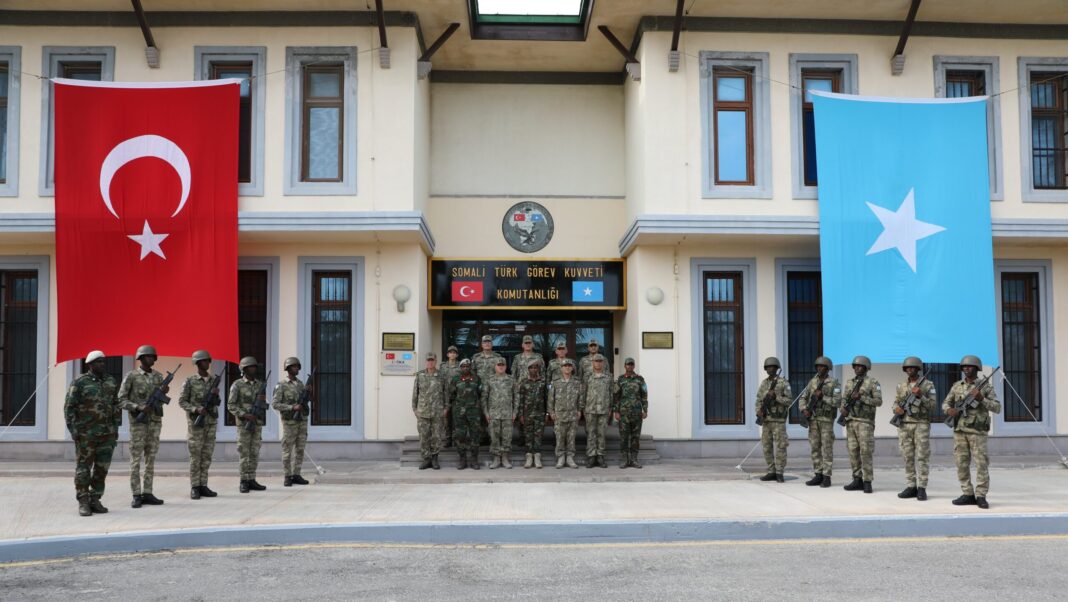

Turkey’s parliament late Tuesday approved a presidential motion extending the deployment of Turkish troops in Somalia for two years from July 27.
Turkey says it is providing support for Somalia’s fight against terrorism, piracy, illegal fishing, smuggling and other security threats.
The motion allows President Recep Tayyip Erdoğan to determine the size, scope, timing and rules of the deployment. Turkish Armed Forces units may serve in areas jointly selected by the two countries, including Somalia’s maritime jurisdiction zones, and may cooperate with third countries and international organizations, according to the text published by the Turkish Parliament.
The measure extends an authorization granted by parliament in July 2024 and will remain in effect until July 27, 2028.
The Turkish government said Somalia requested military assistance under a defense and economic cooperation agreement between the two countries.
Turkey has been expanding its role in Somalia since 2011 through diplomatic, development and security programs. Ankara opened a military training academy in Mogadishu in 2017 and has trained and advised Somali troops.
The extension comes as Turkey’s military involvement in Somalia has moved beyond training, equipment and advisory support.
Turkey deployed F-16 fighter jets to Mogadishu in January, and Somalia’s defense ministry initially announced on June 30 that Turkish F-16s had struck al-Shabaab positions in the Lower Shabelle region. The ministry claimed that approximately 35 militants were killed and more than 20 wounded, although the figures could not be independently verified. A later version of the announcement referred only to support from “international partners,” and Turkish authorities have not publicly confirmed that the jets took part in the operation.
Turkey’s expanding military role also comes amid a dispute over Israel’s recognition of Somaliland, the self-governing region that Somalia considers part of its territory. Israel became the first United Nations member state to recognize Somaliland in December 2025, a decision Ankara condemned as interference in Somalia’s internal affairs. Somaliland’s defense minister said in June that Israel was training the region’s police and military but denied negotiations over an Israeli military base. Turkey has presented its presence in Somalia as support for the federal government’s sovereignty and territorial integrity.
Opposition lawmakers questioned the lack of information about the mission during the parliamentary debate. Nationalist opposition İYİ (Good) Party parliamentary group deputy chair Turhan Çömez asked how many troops and what equipment would be sent, how much previous missions had cost and whether Turkish forces could be drawn into direct fighting with al-Shabaab militants.
Çömez said his party would not support the motion without answers. Pro-Kurdish opposition Peoples’ Equality and Democracy Party (DEM Party) lawmaker Sevilay Çelenk also opposed the extension, arguing that security should be pursued through diplomacy and democratic institutions rather than military deployments.
Main opposition Republican People’s Party (CHP) lawmaker Namık Tan said his party did not oppose training Somalia’s recognized armed forces but objected to parliament being asked to approve a deployment based on an agreement whose full contents had not been disclosed. He warned that support for Somalia should not make Turkey a party to internal fighting or disputes involving neighboring countries.
Lawmakers from the ruling Justice and Development Party (AKP) and its ally, the Nationalist Movement Party (MHP), backed the motion.
The authorization is separate from Turkey’s naval mission in the Gulf of Aden, Somali waters, the Arabian Sea and nearby areas. Parliament extended that mission for one year in January.