

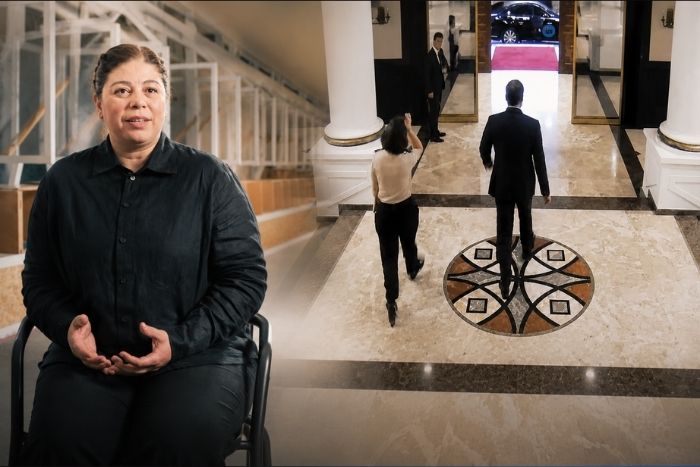

A former Turkish military officer seen escorting Hakan Fidan, Turkey’s intelligence chief at the time and now foreign minister, from General Staff headquarters shortly before a failed coup on July 15, 2016, has described being detained, threatened and coerced inside the same compound, where she says other officers were tortured.
Former 1st Lt. Kübra Yavuz gave her first detailed public account outside court in “TANIK / O Geceden Sonra” (“Witness / After That Night”), a new documentary released on the Alesta YouTube channel, after raising allegations of coercion and abuse during court proceedings in 2017.
Yavuz, who served as a protocol officer at General Staff headquarters, was among 221 defendants named in the main indictment over the seizure of the compound during the coup attempt.
The indictment, accepted by the Ankara 17th High Criminal Court in March 2017, accused dozens of officers of belonging to a body prosecutors called the “Peace at Home Council,” which they said directed the attempted takeover.
The failed coup killed 251 people and wounded more than 1,000. President Recep Tayyip Erdoğan immediately blamed the faith-based Gülen movement, inspired by Islamic scholar Fethullah Gülen who died in 2024, for the plot.
The movement strongly denies involvement and has repeatedly called for an independent international investigation.
In the documentary Yavuz gave a fuller account of what she says happened after the coup attempt.
She said she was summoned on August 2, 2016, to the office of then-General Staff Secretary-General İrfan Özsert, where then-Special Forces commander Zekai Aksakallı was also present.
According to Yavuz, Aksakallı accused her of treason, threatened her with execution and told her she would not leave the building. She said she was then handcuffed, blindfolded and taken with other detainees to a firing range inside the compound.
Yavuz said the range had been darkened and that she heard screams, electrical noises and sounds she believed indicated that detainees were being subjected to electric shocks and water torture.
“It was as if you were in a slaughterhouse,” she said, describing how those waiting in silence could hear the abuse drawing closer.
She was later taken to an interrogation area, where she said she saw a fellow officer slumped in a chair with blood on his body and clothing after apparently being beaten and subjected to electric shocks.
Yavuz said the interrogators did not conceal their identities and that she clearly saw their faces.
She identified one as Ertuğrul Erbakan, an officer who later rose to the rank of general and continued serving in the Special Forces.
According to Yavuz, the questioning focused less on her actions during the coup attempt than on placing her within a predetermined organizational structure.
She said interrogators demanded an alleged code name and questioned her about purported links to the Gülen movement.
Yavuz said detainees were eventually given prepared statements and forced to sign them.
She said the documents described them as terrorists even though, in her account, the interrogators had not established what they had done during the coup attempt.
Yavuz later testified about the alleged abuse during proceedings involving her and her husband, also a former military officer. She said a court asked the General Staff to identify the personnel who had conducted the interrogations.
According to Yavuz, the General Staff acknowledged that questioning had taken place inside the headquarters but said it did not know the identities or addresses of those involved. She said defendants in other coup-related trials later cited the response when raising torture allegations.
Footage before the coup attempt
Yavuz became publicly recognizable after security camera footage showed her accompanying Fidan as he left General Staff headquarters on the evening of July 15.
She said escorting him was a routine part of her duties as the protocol officer on call and that she had no advance knowledge of his visit or the substance of his meeting with then-chief of General Staff Hulusi Akar.
According to Yavuz, Akar and Fidan continued talking outside Akar’s office after the meeting and appeared relaxed.
“They were in incredibly good spirits,” she said.
Later that night, soldiers accused of taking part in the coup attempt took Akar hostage at General Staff headquarters and transported him to Akıncı Air Base outside Ankara. He was released the following morning.
Yavuz recalled accompanying Fidan to his vehicle at around 8:20 p.m. and returning to her office. She said she began hearing low-flying fighter jets and gunfire roughly 15 to 20 minutes later.
As violence spread and crowds gathered outside, Yavuz and several other officers barricaded themselves in an office. They were later moved to another part of the building and left the headquarters the following morning, she said.
Yavuz said she returned to work after the weekend despite the damage to the compound, the detention of colleagues and reports of mistreatment of military personnel.
Yavuz’s account adds to longstanding allegations of torture and ill-treatment following the coup attempt, when tens of thousands of people were detained or jailed on terrorism and coup-related charges.
After a visit to Turkey in late 2016, the UN special rapporteur on torture reported receiving numerous consistent allegations of severe beatings, stress positions, prolonged blindfolding and handcuffing, sleep deprivation, forced nudity and sexual violence, concluding that torture and other forms of ill-treatment were widespread.
The Global Torture Index 2025 later classified Turkey as a high-risk country, citing serious shortcomings in safeguards against torture and barriers to accountability.
Questions about the coup attempt
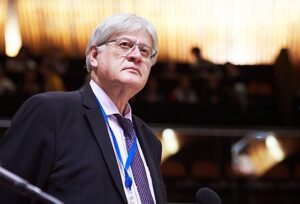
The documentary also features Austrian politician Stefan Schennach, a co-rapporteur for the Parliamentary Assembly of the Council of Europe’s monitoring procedure on Turkey.
Schennach questioned the timing and conduct of the coup attempt, noting that it became publicly visible at around 10 p.m., when soldiers blocked İstanbul’s Bosporus bridges.
He said conventional military takeovers generally begin before dawn and prioritize control of communications infrastructure.
The continued availability of television, internet and mobile phone services — which allowed Erdoğan to appear on television through FaceTime and call supporters into the streets — left unanswered questions about how the events unfolded, he added.
Erdoğan’s government declared a state of emergency five days after the coup attempt and launched a sweeping purge of public institutions. More than 130,000 civil servants were dismissed under emergency decrees, including thousands of judges and prosecutors, as well as military personnel, while media outlets, schools, associations and other organizations were closed without judicial review.
European institutions and rights groups acknowledged Turkey’s right to investigate the coup attempt but repeatedly warned that the scale and collective nature of the measures raised serious concerns about due process, judicial independence and fundamental rights.
Before joining General Staff headquarters as a protocol officer, Yavuz worked as an English instructor at the Turkish Military Academy after graduating from Dokuz Eylül University’s English-language teaching program.
She now lives in Norway with her husband and is studying information technology. She said she hopes eventually to return to academia and rebuild the career and life she lost after July 15.