

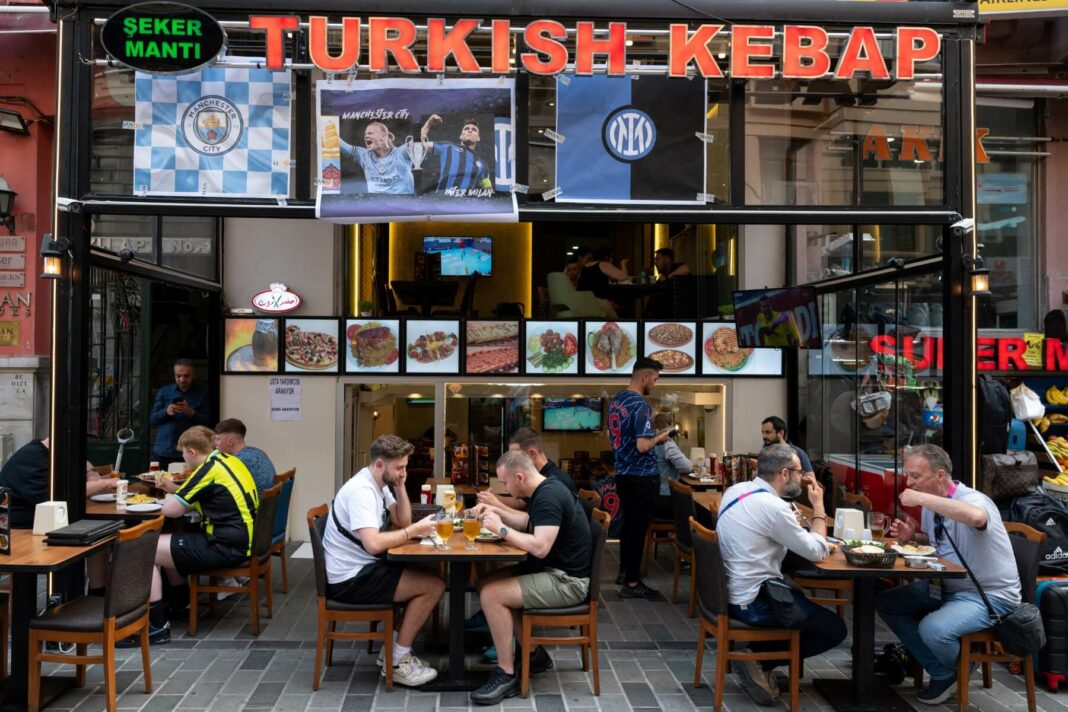

Chain restaurants and cafes in Turkey are required as of today to list calorie information on their menus under new rules introduced by the Ministry of Agriculture and Forestry, the NTV private broadcaster reported.
The requirement initially applies to national chains. Businesses with three or more branches in the same province will have until December 31 to comply, while smaller restaurants and cafes will be brought into the system in stages.
All food businesses will have to list ingredient information by the end of 2026 and calorie counts by December 31, 2027.
Under the rules, menus, digital boards and order lists must show more than prices. Businesses will also have to provide information on ingredients, portion sizes, allergens and calorie values.
The ministry has assigned around 8,000 food inspectors to check whether businesses comply with the new rules, according to NTV.
The government says the measure is intended to support healthier eating and help customers make more informed choices, particularly at a time when obesity and poor nutrition are growing public health concerns in Turkey.
A nationwide public health campaign last year found that nearly two-thirds of more than 1.1 million people measured by the Health Ministry were either overweight or obese.
According to ministry figures released in June 2025, 35.8 percent of participants were overweight and 28.2 percent were obese, while 31.8 percent were within the normal weight range.
The campaign referred people outside the healthy Body Mass Index range to state-run Family Health Centers and Healthy Life Centers for free nutrition counseling and follow-up services.
Public health experts and critics, however, have warned that calorie labels alone will not solve Turkey’s nutrition problems. They say food choices are also shaped by income, food prices and access to fresh produce and protein.
Turkey has been struggling with high inflation for years, making meat, dairy products, fruit and vegetables harder to afford for many households. Annual inflation currently stands at around 32 percent, after peaking at 85.5 percent in October 2022.
Critics say lower-income families are often pushed toward cheaper processed foods that are filling but have limited nutritional value.
The new menu rules also come as Turkey’s food and drink sector faces higher labor, rent and ingredient costs, raising concerns among some small businesses about the cost of updating menus and calculating calorie values for every item.
The ministry says the phased rollout is intended to give smaller businesses more time to prepare.