

 that he intends to seek another term in office. However, under Turkey’s current constitution, he would face significant legal obstacles if the next presidential election were to proceed on its scheduled timetable in May 2028. Article 101 of the Turkish Constitution limits presidents to two terms. Erdoğan was first elected in 2018, when the country shifted to a presidential system, and was reelected in 2023. Some constitutional experts argue that his earlier term as prime minister-turned-president in 2014 should count as well, which would put him beyond the two-term limit. In any case his current term is widely considered his second and final one under normal electoral circumstances.)
Ömer Murat*
President Recep Tayyip Erdoğan has signaled through a spokesperson from his Justice and Development Party (AKP) that he intends to seek another term in office. However, under Turkey’s current constitution, he would face significant legal obstacles if the next presidential election were to proceed on its scheduled timetable in May 2028. Article 101 of the Turkish Constitution limits presidents to two terms. Erdoğan was first elected in 2018, when the country shifted to a presidential system, and was reelected in 2023. Some constitutional experts argue that his earlier term as prime minister-turned-president in 2014 should count as well, which would put him beyond the two-term limit. In any case his current term is widely considered his second and final one under normal electoral circumstances.
An exception in Article 116 offers the only clear constitutional pathway for a third candidacy. It allows the Turkish Parliament to call for early elections with a three-fifths majority, at least 360 out of 600 votes. If parliament takes that step, Erdoğan would remain eligible to run. However, if the president himself initiates early elections, he is barred from standing again. For the parliament to approve early elections, the governing People’s Alliance, comprising Erdoğan’s ruling Justice and Development Party (AKP) and its far-right ally, the Nationalist Movement Party (MHP), would therefore need substantial support from opposition lawmakers.
The People’s Alliance currently has roughly 326 seats, including allies such as the Free Cause Party (HÜDA PAR) and the Democratic Left Party (DSP). Adding the four lawmakers from the New Welfare Party (Yeniden Refah), which has sometimes aligned with the government on key votes, brings the total to around 330. Reaching the required 360 votes would demand approximately 30 additional votes from opposition parties, including the Republican People’s Party (CHP), the pro-Kurdish Equality and Democracy Party (DEM Party), the İYİ (Good) Party and smaller groups such as the New Path Party. Since the İYİ Party and the New Path Party hold fewer than 30 seats combined, Erdoğan would need to secure support from lawmakers in the larger CHP and DEM Party blocs.
Erdoğan’s deeper difficulty, however, lies not merely in securing the procedural route to early elections but also in his prospects of winning them. His popularity has declined sharply amid a prolonged economic downturn. Multiple independent polls show him trailing badly against two of the country’s most prominent opposition figures: İstanbul Metropolitan Mayor Ekrem İmamoğlu and Ankara Metropolitan Mayor Mansur Yavaş.
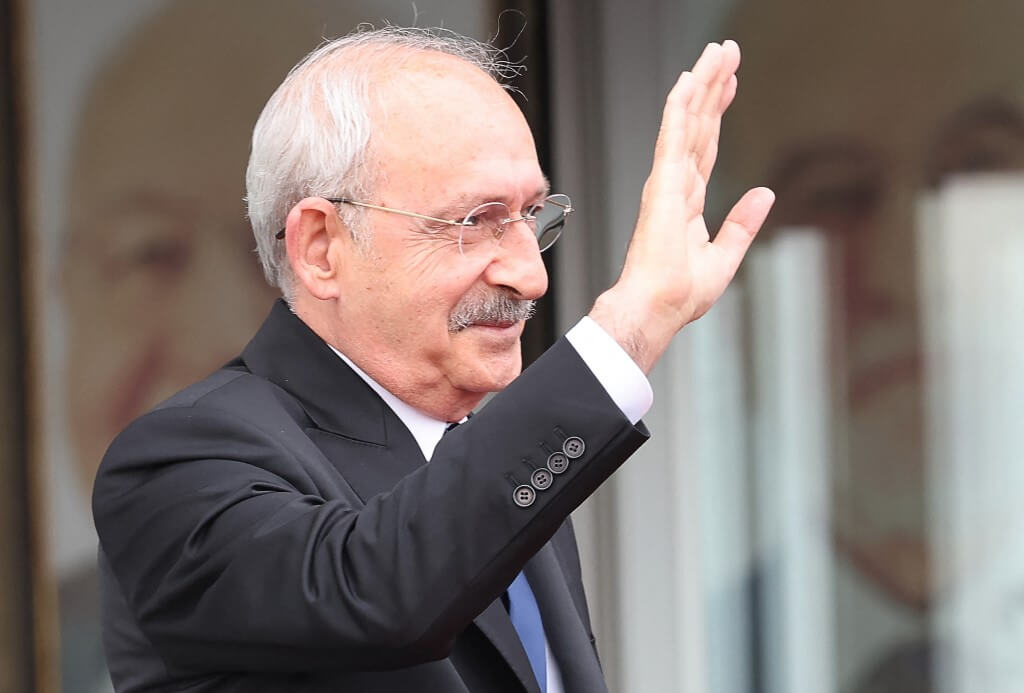
The authorities have moved aggressively against the opposition’s strongest figures through judicial measures. The arrest of İmamoğlu on politically motivated corruption charges last year, together with a controversial court ruling last month that removed Özgür Özel from the CHP leadership, were widely seen as efforts to neutralize the most credible challengers. Following the ruling and swift police action at party headquarters, Kılıçdaroğlu was reinstated as CHP leader. The speed of the intervention has reinforced the view that Erdoğan regards Kılıçdaroğlu as a useful element in his electoral calculations. This perception has been strengthened by the fact that the CHP achieved its strongest nationwide result in the most recent local elections, surpassing the AKP for the first time. At the time of Kılıçdaroğlu’s return to leadership, the party was also leading several national opinion polls.
Özel has publicly stated that figures within the government pressured him to sideline the popular mayors of İstanbul and Ankara and that legal action was taken against him after he refused. His resistance suggests that Kılıçdaroğlu cannot easily steer the main opposition party toward facilitating Erdoğan’s re-election on his own. This has led to speculation that Özel may seek to form a breakaway party capable of nominating either İmamoğlu or Yavaş.
Despite the country entering an active campaign period, Kılıçdaroğlu has not called an extraordinary party congress to resolve internal tensions. His current approach appears more focused on stabilizing Erdoğan’s path to another term than on strengthening the CHP’s own position.
The government’s main objective now appears to be bypassing the electoral threat through a constitutional amendment. Indications of this strategy surfaced during Kılıçdaroğlu’s recent television interview. When asked whether İmamoğlu would remain the CHP’s presidential candidate if he himself stayed on as party leader, Kılıçdaroğlu shifted the discussion to constitutional reform. He argued that amending the constitution should take priority and that the party would only need to consider nominating a candidate if such reforms failed to materialize. He also said the CHP would support the introduction of a strengthened parliamentary system if it were proposed as part of a constitutional package.
Reading between the lines, Kılıçdaroğlu’s remarks suggest that he anticipates, or is prepared to accept, a constitutional amendment that would relieve the CHP of the obligation to nominate a presidential candidate. At first glance this position appears puzzling. Under normal circumstances the main opposition party would be expected to field a candidate in a presidential election. The implication, however, is that a transition to a strengthened parliamentary system could eliminate the direct popular election of the president altogether, thereby removing the need for such a nomination.
This approach aligns with the broader goal of sidelining the figures who pose the greatest threat to Erdoğan at the ballot box, namely İmamoğlu and Yavaş. Under the stated goal of strengthening parliamentary democracy, the proposed constitutional changes could include provisions restricting presidential candidacies to sitting party leaders, which would legally bar the two mayors from running.
To enact such an amendment without submitting it to a referendum, Erdoğan would need the support of at least 400 members of parliament. This would require backing from a significant number of CHP lawmakers, as cooperation with the DEM Party would likely require concessions regarding Abdullah Öcalan, the imprisoned leader of the Kurdistan Workers’ Party (PKK), a step that carries serious political risks among nationalist voters. Kılıçdaroğlu’s ability to deliver the votes of roughly 50 to 60 CHP lawmakers could therefore prove decisive, even at the cost of deepening divisions within his party. Several opposition lawmakers have already switched to the AKP in recent months, and further defections remain possible.
Carrying out this plan will be more difficult than in previous cycles. Public awareness of the degree of executive influence over judicial and security institutions has grown significantly. Many voters, particularly opposition supporters, increasingly view recent developments not as routine political competition but as coordinated efforts to shape the outcome of future elections. In this environment any attempt to alter electoral rules through institutional pressure risks triggering a strong public reaction from an electorate already frustrated by economic hardship, corruption concerns and the weakening of institutional checks. The scale and nature of such a reaction, should it occur, would be difficult to predict or contain.
* Ömer Murat is a political analyst and a former Turkish diplomat who currently lives in Germany.
Disclaimer: The views expressed in this opinion piece are those of the author and do not necessarily reflect the editorial stance of Turkish Minute.