

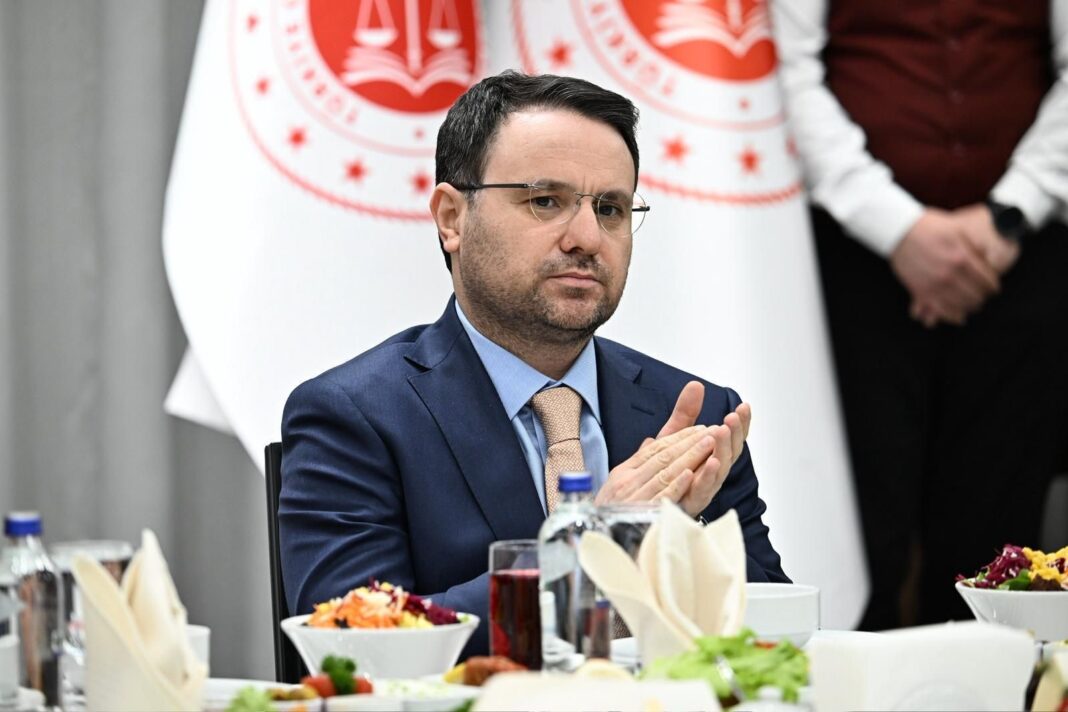

Turkey will update and resubmit extradition requests for people accused of links to the faith-based Gülen movement, Justice Minister Akın Gürlek has said, signaling a renewed push to secure the return of government critics and alleged movement members from abroad nearly a decade after a failed coup in July 2016.
In remarks to the pro-government Sabah daily published on Tuesday, Gürlek said all extradition files were being reviewed and that “new evidence” would be sent to the relevant countries.
“Our efforts have begun again for the extradition to Turkey of the group’s leadership by updating the files,” Gürlek said.
The Turkish government has designated the Gülen movement, inspired by the views of the late Turkish-Islamic scholar Fethullah Gülen, as a terrorist organization and accuses it of masterminding the July 15, 2016, coup attempt.
The movement strongly denies involvement in the abortive putsch or any terrorist activity.
Ankara’s classification of the group is not recognized by the United States or the European Union.
According to Justice Ministry figures cited by Sabah, Turkish judicial authorities have so far prepared 2,950 extradition requests for 2,765 people in 119 countries as part of cases involving the Gülen movement.
The largest number of requests were sent to Germany, with 777 files, followed by the United States with 428 and Belgium with 142.
The ministry data showed that Germany has rejected 519 requests, while 355 files sent to the United States remain pending. Only three people have been extradited to Turkey in connection with the requests, two from Romania and one from Algeria.
Gürlek, a former judge and İstanbul chief public prosecutor who led high-profile investigations involving opposition figures before being appointed justice minister in February, said the renewed campaign would focus particularly on people included on the Interior Ministry’s “most wanted” list, which includes 1,039 individuals.
The government has also sought to use INTERPOL mechanisms to pursue Gülen-linked people abroad, but Turkish officials say none of the Red Notice requests submitted in these cases has been accepted.
Sabah said an INTERPOL Executive Committee decision in 2018 found that requests concerning the Gülen movement were political in nature and violated Article 3 of the organization’s constitution, which prohibits INTERPOL from undertaking any intervention or activities of a political, military, religious or racial character.
Gürlek criticized what he described as a lack of support from INTERPOL, saying Turkey is one of the most active contributors to the organization at both the institutional and operational levels and that INTERPOL should stand with Ankara “with no ifs, ands or buts” against threats to Turkey’s national security.
Foreign governments have frequently rejected Turkey’s extradition requests for Gülen-linked people on grounds that include refugee status, citizenship, concerns that prosecutions are politically motivated and the risk of torture or ill-treatment in Turkey.
According to the figures cited by Sabah, 1,072 extradition requests have been rejected so far.
Turkey has also submitted 246 mutual legal assistance requests in connection with the same cases. Of those, 46 were fulfilled while 140 were rejected by foreign authorities.
Gürlek’s latest remarks come amid an ongoing crackdown on the Gülen movement that has drawn sustained criticism from rights groups and European courts.
Since 2016 Turkish authorities have used criteria such as having an account at the now-closed Bank Asya, using the ByLock messaging app or subscribing to publications linked to the movement as evidence in terrorism cases.
In 2023 the European Court of Human Rights ruled that Turkey’s use of such criteria, including ByLock and bank records, as criminal evidence violated rights protected under the European Convention on Human Rights.
The rulings, however, have not led to a change in Turkey’s judicial practices.
Rights groups say the post-coup crackdown has led to the dismissal of around 130,000 civil servants, including judges and teachers, as well as 24,000 military personnel, while thousands of people have been jailed.
Many others have fled Turkey and sought asylum in Europe, North America and elsewhere.
The Turkish government has also been accused of using extraterritorial tactics against critics abroad, including surveillance through diplomatic missions, denial of consular services, intimidation and illegal renditions.
Turkey’s National Intelligence Organization (MİT) has acknowledged conducting operations for the forcible return of more than 100 people accused of links to the Gülen movement.
Victims of such operations have reported arbitrary detention, torture and ill-treatment.
Apart from Turkey, no member state of the Council of Europe designates the Gülen movement as a terrorist organization.