

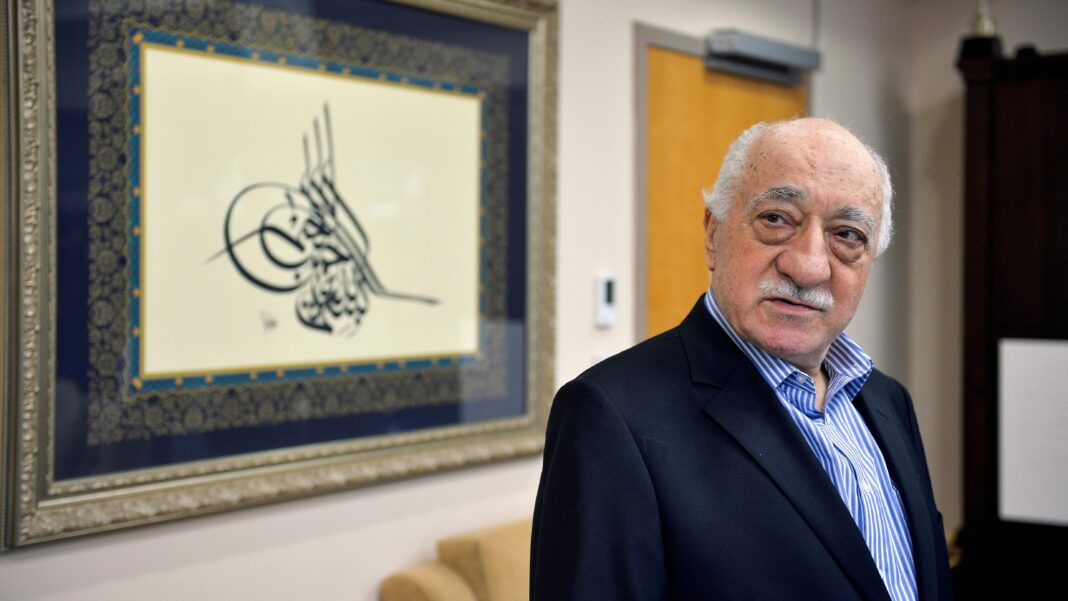

A Turkish court has kept in force an arrest warrant for Fethullah Gülen, the Turkish Islamic scholar who was a critic of the government of Turkish President Recep Tayyip Erdoğan until his death in the US in October 2024, Nordic Monitor reported on Thursday, citing court minutes from a May 14 hearing in Ankara.
The decision was issued by the Ankara 4th High Criminal Court in a case involving Gülen and dozens of co-defendants. According to Nordic Monitor, the court said previous arrest warrants for Gülen had been returned unexecuted and ruled that the warrants would remain in force.
The court record did not mention Gülen’s death, although Nordic Monitor said Turkish authorities had been notified of it through diplomatic channels after his death certificate was transmitted by the US State Department.
Gülen died in a US hospital on October 20, 2024, at the age of 83. His funeral was held in New Jersey on October 24 and was attended by thousands of people.
Nordic Monitor said Gülen was not the only deceased defendant covered by the court’s decision.
The court also renewed or kept active arrest warrants for Ali Bayram, an educator who died in Egypt on June 2, 2020; Mehmet Erdoğan Tüzün, the former general manager of the now-closed Cihan News Agency, who died in Albania on November 22, 2021; and Mehmet Ali Şengül, a longtime associate of Gülen who died in Germany on July 11, 2021.
According to Nordic Monitor, the deaths of the three men had already been recorded in Turkey’s civil registry system after notifications and filings by relatives.
Under Turkish criminal law, proceedings are terminated upon the death of a defendant. Legal experts say maintaining an arrest warrant for a dead person has no legal effect and points to the way politically sensitive cases are handled by Turkish courts.
Gülen, who had lived in self-imposed exile in Pennsylvania since 1999, became one of President Erdoğan’s main targets after corruption investigations in December 2013 implicated Erdoğan, members of his family and people close to the government.
Erdoğan accused Gülen and the movement inspired by him of orchestrating the investigations, a claim Gülen denied.
The Turkish government also accuses Gülen of masterminding a failed coup on July 15, 2016. Gülen denied involvement and called for an international investigation.
After the coup attempt, Turkey launched a crackdown on people accused of links to the Gülen movement. More than 130,000 civil servants were removed from public jobs by government decrees, and tens of thousands of people were detained or arrested.
The purge also affected the judiciary. Thousands of judges and prosecutors were dismissed, arrested and replaced after the coup attempt, sparking criticism from rights groups and European institutions over the loss of judicial independence and due process protections.
The European Court of Human Rights, the Council of Europe and United Nations experts have criticized Turkey’s use of counterterrorism laws in cases involving alleged Gülen links, citing problems including vague accusations, weak evidence and the criminalization of lawful activities.
The latest court decision adds to criticism that Turkish courts continue to process politically sensitive files in a mechanical manner even when basic legal requirements, such as the death of a defendant, should end proceedings.