

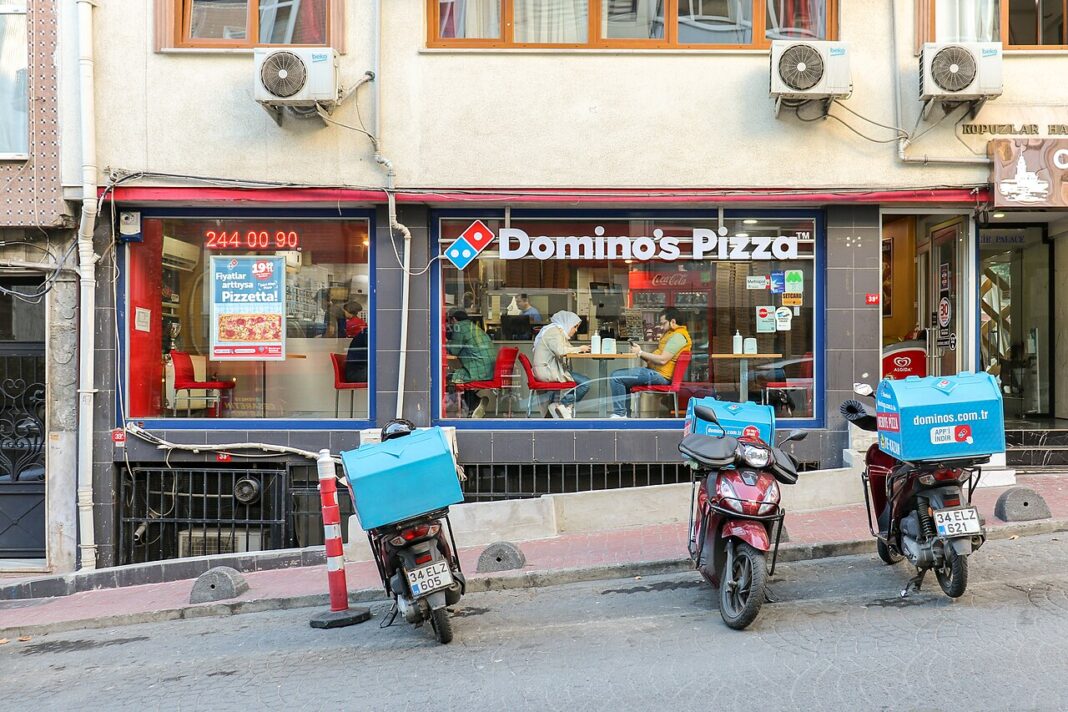

Self-employed couriers working for Yemeksepeti Express, the delivery arm of one of Turkey’s largest online food delivery platforms, are protesting a payment system that courier groups say was introduced on April 27 and requires them to deposit cash collected from customers into Yapı Kredi ATMs, saying the change increases costs and limits access to money they use for daily expenses.
The protests intensified in recent days as couriers said the system began to be enforced more strictly, with some alleging that failure to deposit cash payments could result in temporary or permanent account suspension, according to Turkish media reports and courier groups.
Workers said they do not want to “work like ATM clerks,” arguing that the new requirement adds an administrative burden to a job that already involves long hours, traffic risks and rising operating costs.
Under the previous system, couriers kept cash payments collected during the day and settled the balance against their weekly earnings, depositing only any excess amount into company accounts later.
Under the revised arrangement, couriers are required to deposit cash payments into designated Yapı Kredi ATMs shortly after receiving them.
Couriers say the change will increase fuel expenses and reduce the number of deliveries they can complete at a time when earnings in the sector have already declined.
Many also rely on the cash they collect during the day to pay for fuel, meals and household expenses. Under the new system, they must wait until the company processes and pays their invoices before they can access that money.
The new arrangement has also raised concerns about tips and the handling of small amounts of change.
For example, if a customer pays 300 Turkish lira, about $6.60, in cash for a 279 lira, about $6.15, order and declines to take the remaining 21 lira, approximately 46 cents, couriers often treat the difference as a tip. Workers say the new system could complicate such transactions, especially when they do not have enough change.
The protest comes as incomes in Turkey’s courier sector have fallen as the number of delivery workers has increased.
At the height of the sector’s boom, some couriers said monthly turnover reached nearly 200,000 lira, about $4,400, by working long hours and taking on additional jobs. Many now report net monthly earnings of between 60,000 and 90,000 lira, about $1,300 to $2,000.
Many self-employed couriers also face tax and social security debts, adding to the financial strain.
Turkey’s courier sector expanded rapidly during the COVID-19 pandemic as online ordering became more common. Many platform couriers work as independent contractors rather than salaried employees, meaning they cover their own fuel, maintenance, insurance and tax costs.