

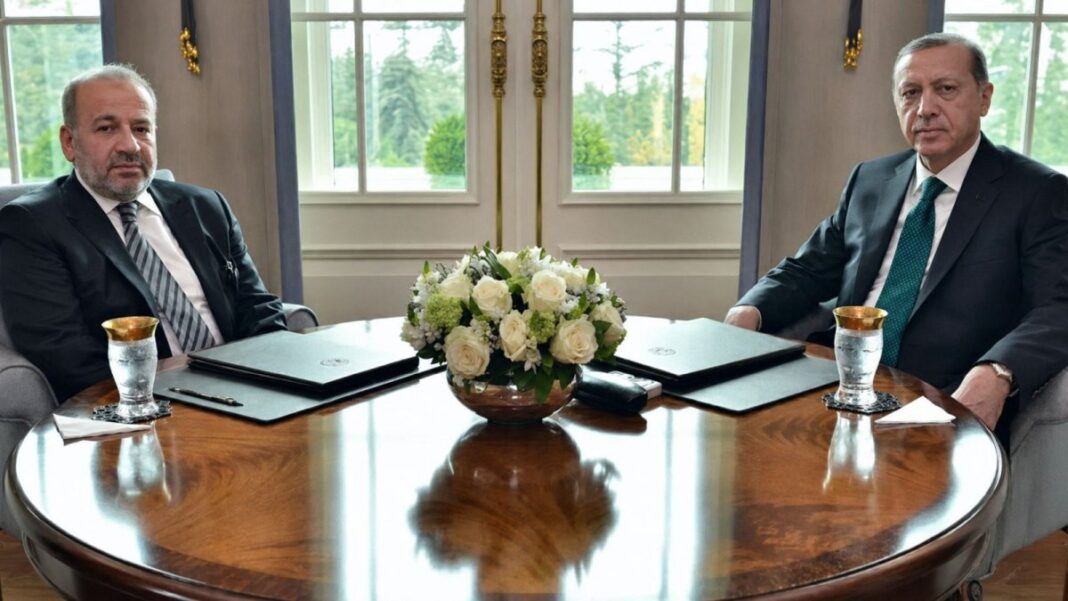

Turkish prosecutors are seeking up to two years in prison for prominent legal scholar İzzet Özgenç, a former legal advisor to President Recep Tayyip Erdoğan, over remarks targeting former Supreme Court of Appeals president Mehmet Akarca, the Medyascope news website reported on Monday.
The Ankara Chief Public Prosecutor’s Office charged Özgenç with publicly insulting a public official over his duties, citing 12 posts he shared on social media platform X in 2023 that allegedly harmed Akarca’s honor and reputation.
Prosecutors are requesting a prison sentence ranging from one to two years.
Özgenç, a professor of criminal law who helped draft Turkey’s penal code, which entered into force in 2005, denied the charges.
In his statement to prosecutors, he argued that his remarks did not constitute a criminal offense and said the role of the Supreme Court of Appeals president is administrative rather than judicial.
In his posts Özgenç sharply criticized Akarca, accusing him of failing to defend the credibility of Turkey’s judiciary and of remaining silent in the face of controversial decisions.
Özgenç in one post described Akarca as “a person sitting in the seat of the Supreme Court of Appeals presidency who serves merely as a ‘salt shaker.’”
The term “salt shaker” is used in Turkish as a derogatory expression to suggest that someone is ineffective, passive or merely symbolic in their role.
He also argued that senior judicial figures should resign even amid allegations of improper ties.
Akarca, who served as president of the Supreme Court of Appeals between 2020 and 2024, is currently Turkey’s chief ombudsman.
The remarks refer to a judicial crisis that erupted in 2023 between Turkey’s top courts —the Constitutional Court and the Supreme Court of Appeals. The dispute began when the Supreme Court of Appeals refused to implement a Constitutional Court ruling that found a rights violation in the case of an imprisoned lawmaker, arguing that the top court had exceeded its authority.
In an unprecedented move, the Supreme Court of Appeals also filed a criminal complaint against members of the Constitutional Court, deepening the institutional rift. The standoff later involved the Turkey Parliament, with decisions that further fueled debate over the separation of powers and the binding nature of Constitutional Court rulings.
The episode has since been widely described by legal experts and commentators as a crisis that extended beyond the judiciary into a broader state-level dispute.
The criminal complaints filed by the Supreme Court of Appeals against members of the Constitutional Court did not lead to any known prosecutions.
Under Turkey’s legal framework, Constitutional Court judges benefit from strong judicial safeguards and cannot be easily investigated over their rulings without following specific constitutional procedures.
As a result, the complaints did not translate into a visible judicial process and remained largely symbolic. The episode instead deepened concerns over institutional conflict and the separation of powers, reinforcing perceptions of a broader crisis within the state structure.
Pointing to how the case was initiated, Özgenç said the investigation should only have proceeded if Akarca had filed a personal complaint.
He said the complaint was instead submitted on behalf of the Supreme Court of Appeals presidency and did not bear Akarca’s signature.
In a post on X after the case became public, Özgenç said he was being prosecuted for allegedly using a derogatory term about Akarca in the context of what he described as an ongoing “judicial crisis.”
Özgenç is a prominent academic and has long been an influential voice in legal debates in Turkey, frequently commenting on judicial decisions and institutional disputes.
In recent years, he has complained that legal briefing notes he prepared for President Erdoğan were no longer reaching him. He has since used posts on X to publish open letters addressed directly to Erdoğan, in which he outlines and comments on legal developments.
The indictment against Özgenç comes amid growing concerns about the rule of law in Turkey.
Turkey was ranked 118th out of 143 countries in the 2025 Rule of Law Index published by the World Justice Project, placing it near the bottom globally and among the lowest in its region and income group.
The country has seen a sharp decline in the rule of law over the past decade, falling from 80th place in 2015 by nearly 40 positions.
The was drop accelerated after a failed coup in July 2016, which was followed by mass purges in state institutions including the judiciary and sweeping restrictions, pushing Turkey down 19 places in a single year.