

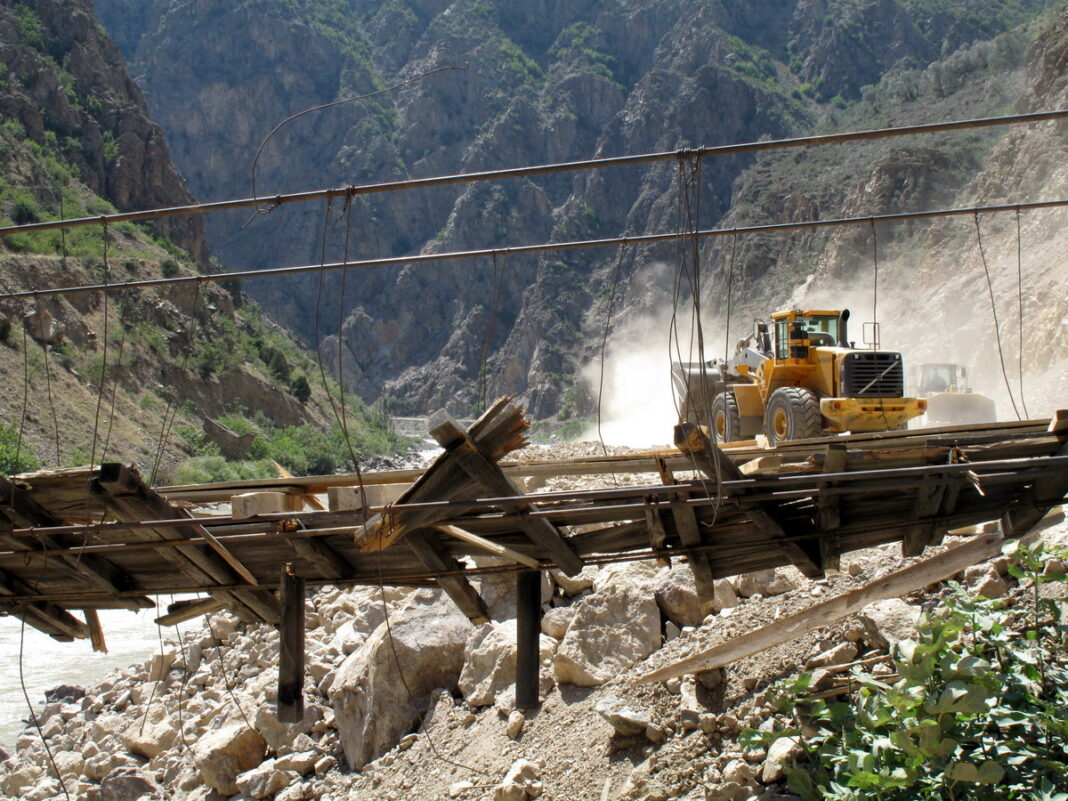

More than 2,700 stone quarries are operating across Turkey, according to a special report by the Kısa Dalga news website citing official data, as their rapid spread reshapes landscapes and raises environmental concerns.
The findings are based on official data from the General Directorate of Mining and Petroleum Affairs (MAPEG), a unit of the Energy and Natural Resources Ministry, which shows that 2,788 quarries were active as of 2026. The increase has been driven largely by demand from large-scale infrastructure projects such as highways and dams as well as urban redevelopment.
The data also point to a broader expansion in mining permits, with MAPEG records showing that the total number of licenses, which also includes inactive and exploratory permits, had reached 8,828 by the end of 2023, up from 6,199 in 2010, as public construction projects accelerated across the country.
Only a portion of those licensed sites are actively producing. MAPEG’s 2024 activity report shows that 1,141 quarries had production permits that year, slightly up from 1,104 a year earlier.
Demand from the construction sector, particularly cement production, has also helped fuel the increase. The number of limestone quarries supplying raw material for cement rose from 27 in 2023 to 42 in 2024, a 55 percent jump. Projections suggest that figure could reach 77 percent as new projects receive environmental approval.
Another similar trend is seen in sand and gravel quarries, which also supply ingredients for concrete. The number of active sites is expected to rise from 294 in 2024 to 481 in 2025, reflecting a growing demand for building materials.
Quarries tend to be located close to construction zones or export routes because transporting heavy materials over long distances is costly. This economic constraint has led to regional concentrations, which resulted in an increase of pressure on certain areas.
In the Mediterranean and western provinces such as Antalya, Muğla and Denizli, quarrying is driven largely by marble exports. In contrast, in the Marmara region in northwestern Turkey, including the industrial cities of Kocaeli and Bursa, quarries mainly supply domestic demand from major infrastructure and urban transformation projects around İstanbul.
Mining engineer Özgür Tutoğlu from the Chamber of Mining Engineers, part of the Union of Chambers of Turkish Engineers and Architects (TMMOB), said the concentration of quarries reflects both geology and planning decisions. “When planning is insufficient, multiple licenses can be issued in the same area, leading to uncontrolled quarry expansion,” he said.
Research led by Professor Atiye Tuğrul of Istanbul Technical University has also warned that the rapid growth of quarries around İstanbul is creating environmental risks due to the scale of demand for construction materials.
Local communities have increasingly challenged quarry projects in court. In the İkizdere valley in the northeastern province of Rize, residents protested a quarry linked to a port project, citing environmental risks. Courts have also halted some expansion projects in the Latmos region in the western province of Aydin due to their proximity to ancient rock art sites.
Environmental groups say companies can bypass full environmental impact assessments by dividing large projects into smaller applications, which allows them to secure approvals more easily and expand operations later.
A study by the TEMA Foundation, a Turkish environmental organization, found that 63 percent of land in 24 provinces has been licensed for mining activities, with some areas facing much higher levels of coverage.
In response to the growing criticism, state institutions have begun promoting the reuse of mining waste in construction projects instead of opening new quarries. In 2024, officials approved 29 such recycling projects across 16 provinces.
MAPEG oversees mining licenses and production across the country and provides the main official data on quarry operations. Environmental groups such as the TEMA Foundation have used these records to track the expansion of mining activities, warning that large portions of land have been opened to extraction and calling for stricter environmental protections.