

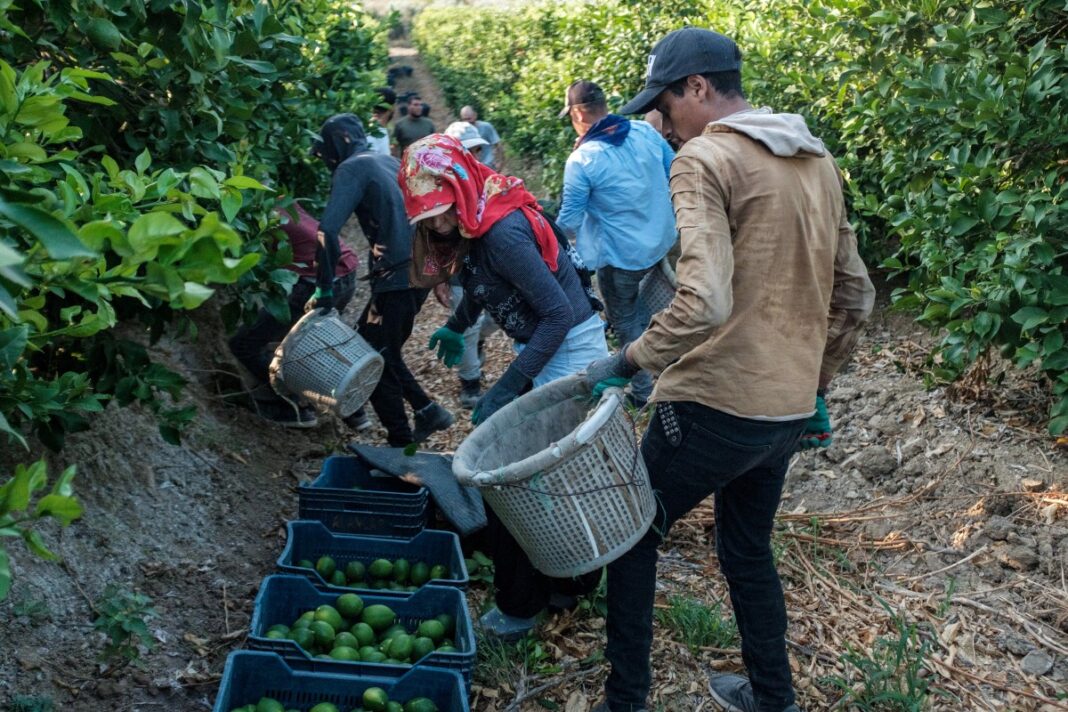

Farmers in Turkey are facing rising production costs due to increases in fertilizer and fuel prices linked to the US-Israel war on Iran, with agricultural representatives urging the government to introduce support measures, the BirGün daily reported.
Şemsi Bayraktar, head of the Turkish Union of Agricultural Chambers (TZOB), called for subsidies for fertilizer and diesel, warning that escalating input costs could reduce agricultural output if the conflict persists.
Conflict across the Middle East continues to rage after the US and Israel launched wide-ranging strikes on Iran in late February
Iran has responded by launching attacks on Israel and US-allied states in the Gulf.
Bayraktar said Turkey relies heavily on imports for key agricultural inputs, noting that around 90 percent of chemical fertilizers and diesel used in farming come from abroad, making the sector vulnerable to global price fluctuations and currency movements.
He cited disruptions to shipping through the Strait of Hormuz as a key driver of rising costs, noting that the region includes major producers of oil, natural gas and fertilizers.
The Strait of Hormuz, located between Iran and Oman, is the world’s most important energy chokepoint, carrying about one-fifth of global crude oil shipments.
Iran’s Islamic Revolutionary Guard Corps (IRGC), along with the country’s regular navy, effectively controls the strait and has warned that ships passing through it could be targeted.
“Restrictions in shipping routes directly translate into higher prices,” Bayraktar said, recalling that fertilizer prices rose by as much as 40 percent during attacks on Iran June 2025. “This year, we are seeing similar increases in both fertilizer and diesel prices.”
The US and Israel attacked Iranian nuclear and military sites in June 2025 in a 12-day war.
Data compiled from TZOB-affiliated chambers show sharp increases in fertilizer prices since the start of the war.
The price of calcium ammonium nitrate rose 26.5 percent, from 16,048 Turkish lira ($361) per ton to 20,295 lira ($457), while ammonium sulfate increased 23.3 percent to 17,439 lira ($393). Urea prices climbed 19.5 percent to 31,124 lira ($701), DAP fertilizer rose 9.6 percent to 38,943 lira ($877) and compound fertilizer (20.20.0) increased 8.3 percent to 25,888 lira ($583).
Bayraktar warned that higher costs may limit farmers’ ability to buy sufficient fertilizer at a critical stage of the agricultural cycle, potentially reducing yields.
“Fertilization at the right time and in the right amount is essential for crop productivity,” he said, adding that many farmers lack sufficient stocks and will be forced to purchase inputs at elevated prices.
He said Turkey is currently in a key fertilization period, with top dressing underway for cool-season crops and base fertilization for warm-season crops, meaning delays could directly affect yields.
Rising input costs could also lead to supply shortages and higher food prices, Bayraktar said.
Calls for fuel tax relief
Fuel prices have also increased, adding to pressure on farmers. Diesel rose by 22.3 percent after the outbreak of the war, from 61.41 lira ($1.30) per liter to 75.12 lira ($1.70), according to Bayraktar.
He said nearly 40 percent of diesel prices consist of taxes and reiterated calls to remove taxes on fuel used in agriculture.
“Diesel is an indispensable input used at every stage of agricultural production. Therefore, farmers should not be taxed on fuel,” he said.
While noting recent government steps such as removing customs duties on fertilizer imports, banning fertilizer exports and reauthorizing ammonium nitrate use, Bayraktar said affordability remains the main issue.
“The critical point is whether farmers can actually purchase fertilizer at reasonable prices,” he said.
The economic impact comes as Turkey has taken on an active diplomatic role in the conflict, seeking to prevent further escalation.
Ankara has been relaying messages between Washington and Tehran to encourage dialogue and reduce tensions, according to a senior official from President Recep Tayyip Erdoğan’s ruling Justice and Development Party (AKP), as reported by Reuters.
Turkey, a NATO member, has repeatedly called for a ceasefire, with President Erdoğan saying Ankara would use all available means to support efforts to secure peace.
Since the start of the war, three Iranian missiles heading toward Turkey have been intercepted by NATO air defense systems, pointing to the risk of the conflict spilling into neighboring countries.