


Adem Yavuz Arslan*
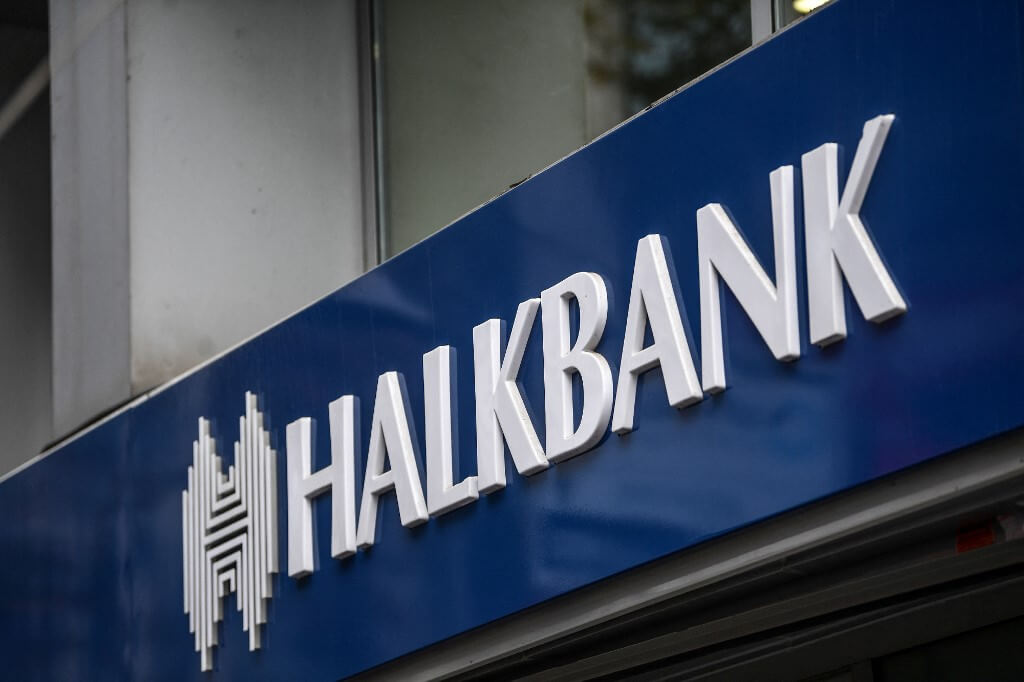
After years of legal battles and diplomatic tension, the long-running Halkbank sanctions case in the United States appears headed toward an unexpected conclusion. Washington has opted for a deferred prosecution agreement with Turkey’s state-owned lender, an outcome that many observers see as a strikingly lenient resolution for one of the largest sanctions-evasion schemes ever prosecuted.
The decision marks a turning point in a case that has for years symbolized the complicated intersection of financial sanctions, international law and geopolitics in US–Turkey relations.
A sanctions-busting scheme
US prosecutors first indicted Halkbank in 2019, accusing the Turkish lender of helping Iran evade American sanctions by facilitating billions of dollars in illicit financial transactions.
According to court filings and Treasury Department findings, the scheme revolved around Iranian oil revenues trapped in Turkish accounts between 2012 and 2013. Those funds were converted into Turkish lira, then into gold and cash, before ultimately being routed back to Iran through an elaborate network of intermediaries.
At the center of the operation were Reza Zarrab, an Iranian-Turkish businessman who later became a cooperating witness for US prosecutors, and Mehmet Hakan Atilla, Halkbank’s deputy general manager at the time. Atilla was convicted in US federal court in 2018 for sanctions violations.
Zarrab’s testimony during the trial attracted global attention, as he alleged that senior Turkish officials were aware of, and in some cases facilitated, the transactions.
US authorities estimate that at least $13 billion in Iranian-linked transactions passed through Halkbank during the scheme, with some estimates placing the total closer to $20 billion.
A surprisingly soft landing
Against that backdrop, Washington’s decision to pursue a deferred prosecution agreement has raised eyebrows in policy circles.
The arrangement allows Halkbank to avoid a full criminal conviction if it complies with certain conditions, typically including internal reforms, cooperation with regulators and oversight measures.
Critics note that similar sanctions violations have historically triggered massive financial penalties. In 2014, for example, the French bank BNP Paribas paid $8.9 billion for sanctions violations related to Iran, Sudan and Cuba. British bank Standard Chartered also paid more than $1 billion in penalties for similar conduct.
By comparison, the Halkbank settlement appears modest.
Some analysts warn that such a lenient outcome could weaken the credibility of US sanctions enforcement, which relies heavily on the perception that violations carry severe consequences.
The geopolitics behind the case
But the Halkbank case has never been purely legal.
For more than a decade, it has been entangled in the broader political relationship between Washington and Ankara.
Turkish President Recep Tayyip Erdoğan has repeatedly criticized the case, arguing that it was politically motivated. Turkish officials have also suggested that the prosecution unfairly targeted Turkey’s financial system.
Meanwhile, the case repeatedly surfaced during diplomatic engagements between US and Turkish leaders.
In recent years Turkey has sought to position itself as an important intermediary in several geopolitical crises, from mediating regional tensions in the Middle East to facilitating talks connected to the Russia–Ukraine war.
Following the Israel–Hamas ceasefire negotiations in late 2025, President Donald Trump publicly praised Erdoğan’s leadership, highlighting Turkey’s role in hostage diplomacy and regional stabilization efforts.
In that context, some analysts believe the Halkbank settlement may reflect a broader effort to reduce friction in a strategically important relationship.
Questions about sanctions credibility
Still, the resolution raises broader questions about the future credibility of US sanctions policy.
Financial sanctions have become one of Washington’s most powerful foreign policy tools. From Iran and Russia to North Korea, the United States has increasingly relied on access to the dollar-based financial system as leverage in global diplomacy.
But the effectiveness of that strategy depends largely on consistent enforcement.
If major violations can be resolved through relatively mild settlements, especially when geopolitics is involved, some analysts worry the deterrent value of sanctions could erode.
A case that reflects a changing world
The Halkbank case ultimately illustrates a broader reality of international politics: Financial law enforcement rarely exists in isolation from strategic interests.
For Washington, maintaining leverage over global financial networks remains a central pillar of foreign policy. At the same time, managing complex alliances, particularly with strategically located partners like Turkey, often requires pragmatic compromise.
The Halkbank settlement may therefore represent more than the closing chapter of a long legal dispute.
It may also serve as a reminder that in the world of international finance and diplomacy, law, power and politics often move together.
*Adem Yavuz Arslan is a journalist with over two decades of experience in political reporting, investigative journalism and international conflict coverage. His work has focused on Turkey’s political landscape, including detailed reporting on the 2016 coup attempt and its aftermath, as well as broader issues related to media freedom and human rights. He has reported from conflict zones such as Bosnia, Kosovo and Iraq, and has conducted in-depth research on high-profile cases, including the assassination of Turkish-Armenian journalist Hrant Dink. Arslan is the author of four books and has received journalism awards for his investigative work. Currently living in exile in Washington, D.C., he continues his journalism through digital media platforms, including his YouTube channel, Turkish Minute, TR724 and X.
Disclaimer: The views expressed in this opinion piece are those of the author and do not necessarily reflect the editorial stance of Turkish Minute.