

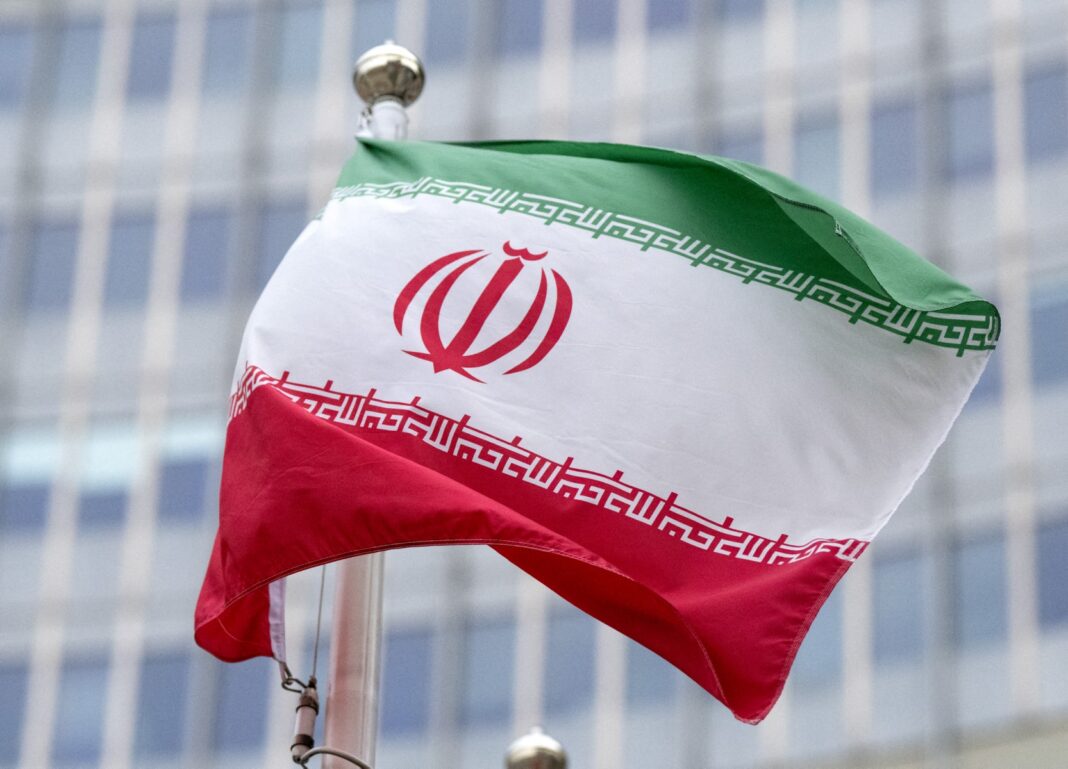

In the days before the US and Israeli strikes on Iran, countries bordering the Islamic republic feared a wider regional crisis, including retaliation against US bases, cross-border violence, new refugee flows and disruption to oil shipments through the Strait of Hormuz.
“If the United States strikes, Iran will retaliate and the crisis will spread throughout the region, with the Strait of Hormuz blocked and actions by its proxies,” a diplomatic source from a country bordering Iran told Agence France-Presse.
“The chaos in Iran would affect Turkey and the European Union, potentially leading to a massive influx of refugees,” the source added.
Fear of an Iranian response
Washington’s partners in the Gulf worry that Iran could respond by targeting US forces they host or striking key infrastructure.
In June 2025 Iran attacked the American Al Udeid base in Qatar in response to US air strikes on Iranian nuclear facilities during what AFP described as a 12-day war triggered by an Israeli attack.
In January of this year, Qatar, Saudi Arabia and Oman urged the administration of US President Donald Trump to postpone strikes it was considering in response to what AFP described as Iran’s deadly crackdown on nationwide protests.
The Gulf states “know they are vulnerable because the Iranians have enough basic, intermediate-range missiles to hit vital infrastructure, desalination plants, hydrocarbon hubs, power stations,” Pierre Razoux, research director at the Mediterranean Foundation for Strategic Studies, told AFP.
Risk of violence inside Iran
Some officials and analysts fear that if the Islamic republic were toppled, Iran could face internal violence as separatist groups and armed militants compete for power.
“If there is to be regime change, it has to come from inside the country,” a senior official in a European intelligence service told AFP.
“If the Americans or the Israelis force regime change, they risk provoking the opposite effect,” the official added, comparing the risk to Libya after the overthrow of longtime leader Muammar Gaddafi following a NATO-backed uprising.
The weakening of Iran could also affect neighbors by giving more room to armed groups hostile to them.
“With the previous Iranian protests, Turkey wanted Iran to remain intact and worried that if something happened to the regime, the Kurdish groups would capitalize on that and create problems for Turkey,” Gönül Tol of the Middle East Institute told AFP in January.
Turkey fears “chaos on the borders, more refugees into Turkey and the PKK-linked groups getting more active,” Tol said, referring to the Kurdistan Workers’ Party (PKK), which led an armed insurgency against the Turkish state from 1984 until 2025.
AFP said the stakes are similar for Pakistan, which shares a long border with Iran.
“Pakistan in particular would be seriously affected if there is a spillover across its border,” analyst and former diplomat Maleeha Lodhi told AFP in January.
Refugee fears
Several neighbors fear a refugee movement similar in scale to displacement caused by Syria’s civil war, a major driver of the 2015 migrant crisis.
“The cross-border shocks are likely to be an order of greater magnitude, given the size, population, heterogeneity of the country,” Sinan Ülgen, a visiting scholar at Carnegie Europe, told AFP.
Turkey, Azerbaijan and Armenia are among the countries most concerned they could become destinations for refugees, according to Baku-based Russian analyst Nikita Smagin.
For Azerbaijan and Armenia, which have smaller populations, an influx could “threaten the stability of the whole country easily,” he told AFP.
Strait of Hormuz and oil shipments
Oil-producing Gulf states also fear that strikes could lead to a blockade of the Strait of Hormuz, a narrow waterway linking the Persian Gulf to the Gulf of Oman that is one of the world’s main oil chokepoints.
About 20 percent of global oil supply flows through the strait, according to AFP.
Cinzia Bianco, a Gulf researcher at the European Council on Foreign Relations, told AFP that a blockade could trigger an economic shock for Gulf Cooperation Council countries.
For those states, “a liquidity crisis would be a big problem,” Bianco said, adding that governments are spending heavily as they try to diversify their economies.
“All of that is more complicated if there is a weaker Iran” combined with an oil crisis, she said.
Razoux said a drop in Gulf supplies could push China, the world’s largest oil importer, to find alternatives, a shift that could add pressure on Gulf monarchies that are trying to reduce trade dependence on the United States.
© Agence France-Presse