

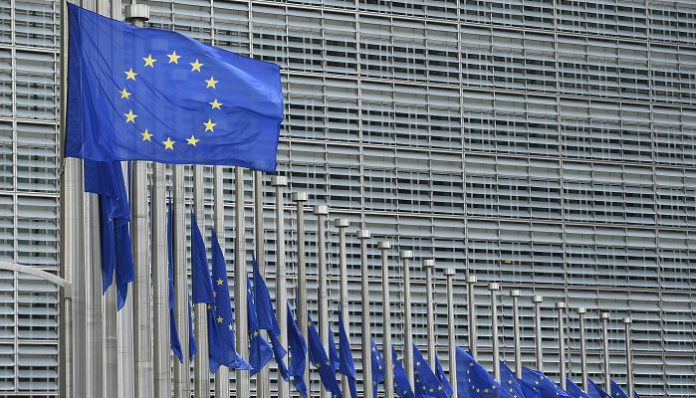

Turkey could face limits on access to parts of the European Union’s public procurement market under a European Commission proposal often described as a “Made in Europe” or “Buy European” push.
The draft would set local content thresholds that could reach up to 70 percent for some products bought through public tenders, a move that Turkish officials and business groups warn could hit sectors tied to Europe-focused supply chains, including vehicles and parts.
The European Commission is expected to present the proposal on Wednesday as part of its broader industrial policy agenda.
Public procurement refers to purchases by public bodies, including national and local governments and publicly funded agencies, from trains and buses to energy infrastructure and equipment for public buildings. Because those tenders can be large and predictable, the European Union has been weighing whether to use them to steer manufacturing and supply chains toward Europe.
The draft’s stated goal is to strengthen Europe’s position in global competition and reduce reliance on imports, especially from China, as Europe expands its clean energy and electric vehicle industries. Reuters, citing a draft it reviewed, said the plan would apply to public purchases of green technologies, including areas such as batteries, solar and wind components and electric vehicles, with requirements that tighten over time.
According to an analysis by T24 columnist Barçın Yinanç, the commission draft could limit access to procurement for non-European suppliers or, in some cases, restrict tenders to European suppliers only. Yinanç wrote that public procurement accounts for about 15 percent of the European market. She said the draft defines “Europe” as European Union member states plus European Economic Area countries Iceland, Norway and Liechtenstein.
Diplomatic efforts
President Recep Tayyip Erdoğan reportedly sent a letter to European Commission President Ursula von der Leyen seeking to prevent Turkey’s exclusion from the framework. Turkish business groups have also been lobbying European capitals over the proposal.
The draft says the European Union will comply with its international obligations, which Turkish business representatives argue should include the EU-Turkey customs union, the trade arrangement that has linked Turkey to much of the European Union’s industrial goods market since the 1990s. The draft also would give the European Commission discretion to decide, product by product, whether certain non European partners can be treated as eligible under the “Made in Europe” approach.
Business community response
Rifat Hisarcıklıoğlu, president of the Union of Chambers and Commodity Exchanges of Turkey (TOBB), said Europe’s goal of building industrial resilience is understandable but warned against a protectionist approach.
“Turkey has been integrated into the European industrial manufacturing market for nearly 30 years through the customs union,” Hisarcıklıoğlu said, adding that the “Made in Europe” approach should be handled in an inclusive and complementary way.
He said the current customs union no longer meets modern trade and investment needs, arguing that modernization would matter not only for trade but also for strategic alignment, competitiveness and mutual security.
Industry executives say Turkey’s vehicle production is built around European brands and suppliers, with factories in Turkey shipping finished vehicles and parts into Europe. Hakan Doğu, former chief executive of the Renault Group Turkey, said being shut out of a market tied to European automotive supply chains since 1996 would be unacceptable.
Bahadır Kaleağası, president of the Paris Bosphorus Institute, said the customs union was negotiated under 1990s conditions and is now outdated.
“We must accelerate internal economic and political reforms to increase our negotiating power,” Kaleağası said. “The cost of being caught unprepared will be heavy.”
Sinan Ülgen, director of the Center for Economics and Foreign Policy Studies (EDAM), said Turkey would face competitive disadvantages if excluded, with risks concentrated in energy-intensive sectors such as automotive, iron and steel, aluminum, cement and construction materials.