

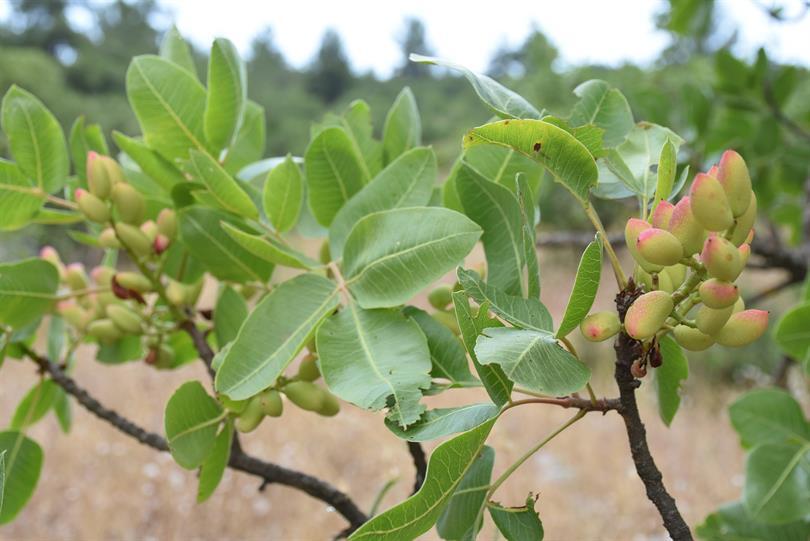

Turkey eased restrictions on pistachio imports, in a move that has attracted criticism from local growers, days before President Recep Tayyip Erdoğan’s scheduled meeting with US President Donald Trump at the White House on Thursday, according to the BirGün daily.
On September 16 the Turkish Ministry of Agriculture and Forestry’s General Directorate of Food and Control informed exporters that shipments of pistachios from the United States, Iran and Syria would no longer require a pest risk analysis.
Six days later, the trade ministry lifted additional tariffs imposed since 2018 on several US agricultural products, including pistachios. The steps were widely seen as goodwill gestures ahead of Erdoğan’s talks with Trump, which were also expected to include discussions over a potential deal for Turkey to purchase 300 Boeing aircraft.
The policy shift contrasts with the government’s own “Pistachio Policy Document” for 2025–2029, which pledged to boost exports. The agriculture ministry report called for more support for organically and sustainably grown pistachios and noted that exports had already risen 218 percent in volume and 210 percent in value between 2015 and 2024.
Yet data from the Turkish Statistical Institute (TurkStat) show the country’s self-sufficiency in pistachio production dropped to 103 percent in 2022, its lowest level in 12 years, as imports increased.
Last year there was a record rise in pistachio production in the country, which rose 117.6 percent to 383,000 tons, according to TurkStat.
Support from bakers
The dessert industry welcomed the move. Mehmet Yıldırım, head of the Baklava and Dessert Producers Association, said allowing imports of both shelled and unshelled pistachios was critical, as he accused local producers of artificially inflating prices.
He said the cost of baklava-grade nuts rose 213 percent in the past year — from 750 lira to 2,350 lira ($18 to $56) per kilo — including a 38 percent jump in the past month. Yıldırım added that pistachios sell for up to $60 per kilo in Turkey compared with about $18 in Iran.
Backlash from growers
Producers condemned the measures, saying they come on the heels of severe frost damage in February and rising input costs. Yusuf Yılmaz, head of the Gaziantep Chamber of Agricultural Engineers, said pistachio trees take two decades to mature and accused the government of sacrificing farmers’ livelihoods to satisfy large pastry producers.
“There are 25,000 pistachio growers in Gaziantep alone. Their labor cannot be discarded for the demands of a handful of pastry bosses,” he said.
Veteran grower Cuma Öztekin said baklava often contains only 100 to 300 grams of pistachios per kilo, while producing the crop requires heavy spending on labor, transport, fertilizer and maintenance. “Instead of supporting local production, they undermine our efforts,” he said. “At the very least, it is a shame.”