

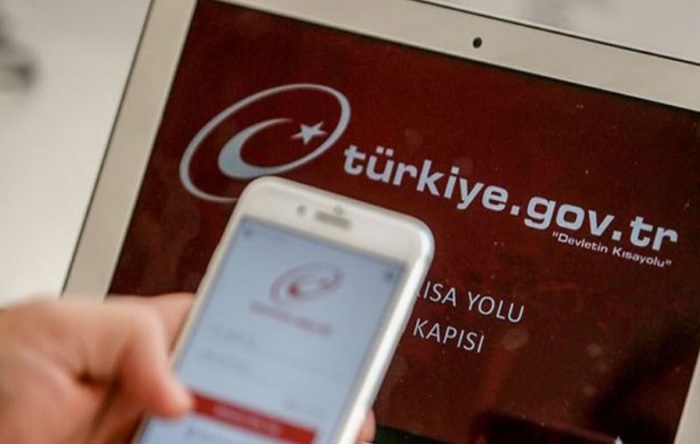

Opposition parties in Turkey have blamed the government of President Recep Tayyip Erdoğan for what they describe as a collapse of the security of the country’s digital infrastructure, accusing the authorities of ignoring or covering up a fraud ring that used stolen electronic credentials to create real documents across dozens of institutions.
The scandal has expanded since prosecutors filed two indictments naming 220 suspects, revealing that a 35-member organized gang obtained and cloned the electronic signatures of public officials to access key government platforms, including education databases, procurement systems and human resources records. The forged digital certificates were used to create official state documents — ranging from university diplomas to professional licenses — granting dozens of unqualified individuals titles such as psychologist, engineer or civil servant.
Opposition leaders, including main opposition Republican People’s Party (CHP) Chairman Özgür Özel, Democracy and Progress Party (DEVA) leader Ali Babacan and officials from the pro-Kurdish Peoples’ Equality and Democracy Party (DEM Party), harshly criticized the the Justice and Development Party (AKP) government’s handling of the scandal and demanded accountability.
‘AKP’s rot is spilling over’
Speaking during a rally in Tuzla on Wednesday as part of the CHP’s “The Nation Defends the Will of the People” campaign, launched after the arrest of İstanbul Mayor Ekrem İmamoğlu, CHP leader Özel lashed out at the government’s months-long silence on the case. Referring to the forged documents and the lack of official resignations, he said, “The AKP’s rot is spilling over.”
Özel accused the Erdoğan government of double standards, pointing to recent dawn raids targeting opposition mayors while the forgery scandal had been quietly under investigation for months. “They detained a 30-year-old opposition mayor over a notary stamp found in her office, but they’ve been hiding this scandal for nine months,” he said.
He also highlighted the human cost, referencing hundreds of teacher candidates who failed to secure appointments through competitive exams. “This regime gave diplomas to people who never took an exam, while 300 teachers who weren’t appointed ended their lives,” he said. “In 2025 a system emerged in Turkey that sells diplomas for 250,000 lira.”
Özel referenced media reports that a convicted drug dealer allegedly obtained the digital credentials of a police chief and was falsely documented as working in the police narcotics department. “They made a dealer the head of narcotics,” he said. “The state is not safe in their hands anymore.”
DEM Party demands parliamentary investigation
On Thursday lawmakers from the DEM Party submitted a motion for a parliamentary investigation into the scandal. Mardin MP Beritan Güneş Altın and Şırnak MP Zeki İrmez said the scandal was emblematic of widespread institutional decay under the Erdoğan government.
Their statement pointed to a broader pattern of abuse, highlighting claims that forged diplomas had been used to access senior public positions, including engineering roles in major infrastructure projects. They also noted growing public skepticism over whether the judiciary could handle the case impartially, saying citizens have lost trust due to the politicization of courts and law enforcement.
The motion asked for a commission to be set up to investigate not only the 35-member gang but also the vulnerabilities that allowed such a breach.
‘No one resigned. No shame. No accountability’
DEVA Party Chairman Ali Babacan, a former deputy prime minister and economy minister under Erdoğan, also denounced the government’s response, warning that the scandal had exposed the total failure of Turkey’s digital state infrastructure.
In an interview with Halk TV on Thursday, Babacan argued that the issue went far beyond forged diplomas. “This is about how personal data, identity numbers, addresses and even health records have been sold,” he said. “It is not just about fake diplomas — it is about the failure to protect the digital identity of citizens.”
Babacan emphasized that despite the scale of the breach, no officials had stepped down. “In any other country, this would have triggered mass resignations,” he said. “We’re talking about a scandal where the state could not protect the most sensitive information. And not one person has resigned.”
He also called for those implicated in failing to secure the e-signature infrastructure to be permanently banned from public digital systems. “Anyone who has violated the sanctity of e-government should never again be allowed to touch a government computer,” he said.
Babacan linked the scandal to the centralization of power under the presidential system introduced by Erdoğan in 2018, saying the collapse of institutional checks and balances had left lower-level bureaucrats unaccountable. “In a country where all decisions come from one man sitting in a 1,200-room palace, everything else breaks down,” he said.
Ministry defends response, but fails to calm criticism
In a statement to the state-run Anadolu news agency, Deputy Minister of Transport and Infrastructure Ömer Fatih Sayan said the government had moved quickly once the first signs of abuse were detected in early 2024. He said 44 e-signatures created under false identities had been revoked and that service providers had been ordered to suspend in-person e-signature registrations.
Sayan also defended himself against recent questions over the legitimacy of his own academic credentials. “I find the recent stories about my diplomas malicious and uninformed,” he said, blaming critics for targeting him instead of recognizing the government’s efforts to track the scandal.
Amid the mounting claims, Turkey’s Council of Higher Education (YÖK) filed a criminal complaint on Thursday against those who alleged that 400 academics had forged diplomas, calling the accusations baseless and defamatory.
A broader collapse of state integrity
Ümit Özdağ, leader of the far-right Victory Party, also weighed in, calling the forgery scandal “a deep attack on the cyber-structure of the Republic of Turkey.” He warned that the infiltration had compromised everything from public tenders to citizen databases.
“The state’s nervous system has been hijacked,” he said. “This isn’t just about fake diplomas. What has happened is an infiltration into the very capillaries of the Republic of Turkey, penetrating all kinds of information, documents, paperwork and operational systems.”