


Ömer Murat*
Turkey’s political landscape is characterized by significant instability, and recent warnings from unexpected sources have led to a resurgence of concern regarding the possibility of a military coup. During a recent visit to Germany, Tuncer Bakırhan, co-chair of the Peoples’ Equality and Democracy Party (DEM Party), conveyed a warning from Abdullah Öcalan, the jailed leader of the outlawed Kurdistan Workers’ Party (PKK). Öcalan reportedly warned that conditions in Turkey may be ripe for a military coup.
Shortly after, Republican People’s Party (CHP) leader Özgür Özel accused President Recep Tayyip Erdoğan of clinging to power through military backing and political manipulation, following the detention of three CHP mayors. Together, these developments have revived long-standing fears: Could Turkey be headed toward another military coup?
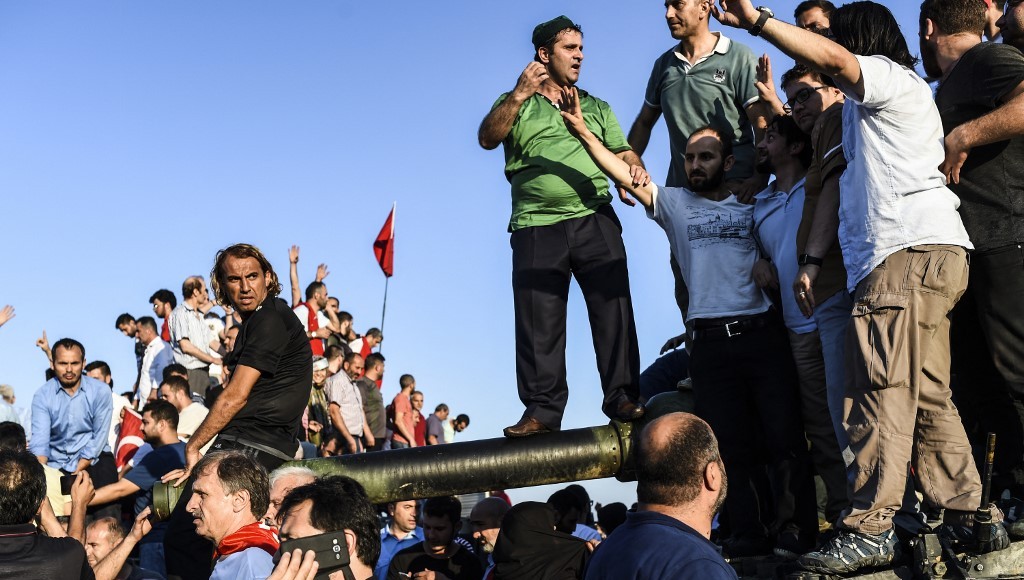
Historically, Turkey’s military coups, such as those in 1960, 1971 and 1980, were the army’s ‘self-appointed’ duty to safeguard the Kemalist status quo shaped by the ideology of Mustafa Kemal Atatürk, the founder of the modern Turkish Republic. Tanks rolled out to “correct” elected governments that strayed from the secular, nationalist path. However, history also teaches us that coups aren’t always about preserving the regime. Sometimes, they channel the people’s rage when democratic avenues for change are cut off. From the Roman Empire to the Ottoman Empire, this territory has witnessed the intervention of militaries as surrogates for public sentiment. Could such a scenario unfold today?
If Öcalan is referring to a Kemalist coup, then he is unaware of the state’s current internal dynamics due to his isolation in prison. Erdoğan’s relentless purges, conducted under the guise of rooting out followers of the faith-based Gülen movement, have stripped the military of its autonomy. Independent-minded officers have been replaced with loyalists, and the institution has been reshaped through legal reforms. A “classic” Kemalist coup against the CHP, the standard-bearer of Kemalism, is difficult to envision. Özel’s warning points to a different threat: not an uprising by the military against the government, but rather the government using the military to crush the opposition.
Skeptics might posit that if a coup were indeed feasible, it would have been executed by this point. Erdoğan’s one-man rule has systematically dismantled the state’s institutional framework, including the military. Political appointees now dominate security and intelligence agencies. If factions within the military possessed the will and capacity to act, why have they not done so?
However, dismissing the possibility entirely ignores Turkey’s volatile history and the mounting pressures under Erdoğan’s autocratic rule. Erdoğan’s reign, effectively a civilian coup that has suspended the constitution and obliterated the separation of powers, has left the nation in a state resembling a pressure cooker. The rule of law is in tatters, corruption is rampant and a crippling economic crisis is impoverishing millions. Consequently, avenues for democratization that were once available are becoming increasingly limited. The imprisonment of İstanbul Mayor Ekrem İmamoğlu, the strongest political rival of Erdoğan, and the relentless attacks on CHP municipalities indicate that Erdoğan will not tolerate a viable electoral challenge.
In this suffocating climate, could a military faction emerge as a catalyst for upheaval? This faction would not necessarily be driven by Kemalist ideology, but rather by public despair. Such a “popular coup” would be less a planned conspiracy and more a chaotic response to reaching a breaking point, a conduit for the people’s frustration.
This scenario would be unpredictable and less organized than a conspiracy. It would resemble a spark ignited by chaos or a ball dropped in front of an unsuspecting army. Under Erdoğan’s rule, Turkey has become more of a Middle Eastern autocracy. The region’s history offers no reassurance: Autocracies like Erdoğan’s often spawn a cycle of coups and countercoups that plunge nations into deeper turmoil.
Complicating the picture is Erdoğan’s alliance with nationalist Kemalist cliques through the Nationalist Movement Party (MHP). This Islamist-Kemalist alliance is frequently disregarded by foreign analysts, yet it constitutes a fundamental element of his political strength. Bakırhan’s message shows that Öcalan’s assessments regarding the potential for a coup in Turkey were made in the context of operations against the CHP. Is Öcalan implying that the operations against the CHP could ultimately undermine the alliance between the Kemalists and Erdoğan?
Led by Özel and featuring İmamoğlu as a potential presidential contender, the CHP has transitioned from a passive opposition under the previous leadership of Kemal Kılıçdaroğlu to a more confrontational stance. If Erdoğan cannot control the CHP, the resulting political fracture could destabilize his regime and create fertile ground for upheaval.
The question isn’t just whether a coup will happen, but also what it would mean. Would it resolve Turkey’s political and economic chaos, or would it only worsen the situation? Polls show that Erdoğan’s popularity is eroding, yet hope for change through elections is fading. If the public loses all hope, calls for the military to “save” the nation could grow louder. However, with the military’s institutional structure weakened, which factions would respond? Would they compete for power, or could they reach a compromise that politics has failed to achieve?
Turkey finds itself at a critical juncture, precarious and uncertain about its future. When democracy is suffocated, the people’s anger will find a way to erupt. Erdoğan’s one-man rule has pushed the nation toward a painful transition. As with numerous strongmen throughout history, it is likely that he is incapable of determining his own demise, let alone that of his successor. Whether this transition will end in chaos or a controlled transformation depends on forces that no one can fully predict — not Öcalan, not Özel and not even Erdoğan himself.
* Ömer Murat is a political analyst and a former Turkish diplomat who currently lives in Germany.