

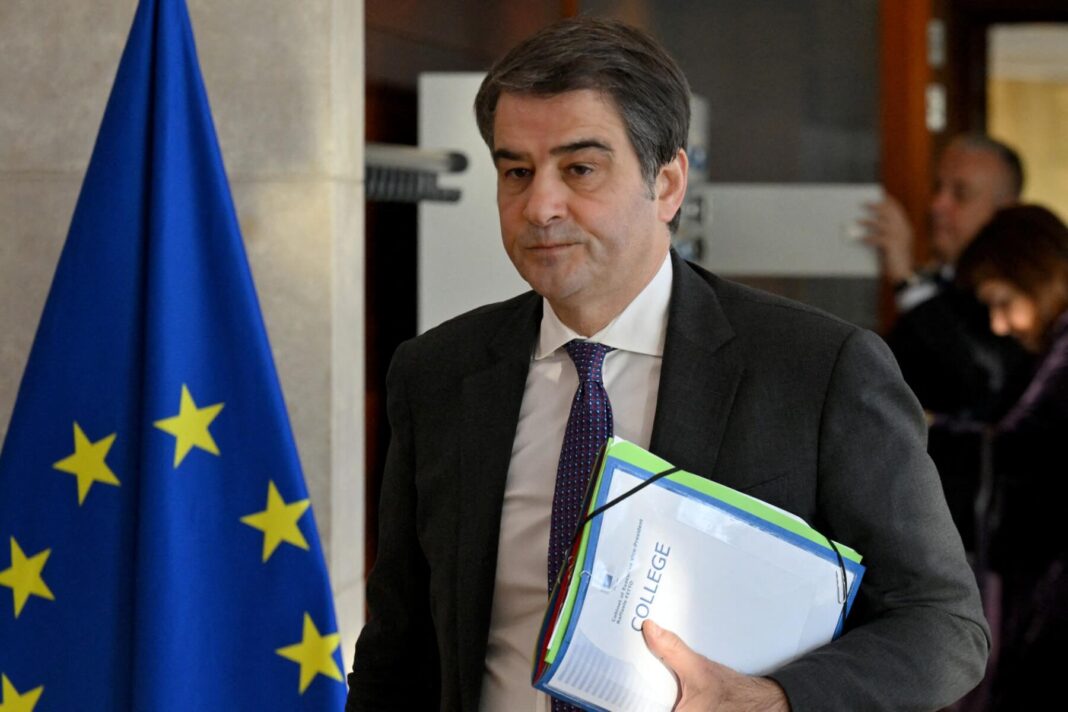

The European Union appointed a new special representative for Cyprus on Monday, saying there was “renewed momentum” to restart negotiations over the long-divided Mediterranean island, but Turkey questioned the bloc’s neutrality, while the Turkish Cypriot administration rejected the appointment.
Raffaele Fitto, an executive vice president of the European Commission, will work with the United Nations and parties to the conflict to prepare the ground for renewed talks, the commission said.
“Fitto will engage with all relevant stakeholders and interlocutors to prepare the ground for the resumption of negotiations and support a comprehensive and lasting solution,” it said in a statement.
His appointment came a day after European Commission President Ursula von der Leyen said she could “sense a renewed momentum to solve the Cyprus issue” following a call with UN Secretary-General António Guterres.
“The opportunity should be seized. We look forward to progress over the months to come,” she said.
Fitto will work closely with the UN secretary-general’s personal envoy on Cyprus.
Turkish Foreign Ministry spokesperson Öncü Keçeli said Ankara viewed the appointment, like previous EU appointments related to Cyprus, as an internal matter for the bloc.
Keçeli said in a statement on X that the EU had forfeited its neutrality by admitting the Republic of Cyprus in 2004 despite the Greek Cypriot rejection of a UN reunification plan that year.
Avrupa Komisyonu Tarafından Yeniden Bir “Kıbrıs Özel Temsilcisi” Atanması Hakkında:
Avrupa Komisyonu tarafından yeniden bir “Kıbrıs Özel Temsilcisi” atanması kararını, geçmişteki benzer atamalarda olduğu gibi, Avrupa Birliği'nin (AB) iç meselesi olarak değerlendiriyoruz.…
— Öncü Keçeli | Dışişleri Bakanlığı Sözcüsü (@oncukeceli) July 13, 2026
The plan, named after then-UN secretary-general Kofi Annan, was approved by Turkish Cypriots but rejected by Greek Cypriots in separate referendums. The Republic of Cyprus joined the EU a week later, with EU law suspended in the Turkish Cypriot north.
Keçeli accused EU institutions, particularly the European Parliament, of pursuing an increasingly biased approach to the dispute.
He said Ankara expected Fitto to work toward changing that position and recognize that a settlement could be reached only through negotiations between “two sovereign and equal states” based on what Turkey describes as the realities on the island.
The Turkish Cypriot administration’s foreign ministry issued a stronger response, calling the appointment unilateral, unlawful and “provocative” and saying it had been made at the recommendation of the Greek Cypriot government without Turkish Cypriot consent.
BAKANLIK AÇIKLAMASI
Konu: Avrupa Komisyonu tarafından sözde “Kıbrıs özel temsilcisi” atanması hk.
Avrupa Komisyonu tarafından GKRY’nin tavsiyesiyle, tek taraflı ve gayrıyasal bir şekilde Komisyon Başkan yardımcısı Raffaele Fitto’nun sözde “Kıbrıs özel temsilcisi” atanması ve…
— Dışişleri Bakanlığı (@KKTC_Disisleri) July 13, 2026
It said the EU had lost its credibility and impartiality by admitting the Republic of Cyprus in 2004 while failing to lift political, economic and cultural restrictions on the Turkish Cypriots.
The ministry also accused Brussels of attempting to create an artificial process and pressure the Turkish Cypriot side ahead of an expected informal meeting on Cyprus.
It said the appointment would be considered “null and void” and that the Turkish Cypriot administration would not engage with Fitto unless the EU recognized Turkish Cypriots’ sovereign equality and equal international status.
Cyprus has been divided since 1974, when Turkey intervened militarily following a coup backed by the military junta then ruling Greece. Turkey said the operation was intended to protect Turkish Cypriots and prevent the island’s annexation by Greece.
Decades of UN-sponsored negotiations have failed to reunify the island. The last major round of talks collapsed in Crans-Montana, Switzerland, in July 2017.
The internationally recognized Republic of Cyprus, an EU member, controls the predominantly Greek Cypriot south. The Turkish Republic of Northern Cyprus, declared in 1983, is recognized only by Turkey.
The two sides remain divided over the basis of a settlement.
Greek Cypriot leaders support a bizonal, bicommunal federation in line with UN parameters, while Turkey and the Turkish Cypriot leadership advocate a two-state solution based on sovereign equality.
Turkish Minute, with reporting from Agence France-Presse