


Orhan Sait Berber, Amsterdam
A volunteer in the Netherlands who is wanted by the Turkish government over alleged links to the faith-based Gülen movement, a group designated as a terrorist organization by Ankara, has received a Dutch royal honor for decades of community work.
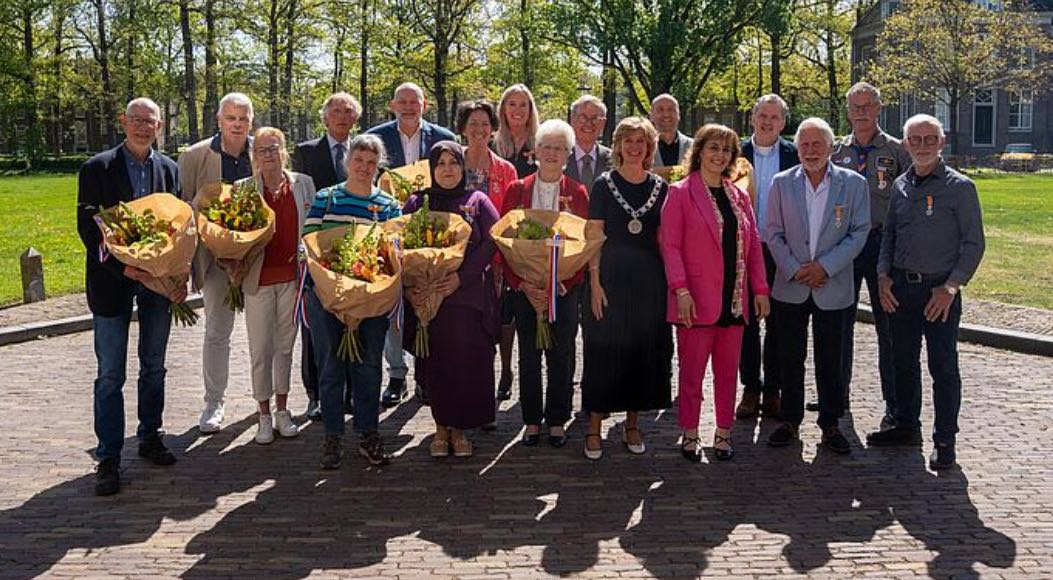
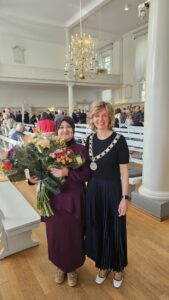
Necibe Çetintaş, 48, a volunteer with the Gülen-linked SECU Foundation in Utrecht, was awarded the honor on April 24 by Mayor Joyce Langenacker ahead of Koningsdag, the national holiday marking the king’s birthday.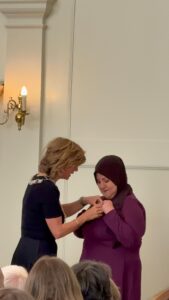
According to the municipality of Zeist, 17 residents were awarded royal honors this year in recognition of their contributions to society.
The municipality said the recipients “stand at the heart of society, bring people together, bridge differences and contribute to the well-being of others,” noting that most are volunteers.
Çetintaş was appointed a member of the Order of Orange-Nassau, a Dutch royal honor recognizing outstanding service to society, for her work in education, refugee support and the alleviation of poverty.
Founded about 30 years ago by volunteers inspired by the followers of the Gülen movement, the SECU Foundation organizes educational, cultural and interfaith dialogue activities aimed at promoting social cohesion.
The Gülen movement, inspired by US-based cleric Fethullah Gülen, who died in 2024, is labeled a terrorist organization by Turkey, a designation the movement strongly denies.
One of the largest initiatives of SECU is a series of fast-breaking (iftar) dinners during the Muslim holy month of Ramadan held across Utrecht, bringing together around 20,000 people in recent years from different cultural and religious backgrounds.
Çetintaş, who has been living in the Netherlands since the age of four, has been involved in volunteer work for about 15 years and has played a key role in organizing many of the foundation’s activities.
She told Turkish Minute in an interview that the award came as a complete surprise and described her work as “something natural,” adding that helping people and bringing communities together “is what should be done.”
During Ramadan, she said, daily iftar events in Utrecht drew about 150 participants, including non-Muslims and local politicians, creating opportunities for dialogue.
Some attendees even tried fasting for a day to better understand Muslims, she added.
Çetintaş’s community work has also received media attention in the Netherlands. On March 8, 2025, Algemeen Dagblad (AD), one of the country’s leading newspapers, reported on SECU’s Ramadan iftar events, reporting growing participation by non-Muslims.
The paper said that more non-Muslims were joining iftar dinners and even trying fasting for a day, describing it as a “positive development.”
The article featured Çetintaş along with Dutch politician Juliëtte van Gilse, noting that the foundation organizes daily iftar dinners during Ramadan and invites organizations and associations to take part.
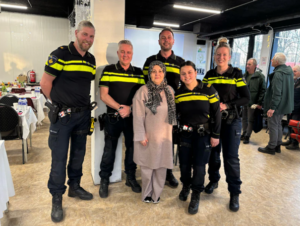
In another report published on March 17, 2025, local outlet Indebuurt featured Çetintaş as one of the organizers of a large iftar gathering in Utrecht’s Kanaleneiland neighborhood, attended by residents, local organizations and community police officers.
“Everyone is welcome,” Çetintaş was quoted as saying. “Ramadan is about connection, and food brings people together.”
Çetintaş said she believes the award could further affect the legal case against her in Turkey, where she faces a possible prison sentence.
“It might even add more years to my situation there,” she said.
Despite the challenges, she said she hopes her work will inspire others.
“Anyone can do this. People shouldn’t hesitate because of language or other barriers,” she said.
 A mother of four, Çetintaş is not currently employed and said she continues her volunteer work along with family life, remaining actively engaged in community activities.
Following a coup attempt in Turkey on July 15, 2016, President Recep Tayyip Erdoğan immediately accused the Gülen movement of orchestrating the event and significantly expanded a crackdown on the movement’s supporters that was already underway. The movement strongly denies involvement in the coup attempt or any terrorist activity.
Over 130,000 public servants, including 4,156 judges and prosecutors, and more than 24,000 members of the armed forces were summarily removed from their jobs for alleged membership in or relationships with “terrorist organizations” by emergency decree-laws subject to neither judicial nor parliamentary scrutiny.
According to the latest figures from the justice ministry, more than 126,000 people have been convicted of alleged links to the movement since 2016, with 11,085 still in prison.
Legal proceedings are ongoing for over 24,000 individuals, while another 58,000 remain under active investigation nearly a decade later.
In addition to the thousands who were jailed, scores of other Gülen movement followers had to flee Turkey to avoid the government crackdown.