


Yasemin Aydın*
While Washington continues to gossip about Donald Trump’s extravagant White House ballroom project, attention has increasingly shifted to his recent foreign policy signals. Trump’s meetings with Hungarian Prime Minister Viktor Orbán and Syria’s new president Ahmed al-Sharaa mark the beginning of a new phase in US foreign policy: less ideological, more transactional, yet significantly more perilous.
During his visit to Washington, Orbán sought to convince Trump that the war in Ukraine could never be won militarily. The Hungarian leader called the West’s strategy a “misunderstanding” — and Trump appeared receptive. Shortly after the meeting, Washington granted Hungary an exemption from sanctions on Russian oil and gas. The move can be read, on the one hand, as an attempt to keep an EU member state within the US orbit; on the other, as a worrying signal in Kyiv that American support is faltering. Ukrainian President Volodymyr Zelenskyy, who visited Washington last month to request additional weapons, left without concrete results.
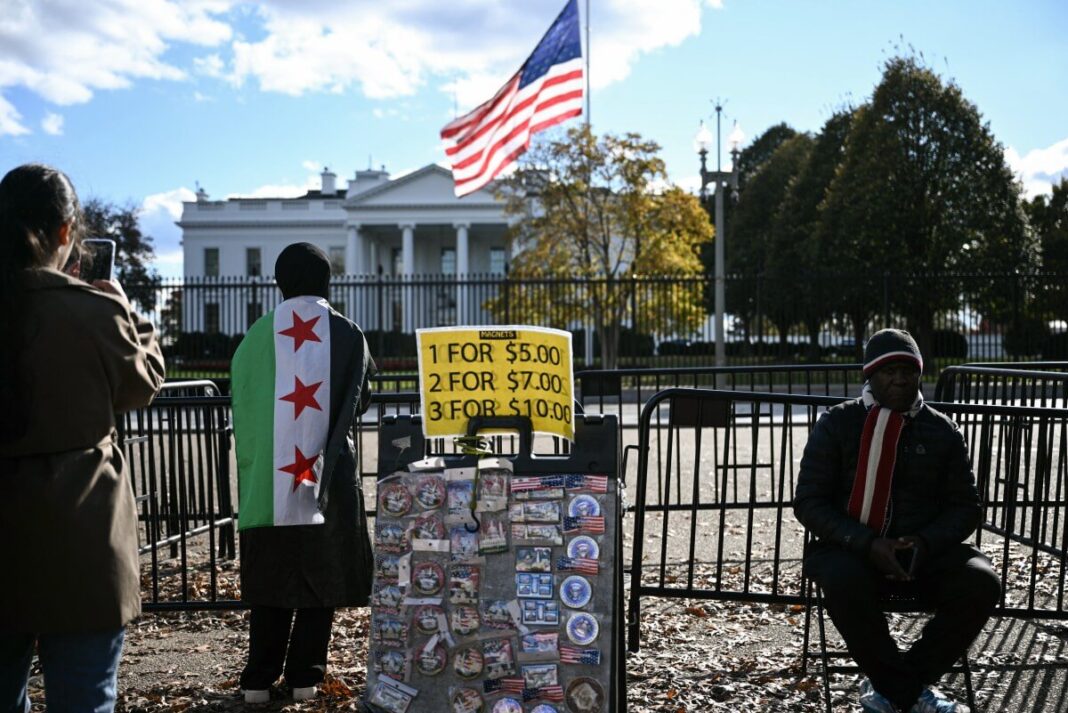
A few days later, Trump hosted al-Sharaa at the White House — a gesture that shows his search for a new diplomatic balance. Al-Sharaa, who is leading Syria’s fragile transition from five decades of dictatorship toward a tentative democracy, had only recently been removed from a UN sanctions list. His invitation to the White House represents both a symbolic and strategic shift: The United States now sees Syria as a potential partner in the fight against the so-called Islamic State in Iraq and the Levant.
Trump’s dual strategy — pressure on traditional adversaries, outreach to emerging actors — reflects his pragmatic approach. It signals a foreign policy defined less by moral boundaries and more by the pursuit of short-term stability and influence. Yet this course brings inherent tension: a delicate balance between principle and realism, between the rhetoric of democracy and cooperation with authoritarian leaders.
As Delaney Simon noted in her Foreign Policy article in June, the patchwork nature of US sanctions makes any consistent strategy difficult to sustain. Trump, however, seems convinced he can turn that complexity to his advantage: acting on the assumption that flexibility equals strength.
Whether this approach will ultimately produce stability or new dependencies remains to be seen. One thing is clear: Trump’s foreign policy no longer represents a turning point, but rather a mirror of our time, a blend of pragmatism, power calculation and the search for equilibrium in an increasingly fragmented world order.
This article was first published on www.deutschebold.com
*Yasemin Aydın is a social anthropologist and social psychologist in Germany.
Disclaimer: The views expressed in this opinion piece are those of the author and do not necessarily reflect the editorial stance of Turkish Minute.