

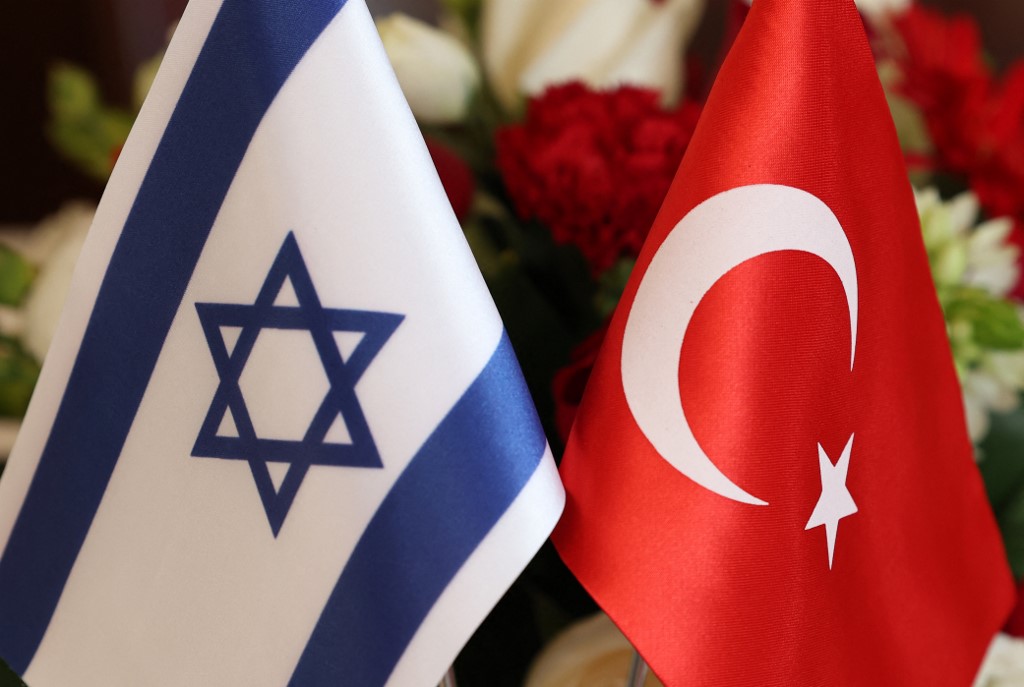

Senior Israeli security officials have accused Turkey of trying to influence the country’s October 27 election through social media, The Jerusalem Post reported on Monday, although they provided no evidence or details to support the allegation.
The officials, who spoke anonymously, did not identify any accounts, platforms or organizations allegedly involved or say whether the suspected activity was directed or supported by the Turkish government.
Ankara had not publicly commented on the report as of Tuesday.
The alleged activity is intended to influence public opinion, disrupt the campaign and deepen divisions within Israeli society, according to the officials, who listed Turkey along with Iran as a suspected source of foreign interference.
The report came as Shin Bet domestic security agency chief David Zini briefed a classified Knesset subcommittee about indications of foreign election interference and Israel’s ability to trace covert funding of domestic political activity, according to Israeli public broadcaster KAN.
KAN reported after the closed-door session that Zini had also warned of attempts by Russia and China to influence the election. Israel’s National Cyber Directorate had previously told Knesset committees that indications of attempted interference had been detected but provided no details.
Israel will hold its first national election since the Hamas-led attacks of October 7, 2023, and Israel’s ensuing war on Gaza.
President Isaac Herzog warned earlier this month of threats to the integrity of the vote after meeting with Zini and Central Elections Committee Chairman Noam Sohlberg, who is also deputy president of the Supreme Court.
“Elections are a test for Israeli democracy, and they are also a test for the unity and cohesion of Israeli society,” Herzog said, urging law enforcement agencies to act and Israelis to exercise caution when sharing material on social media.
A report issued by Israel’s State Comptroller’s Office in July found that the country had no comprehensive policy or designated agency to coordinate the response to foreign digital influence campaigns as of March.
State Comptroller Matanyahu Englman said foreign actors, led primarily by Iran, had used social media to deepen divisions, generate fear and promote political instability. The report did not identify Turkey as one of the actors involved.
The allegation comes amid a sharp deterioration in Turkish-Israeli relations over the war in Gaza.
Turkish President Recep Tayyip Erdoğan has repeatedly accused Israeli Prime Minister Benjamin Netanyahu’s government of genocide and war crimes. Israel rejects the accusations and accuses Erdoğan of supporting Hamas, which Turkey does not designate as a terrorist organization.
Turkey recalled its ambassador from Tel Aviv for consultations in November 2023 and halted direct trade with Israel in May 2024, saying commerce would not resume until Israel allowed the uninterrupted and adequate delivery of humanitarian aid to Gaza.
Ankara also filed a declaration of intervention in South Africa’s genocide case against Israel at the International Court of Justice in August 2024.
Turkey and Israel had restored full diplomatic relations in 2022 and exchanged ambassadors in early 2023 following years of tension, but the rapprochement collapsed after the outbreak of the Gaza war.
The Hamas-led attacks on October 7, 2023, killed some 1,200 people in Israel, according to Israeli figures, and militants took 251 hostages.
Israel’s offensive has killed at least 73,246 Palestinians and injured 173,727 as of July 15, according to Gaza’s Health Ministry figures cited by the United Nations.
The UN said 81 percent of Gaza’s structures had been damaged or destroyed as of October 2025. A joint UN, EU and World Bank assessment issued in April found that 76.6 percent of the territory’s housing units had been damaged or destroyed.