

 in European Union grants over six years, while his government portrayed foreign support for independent media and civil society as a threat to national security.)
Two foundations tied to Turkish President Recep Tayyip Erdoğan’s family were approved for up to €2.28 million ($2.65 million) in European Union grants over six years, while his government portrayed foreign support for independent media and civil society as a threat to national security.
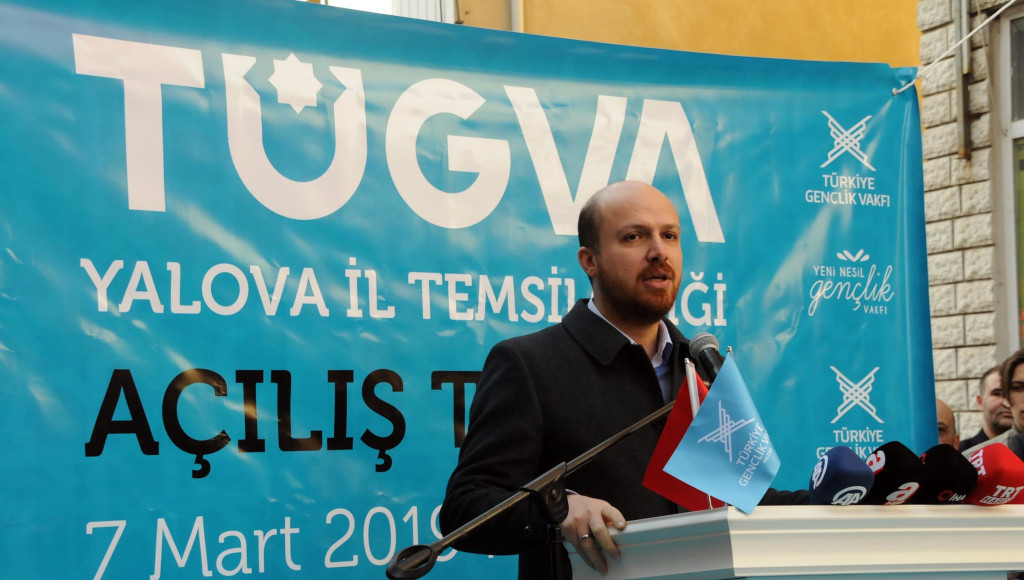
The Turkish Youth Foundation (TÜGVA) and the Turkish Youth and Education Service Foundation (TÜRGEV) qualified for maximum grants totaling €2,278,436 in funding rounds from 2020 through 2025, according to an analysis of Turkish National Agency records published Thursday by the Cumhuriyet daily.
TÜGVA was approved for up to €1,270,568, while TÜRGEV qualified for €1,007,868 during the period.
Erdoğan’s son Bilal Erdoğan sits on TÜGVA’s high advisory board, which also includes government officials and figures from the ruling Justice and Development Party (AKP).
Erdoğan’s daughter Esra Albayrak is also a member of TÜRGEV’s board.
The foundation states that it was established in 1996 under Erdoğan’s leadership when he was mayor of İstanbul.
TÜGVA qualified for maximum grants of €323,166 in 2020, €422,193 in 2021, €120,568 in 2022, €19,318 in 2023, €123,309 in 2024 and €262,014 in 2025.
TÜRGEV’s maximum awards were €180,767 in 2020, €138,410 in 2021, €101,060 in 2022, €175,000 in 2023, €161,100 in 2024 and €251,531 in 2025.
The 2025 awards included €187,350 for a TÜGVA youth mobility project and €196,150 for a TÜRGEV project under the same Erasmus+ program, official records show.
Other projects approved for TÜGVA included the “Young Turkey Congress,” “From Anatolia to Europe,” “Digital Language Cafe,” “Let’s Meet in Andalusia” and an international forum for youth organizations.
The grants came through Erasmus+ and the European Solidarity Corps, programs supporting education, training, youth exchanges, volunteering and cooperation between organizations.
Turkey is not an EU member but participates in Erasmus+ as a candidate country associated with the program, giving Turkish organizations access to all Erasmus+ activities.
The Turkish National Agency, which operates under the Foreign Ministry’s Directorate for EU Affairs, evaluates applications and administers the programs in Turkey.
The amounts in the agency’s approval lists are ceilings rather than proof that the organizations received every euro, since final payments can depend on project implementation, eligible expenses and reporting.
Cumhuriyet put the grants approved for a wider group of organizations aligned with the government at about €3 million, although its report did not publish a complete itemized calculation for that figure.
The records also showed maximum awards of €69,159 for the Foundation for Political, Economic and Social Research (SETA), €52,800 for the Turkey Diyanet Foundation and €68,866 for the Ensar Foundation, with further grants approved for an association representing graduates of Turkey’s state religious schools and organizations linked to the Hayrat religious network.
SETA faced criticism in 2019 after publishing a report that listed journalists working for international news organizations, examined their social media activity and accused foreign outlets of coverage hostile to Turkey, prompting press groups to describe the document as a blacklist.
The disclosures contrast with the Erdoğan government’s treatment of independent news outlets and civil society organizations that receive grants from governments, foundations or international institutions.
Fahrettin Altun, Erdoğan’s communications director at the time, called media organizations receiving foreign support potential “fifth column” operations in July 2021 and argued that new regulations were needed to monitor them.
The AKP later proposed an “agents of influence” measure that rights groups warned could expose journalists, activists and civil society organizations working with foreign institutions to prison sentences, but the provision was withdrawn from parliament in November 2024 after public opposition.