

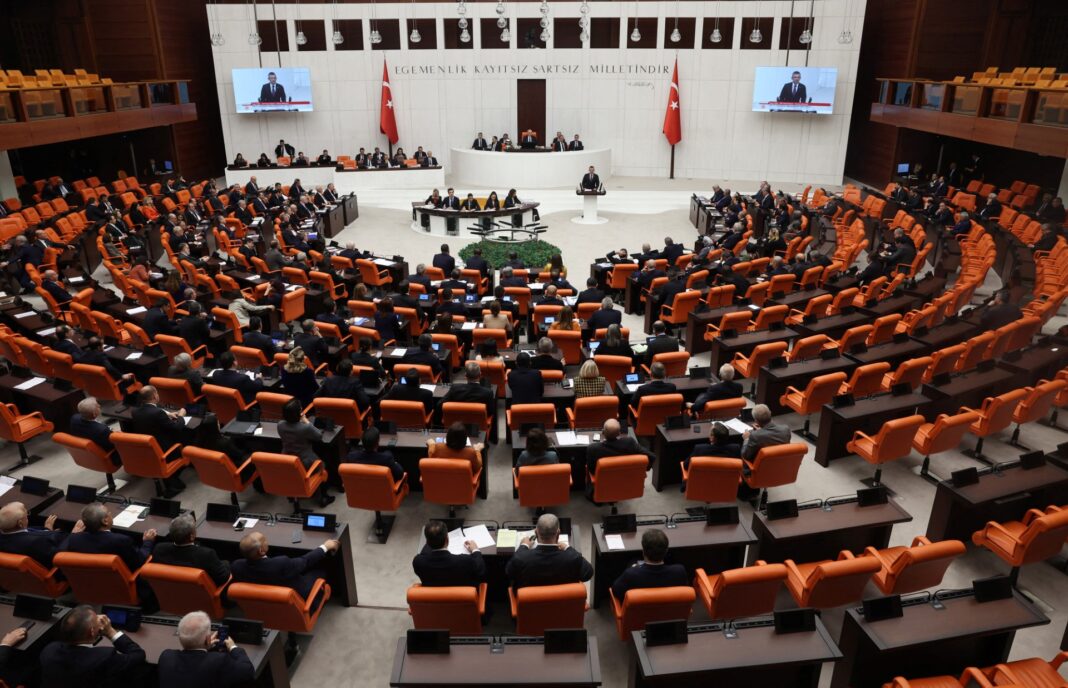

Turkey’s parliament has approved a tax package that creates a new asset-repatriation amnesty and grants a 20-year income tax exemption on foreign-sourced income to some people who become tax residents in Turkey.
The package amends several tax and investment laws. It includes incentives for the İstanbul Finance Center, corporate tax cuts for exporters, new advantages for multinational service centers and longer installment terms for some public debts.
The measure contains two separate tracks that have been grouped in Turkish media under the term “wealth amnesty.”
One is an asset declaration scheme for money, gold, foreign currency, securities and other capital market instruments held abroad or kept in Turkey outside company books.
The other is a new tax-residency regime that exempts foreign-sourced income from Turkish income tax for 20 years for eligible individuals who move their tax residence to Turkey.
Under the residency regime, individuals considered resident in Turkey from January 1, 2026, will be exempt from income tax on earnings and revenues generated outside Turkey if they had no domicile and no tax liability in Turkey during the previous three calendar years.
The exemption does not apply to Turkey-sourced income, which will remain subject to normal tax rules.
Foreign-sourced income covered by the exemption will not have to be declared in an annual income tax return. If the person files a return for other income, the exempt foreign-sourced income will not be included.
The law also says having had previous Turkish tax liability only because of Turkish real estate income, investment income or capital gains will not prevent a person from benefiting from the 20-year exemption.
Costs and expenses linked to the exempt foreign income cannot be deducted from taxable income in Turkey. Taxes paid abroad on the exempt income also cannot be credited against Turkish income tax.
Tax advisers have compared the measure to regimes used by some countries to attract wealthy individuals and globally mobile capital. Turkey’s version is broader in duration than many comparable European regimes and does not set a fixed annual lump-sum payment in the law.
The package also introduces a more traditional asset amnesty.
Individuals and companies will be able to declare assets held abroad, including money, gold, foreign currency, securities and other capital market instruments, through banks or brokerage firms until July 31, 2027.
Assets declared from abroad must be transferred to bank or brokerage accounts in Turkey within two months of the declaration. Assets physically brought into Turkey must be documented through customs declarations.
The scheme also covers money, gold, foreign currency, securities and other capital market instruments held in Turkey by income or corporate taxpayers but not recorded in their legal books.
The basic tax rate on declared assets is 5 percent. The rate falls depending on how long the assets are kept in eligible instruments in Turkey.
The rate is zero if the assets are kept for at least five years in eligible instruments. It is 1 percent for assets kept for at least four years, 2 percent for three years, 3 percent for two years and 4 percent for one year.
Eligible instruments include term accounts, government domestic debt securities, lease certificates and, according to reports on the final floor amendment, venture capital investment funds.
Declarations made from January 1, 2027, through July 31, 2027, will be subject to an additional half-point tax. If the president extends the declaration period, later declarations will be subject to a total increase of 1 percentage point.
The law provides protection from tax inspections and tax assessments for declared assets if the conditions are met. It also says measures required under other legislation will not be affected.
That wording means the amnesty does not, on its face, suspend anti-money laundering obligations. The key issue will be how banks, brokerage firms, customs authorities and Turkey’s Financial Crimes Investigation Board apply source-of-funds and compliance controls.
Opposition lawmakers have criticized the measure, saying repeated asset amnesties weaken tax compliance and create a risk that wealth of unclear origin can enter the financial system with limited scrutiny.
The new law also extends the 100 percent corporate tax deduction for financial institutions operating in the İstanbul Finance Center until 2047. A five-year exemption from certain financial activity fees will be extended to 20 years.
Several issues remain to be clarified in secondary regulations, including the practical definition of foreign-source income, how the exemption will apply to people physically working in Turkey for foreign clients and how the new regime will interact with international tax-reporting rules.
The main opposition Republican People’s Party (CHP) said in a dissenting opinion in parliament that the bill could make it easier for gains that may be linked to crime or unclear sources to enter Turkey.
Turkey was removed from the Financial Action Task Force (FATF) gray list in June 2024 after the global financial crime watchdog said the country had made progress against money laundering and terrorist financing risks.