


Ömer Murat*
The dramatic end to Viktor Orbán’s 16-year hold on power in Hungary has revived a longstanding question in Turkish politics: Can President Recep Tayyip Erdoğan, who has built a comparable system of populist authoritarianism, also be removed at the ballot box?
The Hungarian case is instructive because the forces that toppled Orbán resemble the pressures now confronting Erdoğan. Both leaders have relied on a familiar playbook of generous pre-election spending to boost short-term popularity, followed by painful economic consequences that voters eventually refuse to forgive.
In Hungary, Orbán’s fiscal largesse ahead of the 2022 parliamentary vote — including tax rebates, wage increases and energy subsidies — left the economy dangerously overheated. By 2023 annual inflation had reached 17 percent, the highest in a quarter century, with food prices surging more than 40 percent at times. Even as inflation later moderated, the cumulative erosion of purchasing power proved irreversible for many households. When Orbán attempted to repeat this strategy ahead of this year’s election, he had little room left to maneuver. Budget deficits forced him to implement stealth tax increases, and voters, remembering how quickly their 2022 windfalls had been wiped out by price hikes, simply stopped believing his promises.
Turkey’s experience has followed an almost identical arc. The stimulus measures implemented before the May 2023 presidential and parliamentary elections fueled an inflationary spiral. By the end of the year the Turkish Statistical Institute (TurkStat) reported headline inflation at 64 percent, while an independent research group, ENAG, estimated it to be closer to 127 percent. The government was later forced to push the central bank to raise interest rates to 50 percent, triggering a painful economic contraction.
The Hungarian experience suggests that voters eventually stop believing in pre-election largesse once they have seen their savings evaporate. With the 2028 elections approaching and the Turkish economy exposed to regional risks, particularly escalating tensions involving Iran, Mr. Erdoğan may find his traditional toolkit increasingly ineffective.
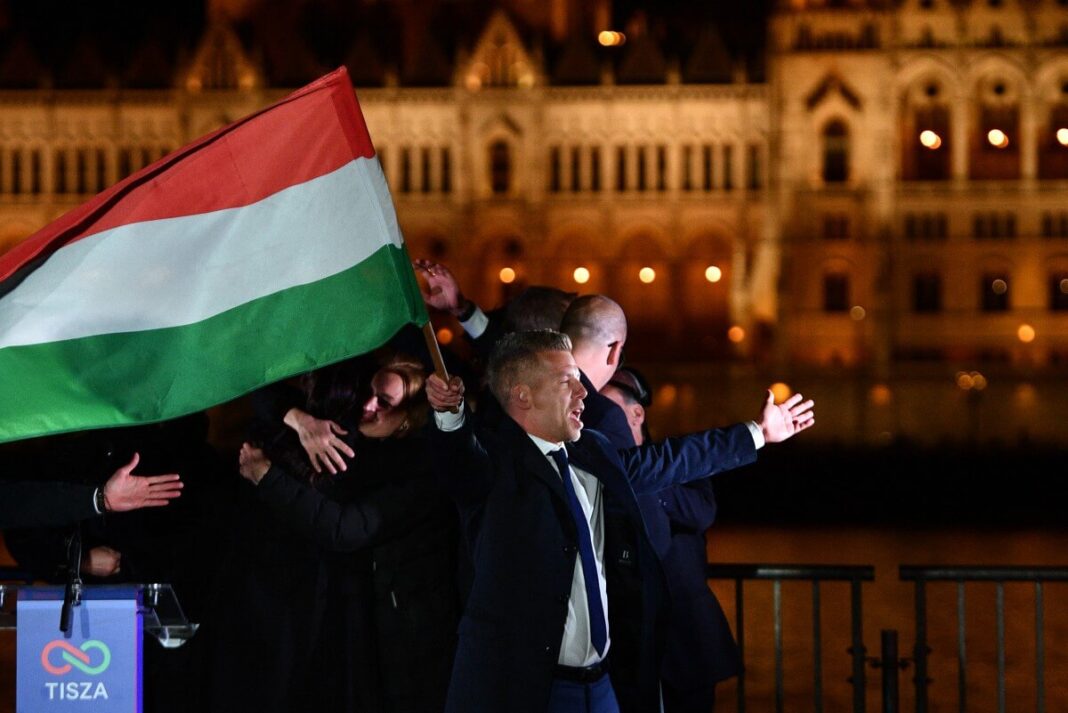
However, Hungary’s experience shows that economic conditions alone do not determine electoral outcomes. Opposition strategy plays a decisive role, particularly in polarized systems with media asymmetry. In 2022, for example, a broad alliance of left-wing and liberal parties — the so-called Alliance for Hungary — played directly into the government’s hands. Rather than strengthening the opposition, the alliance reinforced Orbán’s narrative, enabling him to depict his opponents as a coalition of radicals and Western puppets. By contrast, opposition dynamics shifted in the most recent election. Left-leaning parties stepped aside, enabling Péter Magyar to emerge as a center-right alternative. This repositioning disrupted the government’s preferred “left versus right” framing and encouraged strategic voting among opposition supporters. Recognizing that their parties could not prevail, left-leaning voters cast strategic ballots for the center-right alternative. The polarization that Orbán had cultivated between the right and the left was broken.
A similar dynamic is visible in Turkey. The “Six-Party Table” alliance, formed before the 2023 elections, ultimately played to Erdoğan’s advantage by enabling him to frame the contest in familiar ideological terms. The opposition alliance, led by the main opposition Republican People’s Party (CHP), lost the election by nominating its then-chairman, Kemal Kılıçdaroğlu — a figure who had consistently lost to Erdoğan, rather than a more popular center-right alternative. However, 10 months later, the local elections proved that the opposition is strongest when it rallies around figures with broad, centrist appeal. The Justice and Development Party (AKP) fell to second place in these elections.
Polls consistently show that Ekrem İmamoğlu, the jailed mayor of İstanbul, and Mansur Yavaş, the mayor of Ankara, are the two politicians best positioned to defeat Erdoğan. They draw support well beyond the traditional left. Both appeal to center-right voters disillusioned with the ruling party. Their cross-ideological appeal highlights a broader lesson: In a system shaped by sustained government messaging and media dominance, opposition success may depend less on ideological alignment than on strategic positioning. The Hungarian experience suggests this is no coincidence. The path out of populist authoritarianism may run through the center-right, however uncomfortable that may be for some on the left.
Erdoğan is clearly aware of this threat. His political survival now hinges on whether the CHP nominates a candidate he can easily demonize. The recent judicial proceedings against İmamoğlu, who has already defeated Erdoğan’s candidates three times in İstanbul, are widely perceived as an attempt (“judicial coup”) to neutralize the strongest threat. Under its current leader, Özgür Özel, the CHP has so far refused to withdraw İmamoğlu’s candidacy, a stance that contrasts with the party’s earlier missteps.
The March 31 local elections in 2024 offered a glimpse of what disciplined opposition unity can achieve. In İstanbul and Ankara, voters came together at the grassroots level to hand the AKP defeats by double-digit margins. If the CHP maintains its current posture and demonstrates that it has done everything possible to nominate a viable center-right challenger, it could encourage the kind of strategic voting that proved decisive in Hungary. Should judicial obstacles block both İmamoğlu and Yavaş, the resulting public anger, compounded by economic hardship, could propel an unexpected center-right alternative into the vacuum.
Erdoğan is not blind to the danger. His government’s intensifying legal and administrative pressure on CHP-run municipalities is widely understood as a warning: Return to the role of manageable “regime opposition,” or face further consequences. The Hungarian precedent shows that such tactics lose their potency when the opposition refuses to play its assigned role.
Another critical element in Hungary’s political shift was sustained pressure from the European Union. In recent years Brussels has linked financial transfers to rule-of-law benchmarks, freezing or delaying funds due to concerns about judicial independence, corruption and democratic backsliding under Orbán’s government. This approach constrained fiscal policy and shaped domestic political perceptions by reinforcing the economic consequences of governance choices.
A comparable strategy toward Turkey would be more complex given that it is not a member of the EU. Nevertheless, the bloc retains significant economic and institutional leverage through trade ties, investment flows and accession-related frameworks. A more coordinated and conditional approach that links economic cooperation and financial engagement to measurable democratic and institutional standards could produce similar indirect effects.
Although Turkey is not an EU member, it remains deeply integrated into the European economic sphere through the customs union. The European Commission, currently led by President Ursula von der Leyen, should explicitly tie the modernization of the trade agreement to improvements in Turkey’s human rights record and judicial independence.
Just as the suspension of funds in Hungary forced voters to weigh the cost of Orbán’s rhetoric against their standard of living, a firm “conditionality” policy from Europe could deprive Erdoğan of the economic stability he needs to remain viable. If European leaders move beyond “statements of concern” and utilize their significant economic influence, they could create an environment in which the Turkish electorate views a transition to the center-right as an economic necessity for national recovery, not just a political preference.
Such a policy would not aim to dictate electoral outcomes, but rather to shape the structural environment in which elections take place. In this sense the Hungarian case suggests that international pressure, when sustained and targeted, can become a meaningful, if secondary, factor in domestic political change.
Whether Turkey will follow in Hungary’s footsteps and make a democratic correction ultimately depends less on Erdoğan’s mistakes than on the CHP’s resolve. If the party continues to field candidates who can win and voters, particularly on the left, respond with the same strategic discipline seen in Budapest, the ballot box may be as effective in Ankara as it was in Budapest. The era of the strongman is not invincible. Sometimes, it is the opposition’s own choices that determine the end of the era.
Hungary’s experience offers a cautionary but instructive example. Economic discontent can weaken entrenched leaders but does not guarantee their defeat. That outcome depends on whether the opposition can convert public frustration into a coherent and compelling alternative. Turkey now faces a similar test.
* Ömer Murat is a political analyst and a former Turkish diplomat who currently lives in Germany.
Disclaimer: The views expressed in this opinion piece are those of the author and do not necessarily reflect the editorial stance of Turkish Minute.