

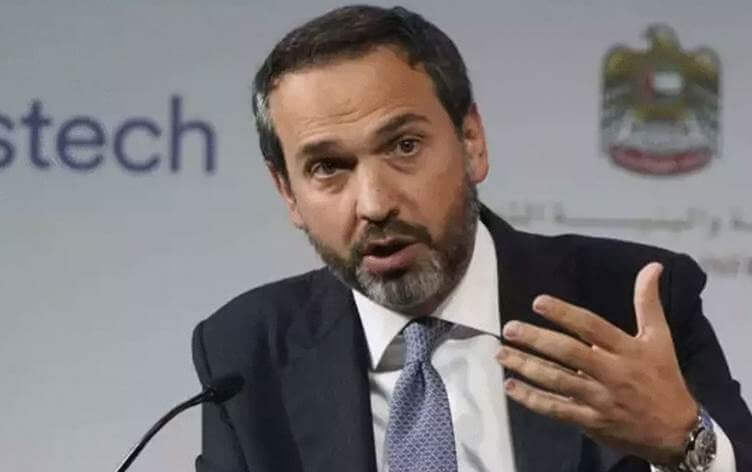

Turkey’s energy minister on Tuesday denied reports that Iran had halted natural gas exports to Turkey following an Israeli strike, saying gas flows continue uninterrupted despite earlier claims of a disruption, the state-run Anadolu news agency reported.
Energy and Natural Resources Minister Alparslan Bayraktar told reporters after a Cabinet meeting that there was “no problem” in natural gas supply and dismissed media reports suggesting a cutoff.
“Gas flow from Iran continues. Our storage facilities are currently 71 percent full,” Bayraktar said.
His remarks came the same day that a Bloomberg report said Iran had suspended gas exports to Turkey following an Israeli strike on the South Pars gas field, the world’s largest natural gas reserve.
According to the Bloomberg report, which cited sources familiar with the matter, the duration of the disruption remained unclear, while Turkey’s Energy Ministry had declined to comment at the time.
Turkey imported about 14 percent of its natural gas from Iran last year, according to data from the Turkish Natural Gas Distributors Association.
The report said Ankara continued to receive gas from Russia and Azerbaijan and had reserves to manage supply during a potential disruption.
The reported suspension followed Israeli strikes on the South Pars field on March 18, part of a broader escalation that has seen exchanges targeting energy infrastructure across the region.
Bayraktar did not directly address the reported strike or its potential impact but said that Turkey’s energy supply remained stable.
The conflicting accounts come amid an expanding regional conflict that began with US and Israeli strikes on Iran on February 28. Since then, NATO air defense systems have intercepted multiple missiles entering Turkish airspace, pointing to the spillover risk for Turkey.
Iran has denied targeting Turkey, saying it respects the country’s sovereignty.
Minister warns of global energy risks
Speaking separately to Anadolu on Wednesday, Bayraktar commented on the possible impact of the US and Israeli strikes on Iran on energy markets, warning of serious consequences if the conflict continues.
“If the war continues for a long time, the world will face serious difficulties,” Bayraktar said, adding that while there is no visible problem on the demand side in oil markets, “there is a serious crisis on the supply side.”
He said Turkey currently faces no problems in energy supply security or procurement.
Bayraktar said the government has absorbed much of the financial impact through subsidy mechanisms, adding that Turkey’s dependence on energy flows through the Strait of Hormuz is around 10 percent and at a manageable level.
The Strait of Hormuz, located between Iran and Oman, is the world’s most important energy chokepoint, carrying about one-fifth of global crude oil shipments.
Iran’s Islamic Revolutionary Guard Corps (IRGC), along with the country’s regular navy, effectively controls the strait and has warned that ships passing through it could be targeted.
Against this backdrop, the collapse of shipping in the strait has driven a surge in global energy prices, with some analysts predicting oil could rise to $150 or even $200 a barrel if the waterway remains closed.
Bayraktar also said the government could review natural gas and electricity prices in April depending on global developments while emphasizing that support for consumers will continue.