

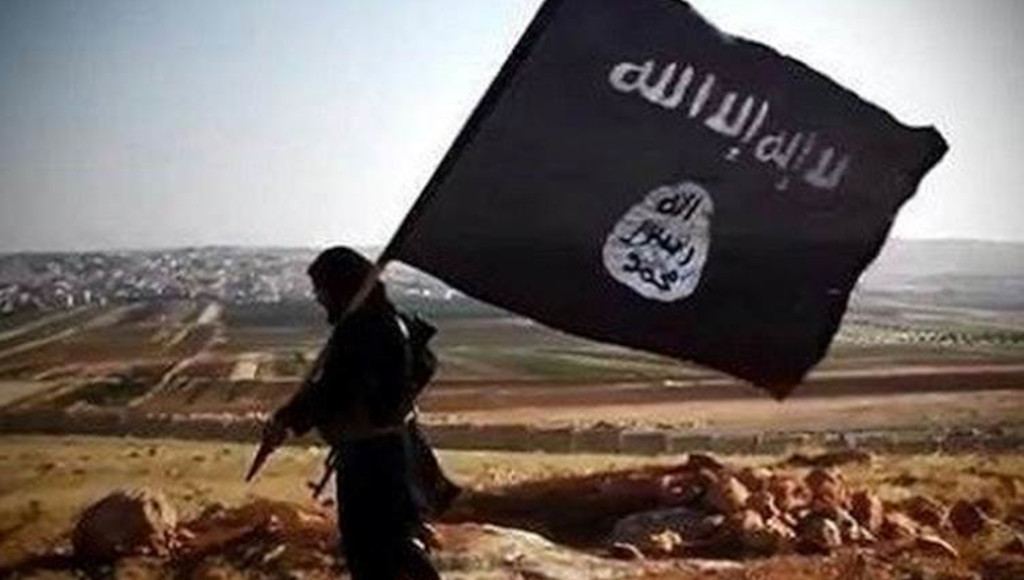
 and other Salafi groups have developed localized community structures in Turkey, supported by both physical networks and online platforms, according to reports by an Ankara-based research group.)
Networks linked to the Islamic State in Iraq and the Levant (ISIL) and other Salafi groups have developed localized community structures in Turkey, supported by both physical networks and online platforms, according to reports by an Ankara-based research group.
Studies by the International Radicalism Observatory (URAD), cited by the Cumhuriyet daily, said that after losing territorial control in Iraq and Syria, ISIL and similar groups shifted toward decentralized, network-based models that allow them to operate through small groups and social networks.
The reports said these structures in Turkey are built around neighborhoods shaped by religious associations, publishing activities and close social ties, forming what researchers described as self-contained “living spaces.”
In some areas of İstanbul, Bursa and Gaziantep, at least five such communities were identified as “Salafi living spaces,” where social and economic life is organized within tightly knit networks.
According to the findings, local businesses and associations play a central role in maintaining these environments. Shop signs often include religious references, and community members are said to monitor social behavior within the neighborhood.
The reports also said some families send their children to unregistered religious education settings, sometimes located in buildings without signs or with covered windows. In addition, charities and bookstores that appear to operate as conventional civil society actors can serve as outward-facing structures, while more hardline elements remain less visible.
Researchers said these communities function not only as physical spaces but also as social ecosystems, where relationships, including friendships and marriages, develop within relatively closed networks.
Digital networks expand reach
The reports highlighted the growing importance of digital platforms in expanding these networks.
Websites were described as functioning like “virtual religious schools,” while platforms such as YouTube are used to broadcast sermons, lessons and question-and-answer sessions to wider audiences.
Social media platforms, including Facebook and X, help connect individuals across different locations, creating what the report described as a “virtual congregation” that reinforces group identity beyond physical boundaries.
URAD also said some imams appointed by the Religious Affairs Directorate (Diyanet), the government body responsible for overseeing Islam in Turkey, may be ideologically close to Salafi interpretations.
Recent incidents highlight ongoing activity
The reports come amid a series of incidents and security operations linked to ISIL activity in Turkey over the past year.
In September 2025, three police officers were killed in an attack on a police station in the western province of İzmir. Later that year, another operation in Yalova resulted in the deaths of three police officers and six militants during clashes.
Turkish police detained hundreds of people over alleged links to ISIL, with dozens later arrested following the Yalova incident.
The neighborhood where the clashes took place in Yalova is also believed to have functioned as an ISIL-linked enclave, according to reports.
In the first quarter of 2026, authorities said they uncovered a weapons workshop linked to ISIL in Sakarya’s Hendek district. A foreign national suspected of involvement with the group was detained in Gaziantep, while four suspects were apprehended in Yalova, one of whom was jailed pending trial and three deported.
URAD’s reports said such developments point to the persistence of decentralized networks and warned of risks including digital radicalization, small autonomous cells and the continued movement of foreign fighters.
The findings suggest that, rather than operating through centralized structures, ISIL-linked networks in Turkey increasingly rely on localized communities and online platforms to sustain their activities.
Turkey shares a 900-kilometer (560-mile) border with Syria and has faced repeated ISIL attacks in the past decade, including a January 1, 2017, nightclub attack in İstanbul that killed 39 people.
While Turkey has officially designated ISIL as a terrorist organization and conducted periodic raids against its cells, intelligence reports and previous court cases have shown that ISIL financial couriers and facilitators have operated from Turkish cities, particularly along the southern border.
Opposition lawmakers have previously accused the government of failing to prevent or properly investigate the presence of ISIL militants in Turkey.