

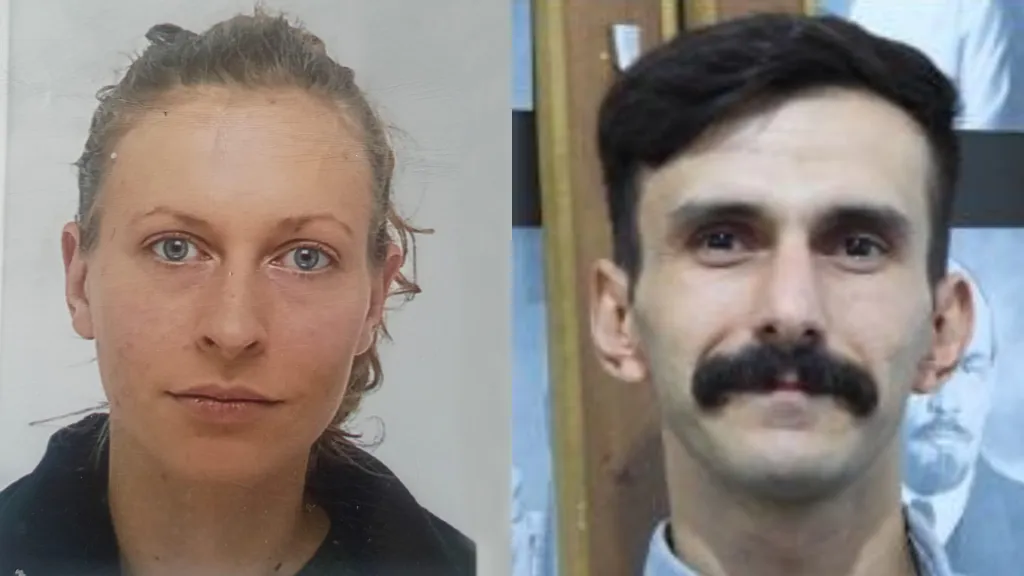

The Committee to Protect Journalists on Wednesday called on Syrian authorities to clarify the fate and whereabouts of a German and a Kurdish journalist who worked for İstanbul-based media outlets and have not been heard from since January 18 in Raqqa, in a case that bears the hallmarks of an enforced disappearance.
CPJ said German journalist Eva Maria Michelmann and Kurdish journalist Ahmed Polad, who worked for the İstanbul-based Etkin News Agency (ETHA) and Özgür TV, were last seen as Syrian government forces took control of the northeastern city during an offensive against the Kurdish-led Syrian Democratic Forces (SDF).
According to ETHA, Michelmann and Polad left a building linked to Kurdish authorities with civilians fleeing the city but were then separated from the group and put in a separate vehicle belonging to Syrian government forces.
Under international human rights law, an enforced disappearance generally involves a deprivation of liberty by state agents, or with state involvement, followed by a refusal to acknowledge the detention or concealment of the person’s fate or whereabouts. CPJ did not explicitly use that legal term in its statement, but the account provided by colleagues and relatives points to that concern.
“The disappearance of Eva Maria Michelmann and Ahmed Polad in Raqqa raises serious concerns about the safety of journalists working in Syria,” Joud Hasan, CPJ’s Levant program coordinator, said in the statement. She called on Syrian authorities to clarify what happened to the journalists, including whether they had been detained, and to guarantee their safety.
Polad, a program producer and reporter for Özgür TV who also contributed to ETHA, had gone to Raqqa to cover the fighting in the city, according to Serpil Arslan, editor-in-chief of Özgür TV. Arslan told CPJ that Polad had tried to go live from Raqqa but instead sent video footage as the clashes intensified. A few hours later, he reported that the building where he was sheltering with civilians had been surrounded before communication was cut off.
Michelmann’s brother, Toni Michelmann, told CPJ he believes she was detained by forces of Syria’s transitional government and said there has been no sign of life from her since. Arzu Demir, a member of ETHA’s editorial board, said Michelmann had been sending reports from Rojava for about four years and that her dispatches were published anonymously for security reasons. Demir also cited a witness account saying the two journalists were separated from others under siege and taken away in another vehicle.
Roland Meister, Michelmann’s lawyer, told CPJ that he and others were in contact with the German government but had received no information about her so far.
When CPJ sought comment, Omar Haj Ahmed, director general of press affairs at the Syrian Ministry of Information, said the ministry had no information about the incident and that no formal request had been submitted. Morhaf al-Hussein, director of the Raqqa Governorate Media Directorate, also told CPJ he was following up on the case.
Syria has remained one of the most dangerous countries in the world for journalists over the course of its conflict, with reporters facing detention, disappearance, bombardment and targeting by multiple state and non-state actors.