

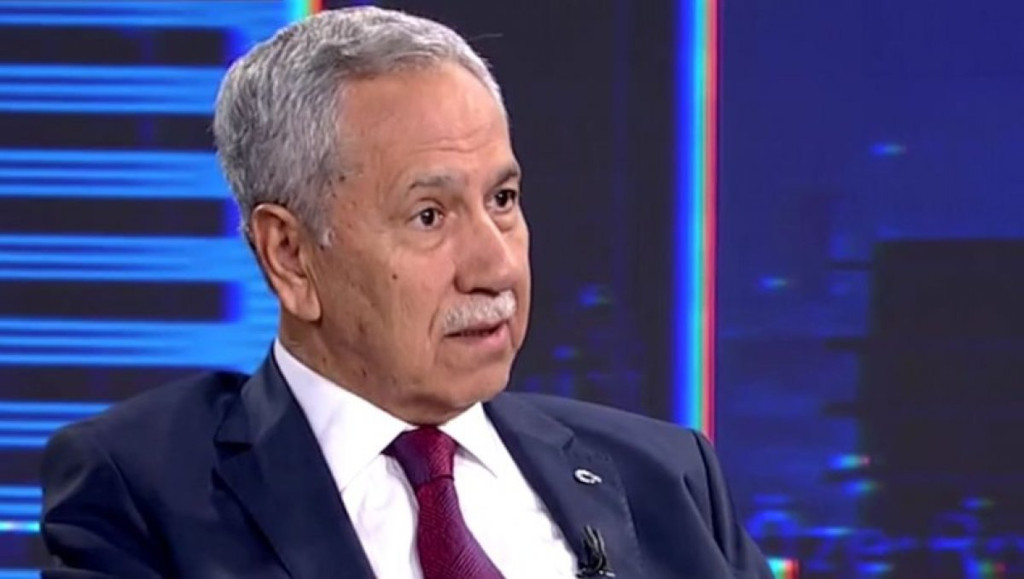

Bülent Arınç, a founder of President Recep Tayyip Erdoğan’s Justice and Development Party (AKP) and a former speaker of the Turkish Parliament, has said the political movement that rose to power promising “virtue” has failed to deliver moral leadership and that Turks are now abandoning Islam and moving away from religious practices such as daily prayers and the headscarf.
Arınç made the remarks at a conference in Ankara on Saturday billed as a discussion of democracy, law and politics featuring independent İstanbul lawmaker Mustafa Yeneroğlu. Clips of Arınç’s comments spread online this week.
“We came as the movement of the virtuous, but now neither virtue nor ethics remains,” Arınç said, using a term associated with the reformist current that helped launch the AKP in 2001. He then described what he said was a retreat from religious life. “People are abandoning Islam. They are taking off the headscarf. They are quitting prayers,” he said.
Arınç framed the issue as a collapse of the AKP’s founding promise to bring cleaner politics and stronger ethics after years of coalition governments and corruption scandals in the 1990s. Arınç did not name the AKP in that sentence, but “the movement of the virtuous” was how the AKP, of which he was a senior figure, advertised itself during its early years, contrasting the movement’s stated goals with what he said Turkey has become.
Arınç said religiosity had become something people were avoiding, and he blamed public religious discourse that, he argued, has lost credibility.
“Many charlatans started speaking, with caps and without,” Arınç said, referring to religious attire. He said people no longer knew whom to believe and argued that lies and wrongdoing by figures who present themselves as religious authorities were pushing people away from worship.
Arınç also tied the change he described to what he called the normalization of self-interest and unethical behavior in politics. He criticized members of parliament and said the legislature reflects the society that elects it, portraying political conduct as both a symptom and a driver of a wider moral decline.
In another line circulated from the same speech, Arınç urged people to not even greet those who, he said, still believe in the view that the judiciary should serve politicians.
Arınç, long associated with Turkey’s political Islamist tradition, held top posts during the AKP’s early years in power, including speaker of parliament and deputy prime minister. In later years, he has at times criticized Turkey’s political climate and legal system while remaining a prominent figure identified with the party’s rise.
Yeneroğlu, who spoke before Arınç at the event, is a former AKP lawmaker who later joined the opposition and now serves as an independent in parliament. He has lately been a vocal critic of rights abuses and legal practices in Turkey.
Arınç’s remarks come at a time when debate over religion’s role in public life remains central to Turkish politics. The AKP built its early appeal on a promise of more democratic governance and economic stability while also expanding space for religiously conservative voters who felt marginalized by Turkey’s secular establishment. Over time, critics of the government have accused the party of using religion to consolidate power, deepen polarization and protect patronage networks.
In his speech Arınç described what he called a loss of virtue and ethics as a turning point that, in his view, is now producing the opposite of what the movement promised: public disillusionment with religious language and a drop in visible religious practice.
He said Turkey should not expect progress without rebuilding ethical standards, portraying the issue as both a political failure and a social one.