

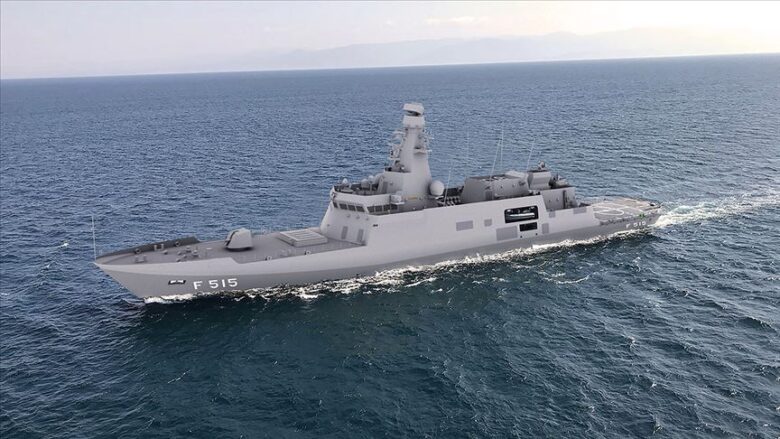

Turkey has sold two recently built naval warships to Indonesia for $1 billion, attracting criticism from opposition figures and retired officers who warn that exporting vessels originally intended for the Turkish Navy could weaken national security, the Sözcü daily reported Wednesday.
The sale involves the warships TCG İzmir and TCG İçel, which were delivered to the Turkish Naval Forces in 2025 as part of Turkey’s MİLGEM national warship program.
The deal follows an earlier transfer of TCG Akhisar, a patrol ship initially built for Turkey’s navy, to Romania for about 245 million euros, raising concerns that vessels planned for domestic force needs are increasingly being redirected to foreign buyers.
The Defense Ministry described the Indonesian sale as proof of “the level of quality and technology reached by Turkey’s defense industry,” presenting it as part of Ankara’s growing defense exports. The ministry did not address criticism over the potential impact on the navy’s long-term modernization plans.
The ships are part of the Istif-class frigate project, under which eight frigates were originally planned. Four have been completed, while work continues on four more.
The sale drew sharp criticism from the main opposition Republican People’s Party (CHP). Deputy chair Yankı Bağcıoğlu, a retired rear admiral, said selling frontline combat ships for economic reasons posed serious national security risks.
“Disposing of main combatants is unacceptable from a national defense perspective,” Bağcıoğlu said. “Vessels planned for the Turkish Naval Forces are not commercial products. They are core elements of national security.”
Aging fleet, delayed renewal
Former naval officer and author Cem Gürdeniz also criticized the decision, arguing that the Istif-class ships were urgently needed to replace Turkey’s aging frigate fleet, particularly eight G-class frigates that are more than 45 years old.
“Sixteen frigates remain in service today, and twelve of them are over 39 years old,” Gürdeniz wrote on X.
He warned that diverting newly built ships to exports could create a significant gap in Turkey’s naval renewal timetable and delay efforts to close what he described as a growing capability shortfall.
While Gürdeniz acknowledged the importance of supporting Turkey’s shipbuilding industry, he said modernizing the navy should remain a priority at a time of intensifying regional and global tensions.
“Our naval power cannot tolerate even stagnation, let alone decline,” he said.
İnşaatları özel sektör tersanelerinde devam eden MİLGEM İstif sınıfı firkateynlerden TCG İzmir ve TCG İçel’in Endonezya’ya satılacağı haberi medyada yer aldı.
İstif sınıfı fırkateyn projesi baştan itibaren Türk Deniz Kuvvetleri’nin yaşlanan fırkateyn gücünü özellikle 50 yaşına…— Cem GÜRDENİZ (@cemgurdeniznet) January 27, 2026
Turkey has expanded defense exports in recent years, marketing domestically produced drones, armored vehicles and naval platforms abroad as part of a wider push to strengthen its defense industry and boost foreign currency revenues.
The warship export comes amid deepening defense cooperation between Turkey and Indonesia. Ankara and Jakarta in July 2025 signed broader agreements that also included the planned sale of 48 KAAN fighter jets, Turkey’s next-generation combat aircraft, under a government-to-government framework, according to defense industry reports.
Critics, however, say the latest warship sales raise questions about whether commercial ambitions are beginning to come at the expense of Turkey’s own strategic needs.