


Ömer Murat*
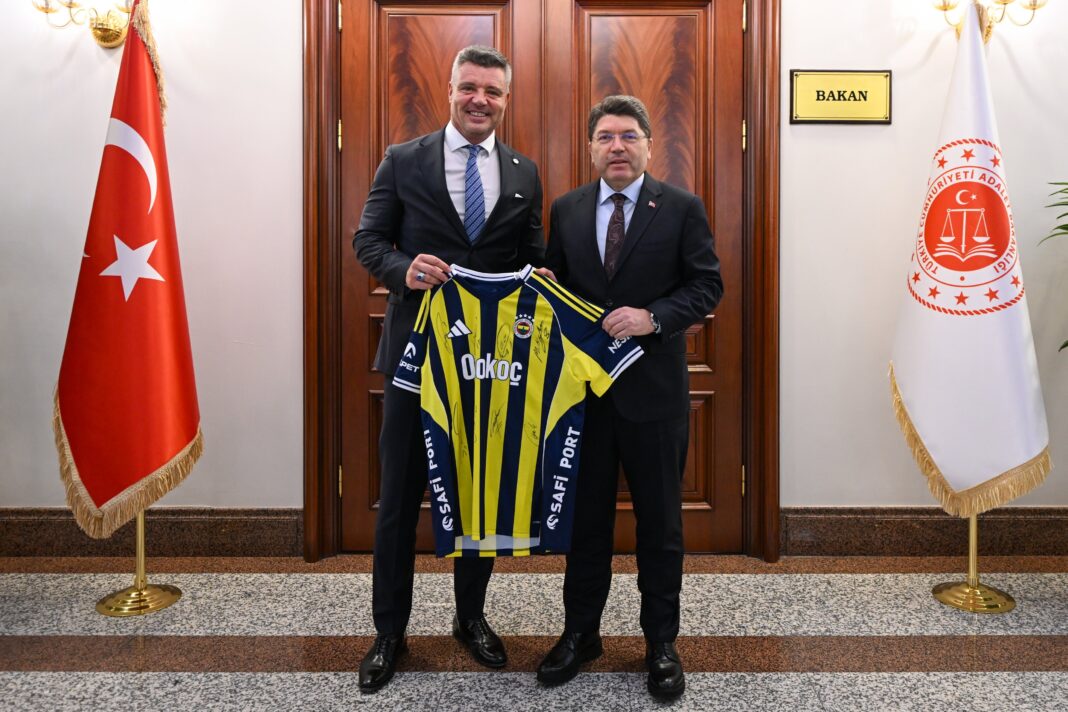
Turkey is experiencing one of the deepest political and economic contractions in recent decades. The crisis extends far beyond inflation and interest rates, shaping foreign policy, domestic politics, institutional trust and the future of the political system itself. In this context the legal campaign targeting Sadettin Saran, president of the Fenerbahçe Sports Club, cannot be understood as an isolated judicial matter.
Saran was summoned for questioning while abroad, returned to Turkey and was detained in late December before being released shortly afterward. He then underwent forensic testing, and four days later was detained again at the club’s headquarters following claims that traces of narcotics had been found in a fingernail sample. The next day he was released under judicial supervision, facing charges including supplying narcotics and facilitating drug use.
In any functioning legal system, such allegations would be examined. However, the timing, the way the case has been presented and the broader political environment strongly suggest that this process is political rather than merely judicial.
As Turkey approaches a post-Recep Tayyip Erdoğan era, the governing system is becoming increasingly fragile. The economy is no longer under effective control, and even the ruling coalition’s supporters widely believe that recovery is unlikely under the current leadership. The contrast with Russia is striking. Despite four years of war and sweeping Western sanctions, recent macroeconomic data suggest Russia’s inflation and interest rates have declined significantly to 6.6 and 16 percent, respectively. Meanwhile, Turkey’s inflation remains above 30 percent, and its policy rate hovers near 40 percent. Even a country engaged in a prolonged war is now outperforming Turkey economically.
Foreign policy offers little relief. Erdoğan had hoped to benefit from Donald Trump returning to office as president of the United States. Yet on critical issues, relations with Washington have failed to produce major breakthroughs due to sanctions imposed after Ankara’s purchase of the Russian S-400 missile defense system, which led to Turkey’s expulsion from the F-35 Joint Strike Fighter program. The Trump administration has made clear that these sanctions will remain in place unless Turkey abandons the S-400 system. Quiet diplomatic probes to Moscow about returning the system appear to have failed. Meanwhile, recent incidents involving Russian unmanned aerial vehicles falling in Turkish territory, including Orlan-10 drones, suggest that Moscow’s hybrid campaign against Europe may be expanding to include Turkey.
In Syria official propaganda promotes a triumphant narrative, but reality is far more complex. The fate of the de facto autonomous entity dominated by the People’s Protection Units (YPG), described as an offshoot of the Kurdistan Workers’ Party (PKK), remains unresolved. Ankara faces a stark choice: recognize the entity in some form or risk military escalation. Both options carry heavy political costs.
At home, the central question haunting all factions within the regime is getting louder: What happens after Erdoğan? The imprisonment of Ekrem İmamoğlu, the mayor of İstanbul and the presidential candidate of the Republican People’s Party (CHP), widely regarded as Erdoğan’s most formidable political challenger, has intensified political stress. Prosecutors are reportedly seeking sentences totaling hundreds of years on dozens of charges. Meanwhile, concerns about regime continuity deepen as Erdoğan’s age and persistent succession questions become more visible. The result is an increasingly coercive governing style.
Fenerbahçe is not merely a sports club. With tens of millions of supporters, it represents one of Turkey’s largest and most influential civil society networks. The individual who leads it therefore carries substantial symbolic and social weight.
Saran emerged from the rivalry between former club chairmen Aziz Yıldırım and Ali Koç, but he lacks their entrenched political alliances. Compared to Yıldırım and Koç, Saran appears more unpredictable and less willing to conform to the government’s preferred symbolic order. In Turkey refusing symbolic alignment often carries political consequences.
This became apparent during preparations for the Gaza rally organized by the Turkey Youth Foundation (TÜGVA) on January 1. TÜGVA is chaired by Bilal Erdoğan, a businessman and the son of President Erdoğan. While the presidents of Galatasaray, Beşiktaş and Trabzonspor attended the rally’s press conference, Fenerbahçe was represented only by a board member. Saran’s absence was conspicuous, and no official explanation was offered. In Turkey’s political culture such symbolic distance is rarely overlooked.
The rally itself was not only about Gaza. Since October 2023 the ruling Justice and Development Party (AKP) has not organized a major Gaza demonstration in Istanbul. Instead, TÜGVA, and the increasingly prominent public role of Bilal Erdoğan, have filled that political space. The messaging surrounding the rally reinforced existing cultural and moral divisions within society. In this carefully choreographed environment, Saran’s independence became politically risky.
The operation appears designed both to force Saran’s resignation and to warn other influential figures. Yet it has not produced its intended effect. Turkey’s institutions now suffer from such deep erosion of public trust that even official forensic reports no longer command automatic authority. A decade ago Saran’s decision to commission an independent test and publicly challenge official findings would have been unthinkable.
Despite the likelihood that he would comply with further legal summonses, Saran was detained again in a highly visible operation at his club’s headquarters. Among Fenerbahçe supporters, the perception quickly took hold that the club itself was the true target. Rather than reinforcing discipline, the operation opened a new arena of political resistance.
On the same day as Saran’s second detention, authorities reopened investigations related to the 2011 match-fixing scandal, known as the July 3 process, targeting four figures associated with Galatasaray and invoking alleged links to the faith-based Gülen movement. The timing of these actions further undermined the credibility of the entire operation, reinforcing the belief that legal mechanisms were being used to manage political sentiment rather than uphold justice.
The Saran affair is thus part of a broader effort to reassert control over media and civil society. However, the familiar instruments of pressure are no longer producing the desired results. The one-man system may appear strong, but its capacity to persuade society is rapidly eroding.
As the leadership hardens its stance, widely interpreted as preparing the groundwork for Bilal Erdoğan’s political rise and suppressing alternative centers of influence, its legitimacy continues to shrink. The contradiction between the expansion of coercive power and the collapse of public consent now defines Turkey’s central political fault line.
* Ömer Murat is a political analyst and a former Turkish diplomat who currently lives in Germany.
Disclaimer: The views expressed in this opinion piece are those of the author and do not necessarily reflect the editorial stance of Turkish Minute.