

 leader Abdullah Öcalan as a necessary interlocutor in ongoing peace talks with the PKK, according to Ahmet Özer, an ousted opposition mayor in İstanbul.)
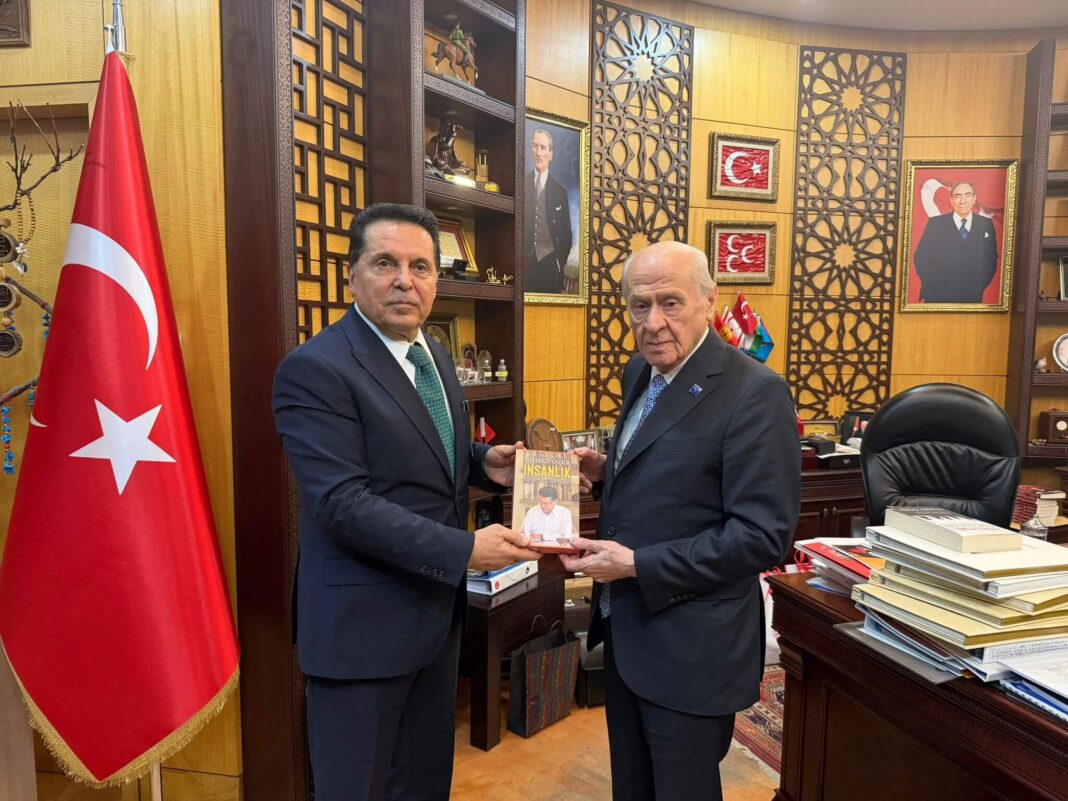
Turkey’s far-right leader, Devlet Bahçeli, a key ally of President Recep Tayyip Erdoğan, sees jailed Kurdistan Workers’ Party (PKK) leader Abdullah Öcalan as a necessary interlocutor in ongoing peace talks with the PKK, according to Ahmet Özer, an ousted opposition mayor in İstanbul.
Özer, who was elected mayor of the Esenyurt district from the main opposition Republican People’s Party (CHP) in the local elections held in March 2024, said Turkey’s peace initiative cannot advance without direct engagement with Öcalan and described Bahçeli as unusually frank and determined in backing that position.
Özer, who was released last month after more than a year in pretrial detention on organized crime and terrorism-related charges, spoke to the T24 news website about his visit to Bahçeli over the weekend. The meeting drew attention given the ongoing crackdown on CHP municipalities and Bahçeli’s increasingly visible role in shaping the peace talks with the PKK.
The talks with the PKK began in October 2024 following a surprise call from Bahçeli, the head of Turkey’s far-right Nationalist Movement Party (MHP), who asked Öcalan to instruct his group to renounce its armed campaign while hinting that the end of PKK violence could lead to Öcalan’s freedom.
“The shortest route between two points is a straight line. Right now, one interlocutor is Öcalan and the other is the state,” Bahçeli told Özer, arguing that attempting to bypass this reality would only waste time and resources.
Öcalan, 76, has led the peace process from his cell on İmralı Island, where he has been held in since 1999.
The remarks reflect Bahçeli’s broader shift over the past year. Once known for calling for the closure of pro-Kurdish parties, the far-right leader has emerged as the strongest political backer of renewed talks with the PKK, following his unexpected October 2024 call for engagement.
MHP Genel Başkanı Sn. Devlet Bahçeli’yi ziyaret ettim ve Sayın Genel Başkanımız Özgür Özel’in selamlarını ilettim.
Einstein “Karşılaştığınız sorunları, o sorunları yarattığınız düşünce düzleminde kalarak çözemezsiniz” der. Yıllar içinde ön yargı, ezberler ve korkularla… pic.twitter.com/HJVZt5pMyx
— Ahmet Özer (@profdrahmetozer) December 13, 2025
Since then, Ankara has held indirect talks with Öcalan, who urged his militants earlier this year to lay down their arms. The PKK announced its dissolution in May and began destroying its weapons in July, later withdrawing its fighters from Turkish territory.
Özer said Bahçeli also voiced support for the swift passage of a “peace law” to establish a legal framework for the next phase of the process, including the political and social reintegration of former militants. A parliamentary commission has been tasked with drafting such legislation, though progress has been slow.
Beyond the PKK talks, Özer said Bahçeli raised issues that put him at odds with key elements of President Erdoğan’s government. In particular, the MHP leader expressed support for ending the practice of appointing government trustees to replace elected mayors in the southeast and in CHP-run municipalities, a system widely criticized by opposition parties and rights groups.
“The trustee regime must end for the peace process to succeed,” Özer said, adding that Bahçeli shared this view and had previously called for both Özer and veteran Kurdish politician Ahmet Türk, a former co-mayor of Mardin in southeastern Turkey from the Peoples’ Equality and Democracy Party (DEM Party), to be reinstated to their elected posts.
Özer was the first CHP mayor arrested and removed from office in a yearlong crackdown that began in October 2024 and has seen 16 CHP mayors jailed and trustees appointed to 13 municipalities, including Esenyurt and Şişli.
His release in November came amid growing domestic and international criticism of the campaign, which CHP leader Özgür Özel has described as politically motivated and aimed at dismantling opposition control of major cities.
During their meeting, Özer said he also pressed Bahçeli on judicial practices undermining trust in the peace process, including prolonged pretrial detention and the non-implementation of rulings by Turkey’s Constitutional Court and the European Court of Human Rights (ECtHR).
In that context Özer said Bahçeli explicitly favored the release of imprisoned Kurdish politician Selahattin Demirtaş, a former co-chair of the pro-Kurdish Peoples’ Democratic Party (HDP) — the predecessor of the DEM Party — whose continued detention since November 2016 has been repeatedly condemned by the ECtHR. Özer quoted Bahçeli as saying that Demirtaş’s freedom would “benefit the country and contribute to peace.”
Bahçeli’s comments are notable because President Erdoğan has long rejected ECtHR rulings on Demirtaş, exposing growing tension within the ruling alliance. Bahçeli’s recent interventions, including his stated willingness to visit Öcalan on İmralı Island if necessary, signal a desire to steer both the peace process and Turkey’s political transition, critics say.
Özer, a political scientist who has written extensively on conflict resolution, said Bahçeli had read his academic work and viewed him as a potential interlocutor in the process. He added that he discussed the meeting in advance with CHP leader Özgür Özel and conveyed Özel’s messages to Bahçeli.
Asked whether he would personally meet with Öcalan if tasked by his party, Özer said he would not rule it out. “Peace requires dialogue and negotiation,” he said. “If my party gives me a role … I would speak to anyone necessary.”
Özer argued that the peace process could not succeed if pursued alongside the continued criminalization of the main opposition. “How can you build peace while criminalizing and ostracizing the country’s leading party?” he said, warning that delays and mixed signals risked “infecting” the process.
Despite the risks Özer said he believed the peace process had passed the point of no return, arguing that Bahçeli’s intervention marked a shift in political thinking and that Öcalan’s call for the laying down of weapons had opened a new phase.