

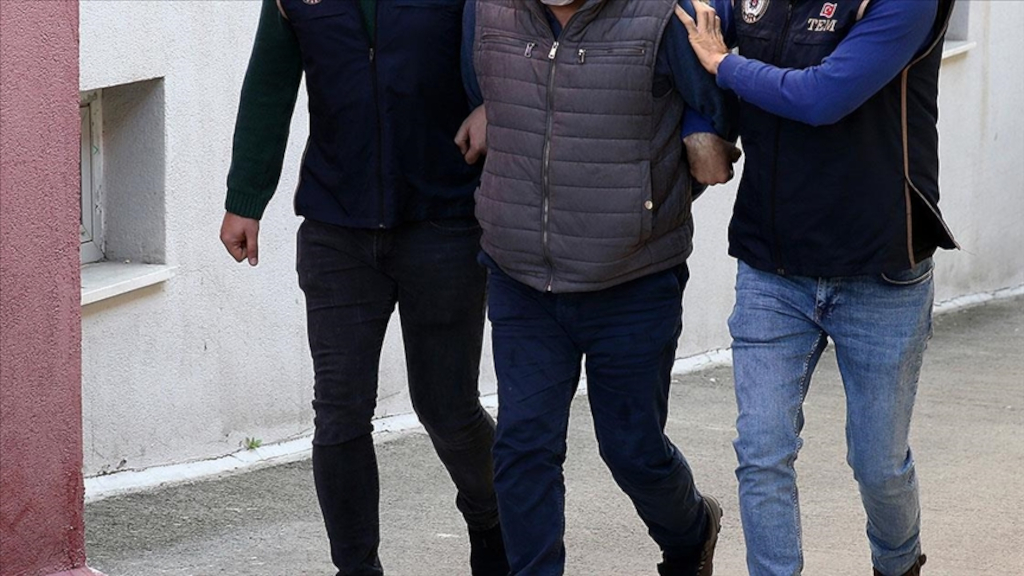

Thirty-two suspects, including four football referees, were arrested on Friday in an investigation into the laundering of proceeds from illegal betting operations, the DHA news agency reported.
Prosecutors ordered the detention of 40 people on November 18 in simultaneous raids across the provinces of Mersin, Bursa, Sakarya, Hatay, İstanbul, Çorum, Batman, Mardin and Şırnak. Among those detained were four referees registered in professional officiating categories.
The 40 suspects were taken to court under heavy security on Friday. Following questioning by prosecutors, a criminal judge ordered the arrest of 32 of them, including all four referees, while eight were released under judicial supervision.
According to a statement from the Mersin Chief Public Prosecutor’s Office, investigators discovered that a logistics company owner and his relatives used cold-storage cryptocurrency wallets to obscure the movement of funds generated from illegal betting.
Prosecutors say the suspects carried out unregistered cross-border money transfers using the informal “hawala” system, sending funds through intermediaries in Iran, Iraq and Dubai as well as a jeweler operating in Mersin. Roughly 3.7 billion lira was ultimately funneled to companies abroad.
The accounts of 801 people who allegedly sent money to illegal betting platforms were also examined.
Prosecutors say the four referees under investigation received a total of 1.3 million lira from suspects previously investigated for illegal betting and money laundering. Financial records show that the referees conducted transactions totaling more than 85.9 million lira between 2020 and 2025.
They now face allegations of misconduct in public office and violating Turkey’s sports violence and disorder law.
The investigation is ongoing.
Turkish authorities have in past months launched multiple investigations into alleged money laundering and suspended or seized the operations of dozens of companies.
According to central bank announcements published in the Official Gazette, at least 10 payment companies, among them the prominent brand Papara, have had their licenses suspended or revoked, some over alleged illegal transactions. The central bank currently lists 61 licensed electronic money institutions.
The operations come amid reports that an evaluation team from the Financial Action Task Force (FATF) is expected to visit Turkey this month, nearly a year after the country was removed from the organization’s “grey list” for progress in tackling money laundering and terror financing.
Five sources told Reuters last week that the visit is aimed at assessing whether Ankara has maintained the commitments that led to its removal from the list. Failure to do so could result in Turkey being put back under increased monitoring, potentially hurting its improving financial reputation.
According to the sources the FATF delegation plans to hold meetings from November 24 to 28 with MASAK, banks, payment service providers and other institutions across the economy. The review could last as long as three weeks.
Turkey was added to the grey list in October 2021, shortly before the country’s currency entered one of its most severe crises, due to what the watchdog said was insufficient oversight of sectors vulnerable to money laundering, including banking and real estate.