

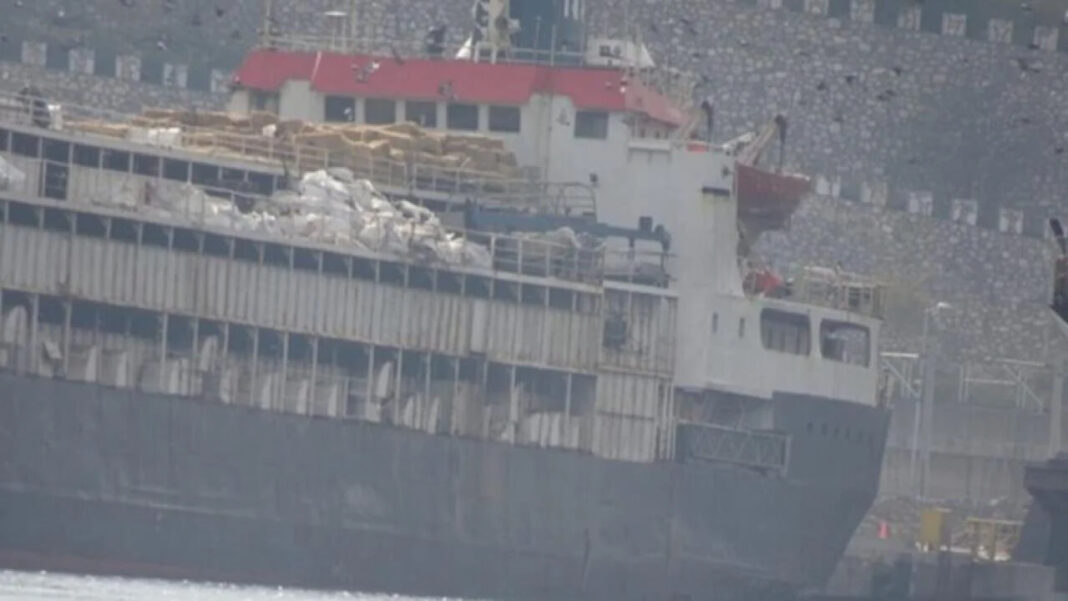

Nearly 3,000 cattle shipped from Uruguay have been stranded for three weeks off Turkey’s northwest coast since authorities blocked their entry over documentation irregularities, officials and animal welfare groups said Wednesday.
The livestock carrier Spiridon II, which left Montevideo more than 50 days ago, was denied entry upon arrival at Bandırma port on the southern shores of the Sea of Marmara on October 21, Turkey’s communications directorate said.
The boat was briefly allowed to dock on Sunday to load feed and bedding before anchoring offshore again, the UK-based Animal Welfare Foundation (AWF) said.
It said the ship’s owner announced that 48 of the animals had died and that food supplies on board were running out.
“Footage shows white bags on the upper deck, likely containing dead bodies,” AWF said.
Residents in Bandırma have complained about the stench and spoken of swarms of flies around the vessel, local Turkish media reported.
The communications directorate said an application was submitted on October 21 to the Bandırma Port Veterinary Border Control Point for the import of 2,901 breeding cattle from Uruguay on behalf of 15 companies.
But when the cattle arrived, veterinary inspectors found some of them lacked ear tags or electronic identity chips, while another 469 did not match the description listed on the paperwork.
“Due to these irregularities, entry of the shipment into the country was not permitted,” it said on X.
The decision was communicated to customs on October 23 and was being challenged by the importers in court, it said.
The ship has remained offshore throughout the process.
AWF urged the authorities to intervene.
“After weeks without a solution, we urgently appeal to have the animals examined by a veterinarian and to put sick or weakened animals out of their misery,” it said.
“The remaining animals must be brought ashore without further delay.”
AWF said the animals were destined for breeders in Turkey and the Middle East, notably Israel.
© Agence France-Presse