

 movement regardless of whether they were women, children, the elderly, the sick, civilians or public servants, someone asked me a striking question:)
Abdülhamit Bilici*
At a meeting where I was speaking about the injustices in Turkey over the past decade, mainly the persecution of people affiliated with the faith-based Gülen or Hizmet (Service) movement regardless of whether they were women, children, the elderly, the sick, civilians or public servants, someone asked me a striking question:
“We understand why President [Recep Tayyip] Erdoğan and the AKP [Justice and Development Party] government became hostile to the Hizmet movement and Fethullah Gülen after 2013. But why do groups that oppose Erdoğan and are ideologically opposed to him also have negative views about Hizmet? How can that be?”
It was not a frequently asked question, yet it pointed to a deep issue that illuminates the past 30 years of both Turkey’s political life and the never-ending debates around the Hizmet movement.
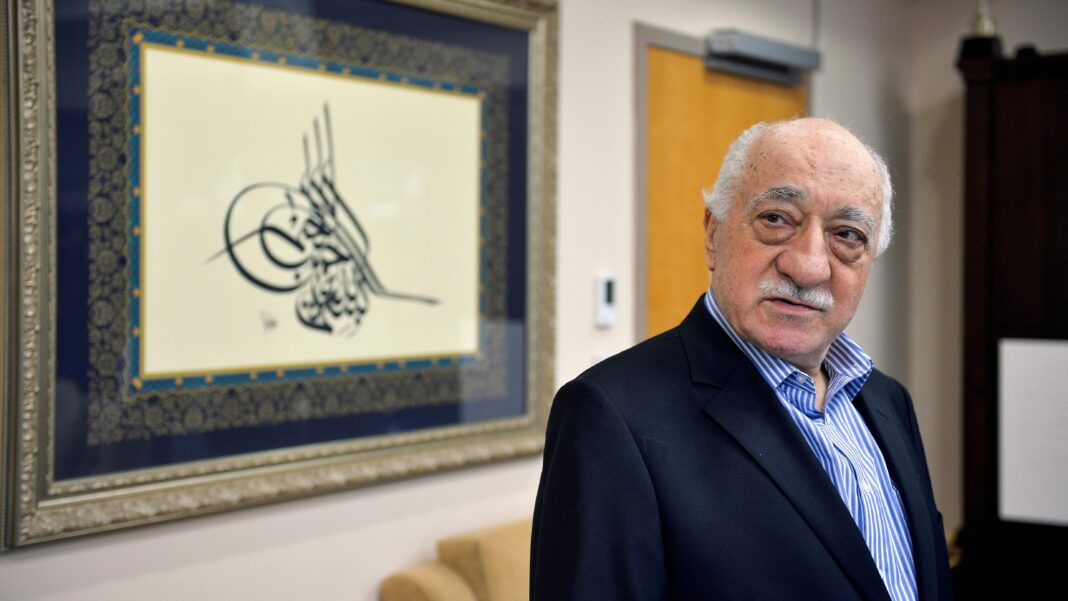
Gülen’s ideas inspired what became known as the Hizmet movement, which built hundreds of schools, universities, media outlets and charities in more than 100 countries. Supporters credit his teaching with shaping a faith-based model of civic engagement that combined Islamic values with modern education, producing graduates active in science, business and the arts.
To answer that question, one must first look at the political chronology.
Before 2013 the AKP pursued democratic reforms with a European Union perspective, reducing military tutelage and strengthening the rule of law. During this period the Hizmet movement shared these goals and strongly supported the efforts to make Turkey a better democracy.
However, in the early years of Erdoğan and his AKP rule, the civil-military bureaucracy within the state and the political parties aligned with it viewed those democratic reforms and the EU process with suspicion, even as a threat to the regime, i.e., the secular establishment. Consequently, Hizmet’s support for democracy and the AKP made it appear “dangerous and subversive” in the eyes of those bureaucratic and political forces.
This tension peaked during the Ergenekon and Balyoz (Sledgehammer) trials in the late 2000s, when powerful military and intelligence figures accused of coup plotting were prosecuted for the first time. Those most disturbed by this process were the guardians of the old order. Hizmet’s perceived role in those trials made the movement, already on their blacklist, a primary target. Journalist Alper Görmüş, in his book “Büyük Medyada Ergenekon Haberciliği” (Ergenekon Journalism in the Mainstream Media), notes that outlets such as Hürriyet and others that functioned as the “state’s newspapers” at the time played a key role in fueling this hostility. It would be good to remember that all democrats in Turkey and the European Union supported those trials, seeing them as a historic opportunity to improve justice and democracy.
There is no doubt that certain mistakes and missteps made during the judicial processes led to some criticism of both the AKP and the Hizmet movement, which had at the time acted in solidarity regarding the trials. Although some of these criticisms of the legal proceedings were justified, most of the reactions were not aimed at improving democracy or supporting these historically significant investigations; rather, they sought to discredit and invalidate the entire process.
Indeed, that is exactly what happened. When Erdoğan and his family’s own large-scale corruption was exposed in late 2013, the AKP allied itself with the very state actors who had once plotted coups against it in the early 2000s, its former enemies within the bureaucracy. Together with these anti-democratic forces, Erdoğan turned against the Hizmet movement. From 2013 onward, he abandoned the democracy and EU agenda, dismantled the rule of law and moved decisively toward a one-man regime.
In short Hizmet became the target of pro-tutelage forces within the state because of its support for democracy and the AKP. After 2013 the situation reversed: Erdoğan broke ties with Hizmet because Gülen until his death in October 2024 refused to bow to him as the self-proclaimed leader of the world’s Muslims, or the “new caliph”; instead the Hizmet movement opposed his corruption and growing authoritarianism. This time, the AKP allied with the very deep-state actors and figures like ultranationalist leader Doğu Perinçek, who had once sought to remove it from power.
Thus, the circle was complete: The movement previously targeted by the AKP’s enemies was now declared the AKP’s own enemy, particularly after a failed coup in July 2016.
The Turkish government labeled the movement a terrorist organization and accused Gülen of orchestrating the failed coup, charges he and the Hizmet movement rejected. After the coup attempt, Turkish authorities shut down schools, charities and media linked to his followers and prosecuted tens of thousands of people over alleged ties by criminalizing their ordinary acts as evidence of terrorist organization membership.
We should also not overlook the Turkish state’s long-standing mastery of demonizing individuals and groups it marks as targets. Without doubt, any person or group subjected to a 24/7 hate and defamation campaign — waged for 10 years with the full might of the state and the media and supported by the Directorate of Religious Affairs and almost all religious orders, would have suffered similarly. The continued persecution of even pregnant women and children shows the depth of this campaign. Seen from abroad, the very survival of the Hizmet movement despite such oppression can itself be considered an achievement.
Can persecution be explained merely by othering?
Still, the fact that even opposing political poles unite in hostility toward the movement cannot be explained only by political tides or state-led campaigns of othering. There must also be sociological and ideological roots to this phenomenon.
I better understood this while recently attending an international conference.
At the conference, titled “The Thought and Practice of Fethullah Gülen,” organized by Drew University, the Peace Islands Institute and the Respect Graduate School on October 3–5, scholars examined Gülen’s ideas and the Hizmet movement from various angles. Among the presentations, one paper by Pakistan-born scholar Dr. Inamul Haq — “Fethullah Gülen: A Dervish, a Reformer, and a Humanist” — opened a new window in my mind.
Dr. Haq explained that the Islamic world has responded to its decline vis-à-vis the West in three main ways: 1-Traditionalists or Conservatives, who see decline as a temporary fate and resist change; 2- Secular-Westernizers, who believe salvation lies in imitating the West; 3- Islamists, who try to reinterpret modernity within Islam but become increasingly politicized.
For centuries, these three currents have shaped the direction of Muslim societies. Yet, according to Haq, Gülen fit into none of these categories. He belonged neither to the stagnant world of the traditionalists, nor to the secular modernization of the Westernizers, nor to the power and state centered ideology of the Islamists.
Gülen belonged to no ‘neighborhood’
Gülen’s approach aimed to blend Islam’s spiritual essence with the scientific, educational and ethical values of the modern world. He emphasized moral transformation of the individual and society rather than seizing political power. He sought to unite science with spirituality, education with ethics. For him, both defying and submitting to politics meant corruption — the true goal was inner purification of the self.
Perhaps this very stance pushed Gülen and the Hizmet movement outside Turkey’s entrenched ideological “neighborhoods.” In Turkey ideas are often judged by affiliation: Where you stand matters more than what you think. Gülen, however, belonged to none of the established camps. Secularists found him too religious; Islamists thought he was insufficient in being militant and revolutionary; traditionalists saw him as overly modernist. As a result, Gülen became a figure no one fully claimed as “one of us,” and the movement became an easy target for all.
This, I realized, was one of the conclusions I drew from Dr. Haq’s paper: Gülen’s being outside all three established categories was the source of both his intellectual originality and his social isolation.
Lacking protection under any ideological umbrella, Gülen and the Hizmet movement became vulnerable to attacks from all sides.
This conclusion indirectly aligns with another study by Dr. Anwar Alam. In his March 2024 article, “Disliked by Opposite Extremes: Understanding the Common Hostility of Secularists and Islamists in Turkey toward the Hizmet Movement.” Dr. Alam says that secularists viewed Hizmet as “an infiltration of Islamist influence into the civic sphere,” while Islamists saw it as “an uncontrolled rival power.”
Hizmet’s influence in education, media and civil society threatened both groups’ spheres of power and their vested interests. Thus, despite differing reasons, both poles found it easy to converge in opposition.
Surely, the Hizmet movement must also reflect internally on this question. Especially, when the ongoing, brutal persecution in Turkey eventually ends, honest self-examination about what the group or its affiliated individuals may have done to contribute to this outcome will yield valuable lessons.
Still, one fact is clear: The Hizmet movement, or “the Community” with a capital C, was among the few initiatives in Turkey that could bring together antagonistic segments of society — through the Abant Platform, a prominent Turkish forum for intellectual dialogue and consensus-building launched in the late 1990s by the Gülen-affiliated Journalists and Writers Foundation, and similar forums — and that reached out across divides of belief, ethnicity, ideology and sect. It opened its doors to the marginalized, invited them to iftar dinners and tried to heal wounds. Gülen’s 1998 visit to the Vatican to meet Pope John Paul II and his warm relations with the religious leaders of Orthodox Christians, Armenians and Jews were also the result of the same perspective.
Outside Turkey, this reconciliatory spirit remains vibrant. In America, Europe, and Asia, many people who gather in Hizmet-affiliated cultural centers often say, “This is the only place where we can come together.”
That was also the main theme of my presentation at the conference. In war-torn Kirkuk, northern Iraq, amid chaos and sectarian violence, children of Arabs, Turkmens, Kurds, Sunnis, Shiites and other groups continue to study peacefully together in a Hizmet school despite constant danger. While their fathers may be fighting, these children share dorm rooms as classmates and friends.
Who knows, when the atmosphere of hostility, fueled by a systematic campaign of black propaganda, eventually fades, perhaps Turkey’s ideologically divided “neighborhoods” will realize how much they need the spirit of reconciliation represented by the Hizmet movement. They may come to see that their merciless hostility harmed not only Hizmet but also Turkey and themselves.
For ultimately, this enmity toward Gülen and the Hizmet movement did not merely target a religious community, it wounded Turkey’s own conscience and deprived the country, both domestically and abroad, of one of its greatest sources of soft power.
*Abdülhamit Bilici is the former editor-in-chief of the now-defunct Zaman daily who currently lives in exile in Washington, D.C.
Disclaimer: The views expressed in this opinion piece are those of the author and do not necessarily reflect the editorial stance of Turkish Minute.