


Dr. Mustafa Dönmez*
In the 1990s Turkey was rocked by frequent terrorist attacks and an aggressive security climate. Reports of torture, ill-treatment, bribery and human rights violations committed by police officers eroded public trust and served as propaganda material for armed groups. The European Union’s 1998 progress report on Turkey harshly criticized the police, citing widespread abuse in detention and weak civilian oversight that shielded perpetrators from accountability.
Against this backdrop a small team of officers in the counterterrorism branch in İstanbul decided that repeating the same methods would only yield the same failures. They began experimenting with a radically different approach they called Human-Centered Policing.
At its core, the model emphasized respect, courtesy and empathy. Suspects were treated with dignity, offered tea or meals and encouraged to speak openly. Families of detainees were also engaged, helping to build trust. Officers were instructed not to see suspects as enemies of the state but as individuals who might be reintegrated into society. In short the goal was not to force confessions but to win hearts.
The results came quickly. Senior militants, surprised by humane treatment, began to cooperate voluntarily. Others left armed organizations altogether, returning to civilian life. Though some colleagues initially mocked the approach, saying, “Will we offer tea to the enemy of the state?” its success soon convinced skeptics. The model spread from İstanbul to other provinces with the support of the national police directorate.
The initiative also attracted international attention. Former militants spoke at training seminars; Turkish experts shared the approach with colleagues in Azerbaijan, Uzbekistan, Kazakhstan, Afghanistan, Kosovo, Yemen and Libya. Even police officers from EU member states observed the experiment with admiration. Turkey, once notorious for abuse, briefly became an exporter of a human-centered security strategy.
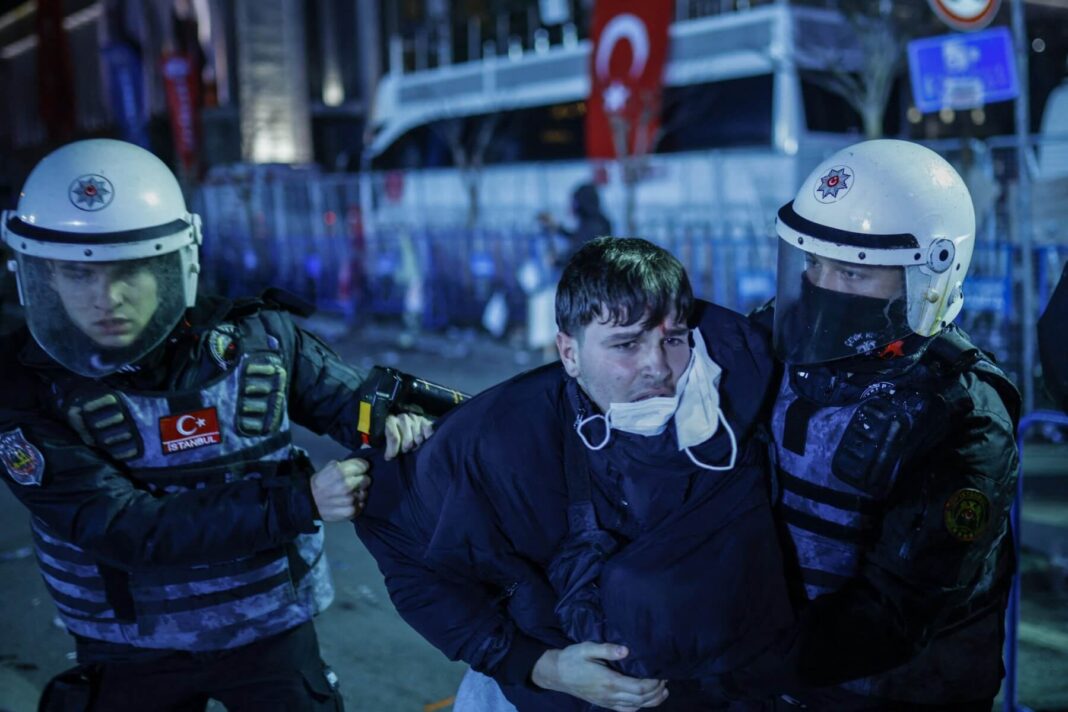
The EU’s 2014 progress report acknowledged improvements in Turkey’s police, noting gains in human rights compliance, witness protection and counterterrorism legislation. Yet the reforms proved fragile. Following the corruption investigations that became public in late 2013 in which then-prime minister Recep Tayyip Erdoğan’s close circle was implicated, Erdoğan described the investigations as a “coup attempt” against his government, leading to the dismissal, imprisonment or exile of many police officers who had pioneered the model. The police returned to harsh practices, and reports of torture and ill-treatment once again became widespread. A 2024 EU report described ineffective civilian control, impunity for abusive officers and excessive force during anti-government protests.
The end of the model was a great loss for Turkey because this model was not only an effective tool for combating crime but also a strong tool in the construction of social peace. However, despite its short life, the legacy it left behind is very valuable. Human-Centered Policing reminded that the real duty of the state is to punish its citizens but to win them. And security can also be achieved by winning people’s hearts.
Although forgotten today, this model is a guiding experience for the security policies of the future. If police organizations adopt a respectful, empathetic and human-oriented approach, their bond with society will be strengthened, and both security and freedoms will be built on stronger foundations.
In conclusion Human-Centered Policing, although a light of hope of a period, should be remembered as a guiding legacy for the future. It is now etched in memory that the greatest power of the state is its ability to win its own people.
*Dr. Mustafa Dönmez, a retired police chief, graduated from the Turkish Police Academy in 1996. He served in a range of units during a 20-year career before retiring from the National Police in 2016 with the rank of chief. He briefly worked with the United Nations in 2006–2007 and later earned a master’s degree from the University of Cincinnati and a Ph.D. from the University of Central Florida. He is the author of several books, including Red and White Love I: A Passion for Liverpool FC, Beyoğlu Patrol and The Alternative Lives of Cristiano Ronaldo. He lives in Switzerland.
Disclaimer: The views expressed in this opinion piece are those of the author and do not necessarily reflect the editorial stance of Turkish Minute.