


Yasemin Aydın*
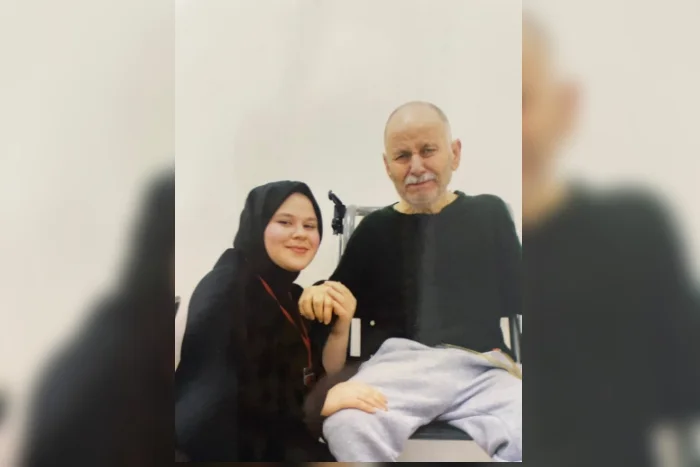
When a 73-year-old man with Alzheimer’s no longer recognizes his own daughter across the glass partition of a prison visitation room, what remains of justice? When such a man — frail, disoriented, bearing the scars of brain surgery, fighting diabetes and prostate illness — is declared “fit for prison” until he dies, what remains of humanity?
Mr. Güngör’s death inside Turkey’s prison system is not simply a legal failure or an unfortunate lapse in medical judgment. It is a cultural performance of cruelty, a deliberate spectacle by an authoritarian regime that uses the suffering of the vulnerable to communicate power.
Cruelty as social performance
Social anthropology teaches us that regimes craft rituals of dominance not only through trials and executions but also through ritualized neglect. In Turkey today denying medical release to the elderly and seriously ill has become such a ritual. It signals to society that mercy is weakness, that even memory itself — as in Alzheimer’s — offers no escape from punishment.
The message is clear: Loyalty is demanded until the very last breath, and dissent will be pursued even into dementia.
The psychology of indifference
Social psychology offers a different lens: the banality of indifference. When institutions like the Council of Forensic Medicine declare the obviously unfit “suitable for prison,” we see the machinery of diffusion of responsibility. Each official absolves themselves by pointing to the next signature, the next procedure, until cruelty becomes routinized and invisible.
This psychological mechanism — the bureaucratization of suffering — ensures that no one feels personally responsible, even as a human being dies in state custody. It is the same mechanism Hannah Arendt described decades ago: the ordinary functionary perpetuating extraordinary evil by doing nothing more than his “job.”
Universal norms, violated with impunity
The Mandela Rules state that prisoners whose health is incompatible with incarceration must be released. The UN Convention Against Torture prohibits inhuman treatment. The European Convention on Human Rights enshrines the prohibition of torture without exception.
Yet what use are these universal norms if a man who no longer knows where he is can be kept in a cell until death? If treaties and conventions are not enforced, they risk becoming mere incantations — moral words stripped of power.
Memory against forgetting
Anthropologists remind us that societies are measured not only by how they treat their strongest, but how they treat their weakest. The elderly and sick embody our collective memory and vulnerability. To discard them is to discard part of our own humanity.
Mr. Güngör’s death should not fade into the statistics of repression. It must remain in memory — as testimony, as warning, as moral indictment. Silence here is not neutrality; it is complicity.
A call beyond condemnation
Justice for Mr. Güngör requires more than words of sympathy. It demands structural accountability, the immediate release of sick and elderly prisoners in Turkey, international monitoring of prison conditions by independent medical experts and public acknowledgment that denial of medical care to political prisoners is not negligence but torture through omission.
Mr. Güngör’s death is not an individual tragedy; it is a mirror. It reflects what happens when cruelty becomes normalized, when institutions collude in indifference, when dignity is no longer seen as universal but as conditional.
And it asks us: What kind of world are we building if we allow the most vulnerable — the elderly, the sick, the forgetful — to be weaponized as instruments of fear?
The answer to that question will shape not only Turkey’s future but the moral credibility of the international community itself.
*Yasemin Aydın is a social anthropologist and social psychologist in Germany.
Disclaimer: The views expressed in this opinion piece are those of the author and do not necessarily reflect the editorial stance of Turkish Minute.