

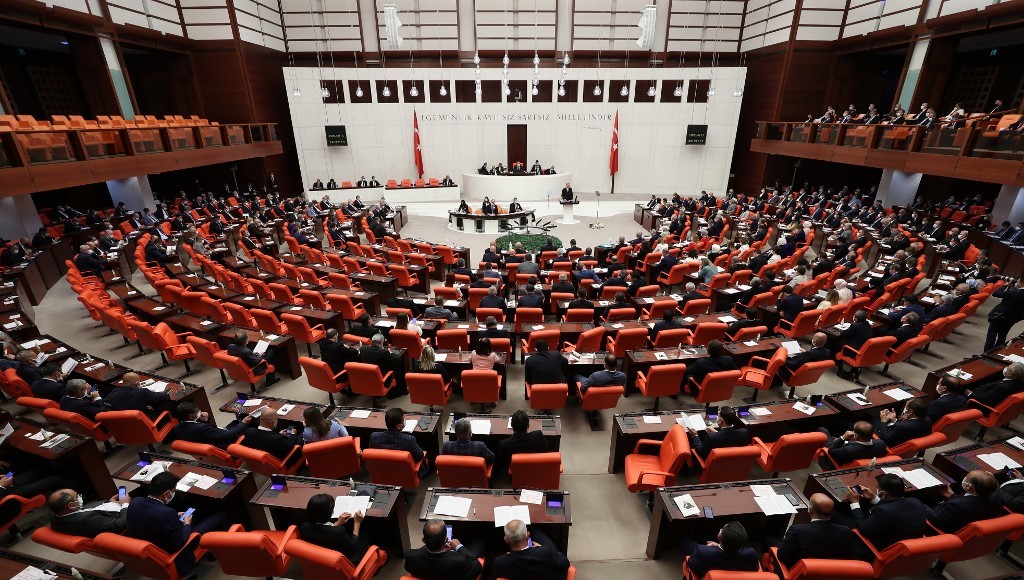
 has submitted a narrower version of its long-debated 12th judicial package to parliament, leaving out several controversial measures that had sparked public criticism, including restrictions targeting LGBT people and a proposed identity verification requirement for social media users, the Anka news agency reported.)
Turkey’s ruling Justice and Development Party (AKP) has submitted a narrower version of its long-debated 12th judicial package to parliament, leaving out several controversial measures that had sparked public criticism, including restrictions targeting LGBT people and a proposed identity verification requirement for social media users, the Anka news agency reported.
The bill, presented to parliament by AKP parliamentary group deputy chairman Muhammet Emin Akbaşoğlu on Monday, contains 29 articles, down from a 59-article draft prepared by the Justice Ministry.
The package includes changes to civil, criminal and administrative judicial procedures that the government says are intended to make the justice system more efficient.
It also includes new provisions replacing some rules previously struck down by the Constitutional Court.
However, several of the most disputed proposals were not included in the bill submitted to parliament.
One of the omitted measures concerned gender reassignment procedures. A draft version of the package had reportedly included provisions raising the minimum age for gender reassignment surgery from 18 to 25 and barring people who have children from legally changing their gender.
Rights groups and opposition figures had criticized the planned measures as part of a larger campaign targeting LGBT people in Turkey.
The omission comes shortly after access to several LGBT organizations’ accounts on X was blocked in Turkey, prompting criticism from rights groups.
President Recep Tayyip Erdoğan, whose ruling Justice and Development Party (AKP) has Islamic roots, has repeatedly denounced LGBT individuals as “perverts,” accusing them of threatening family values and contributing to Turkey’s declining birthrate.
Also left out was a proposed change to the social media system that would have required platforms such as X, Instagram, YouTube and TikTok to introduce identity verification mechanisms.
The proposal, first outlined by Justice Minister Akın Gürlek in April, would have required users opening accounts on major platforms to verify their identity through Turkey’s e-Government portal.
Officials presented the measure as a way to combat fake accounts, protect children and hold users accountable for their posts, while opposition lawmakers and digital rights advocates warned it would end anonymous internet use in Turkey and allow the authorities to link social media profiles to individuals.
Another omitted proposal would have introduced penalties for people who allow others to use their bank account number, or IBAN, for funds transfers. The practice is used in online fraud, illegal betting and money laundering, according to Turkish officials.
The package also left out proposed limits on alimony payments after divorce, a long-running demand of conservative groups that has been criticized by women’s rights advocates as a threat to divorced women’s economic security.
Other measures excluded from the bill include harsher penalties for children pushed into crime and changes to sentence enforcement.
Akbaşoğlu said work was continuing on several issues and that they could be brought before parliament in future judicial packages.
“There are many topics on which our lawmakers continue to work with relevant institutions and ministries,” Akbaşoğlu said. “These topics will be brought before parliament in future judicial packages.”
The AKP’s decision to split the package into separate bills appears to delay, rather than drop, the most controversial measures.
Akbaşoğlu said the government would return to parliament with additional proposals in the coming months.