

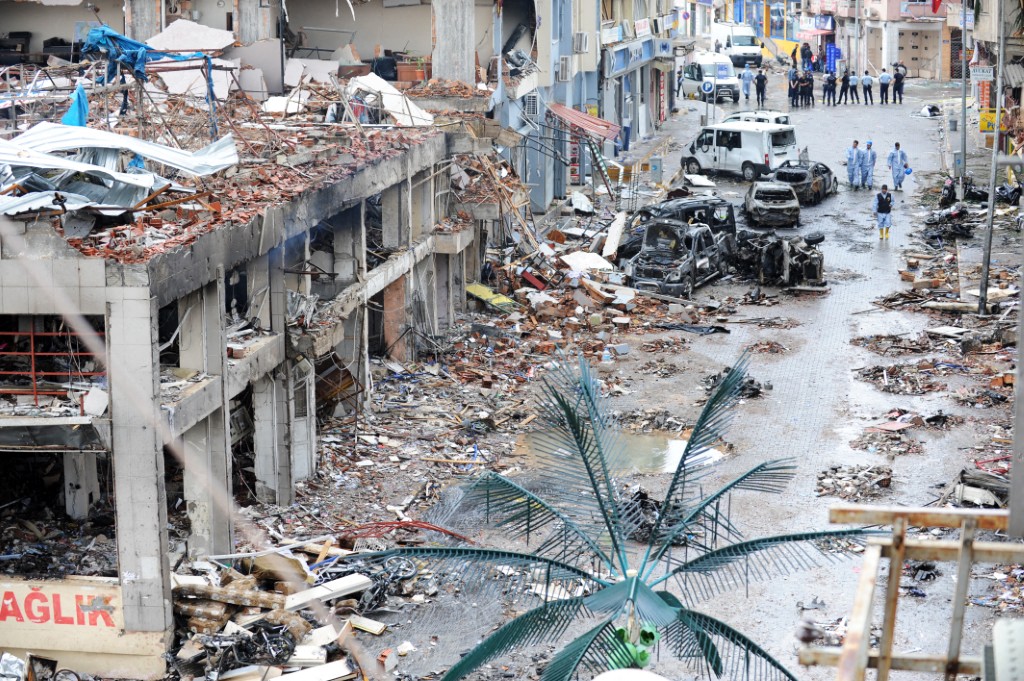

A Turkish court on Friday sentenced three men to 53 aggravated life and 3,921 years in prison each on various charges over the 2013 twin car bombings in Reyhanlı, a town near Turkey’s border with Syria, that killed 53 people and wounded more than 100 others.
The Ankara 9th High Criminal Court convicted Memet Gezer, Temir Dükancı and Cengiz Sertel of charges including attempting to destroy the unity and territorial integrity of the state, intentional murder, attempted murder, illegal possession of explosives, injury and damage to public and private property, the state-run Anadolu news agency reported.
The attack took place on May 11, 2013, when two car bombs exploded near the Reyhanlı municipal building and a post office in Hatay province, which borders Syria. The blasts came as Turkey was hosting large numbers of Syrians fleeing the civil war and as Ankara was backing opposition forces seeking to oust Syria’s then-president Bashar al-Assad.
The case has long been tied to allegations that the attack was organized with the support of Syrian intelligence. Turkey accused a group loyal to Assad of carrying out the bombings. Damascus denied any involvement.
The court sentenced the three defendants to one aggravated life term for attempting to destroy the unity and territorial integrity of the state and 52 more aggravated life terms for murder, including the killing of five children, Anadolu said.
The court also handed down 2,600 years in prison for the attempted murder of 130 people, including 28 children.
Gezer, Dükancı and Sertel denied involvement in the attack when given the chance to make their final statements, Anadolu said. The court ordered that they remain in pretrial detention pending appeal.
The same trial involved six defendants, but the court separated the file of Mohammad Dib Korali, a jailed defendant whose newly appointed lawyer requested more time to prepare a defense. The court also separated the files of Omar Alkhatıp and Mihraç Ural, who remain at large.
Ural has been identified in Turkish proceedings and state media as the leader of THKP-C/Acilciler, a left-wing militant group that Turkish authorities had accused of links to Syrian intelligence under Assad’s rule, which came to an end in December 2024 with a rebel takeover.
Friday’s ruling came 13 years after the attack and followed a series of convictions in related proceedings.
In February 2018 the Ankara court sentenced nine defendants in the main Reyhanlı case to 53 aggravated life sentences and 4,032 years in prison each. The court also sentenced 13 others to prison and acquitted three defendants.
Yusuf Nazik, described by Turkish authorities as one of the planners of the attack, was captured by Turkey’s National Intelligence Organization (MİT) in Syria’s Latakia province in 2018 and brought to Turkey. He was sentenced in 2019 to 53 aggravated life terms.
Gezer, whom Turkish authorities accused of giving the order for the attack, was brought to Turkey from the United States in 2022 after being held there on drug-related charges. Sertel, who was accused of transferring the explosives used in the attack from Syria into Turkey, was captured in December 2024 in an operation involving MIT and police. Korali was captured in Syria in January 2025. Dükancı was captured in Syria in February 2025 while allegedly preparing to flee to Lebanon.
The prosecution said during the trial that Gezer, Sertel, Korali and Dükancı were involved in planning the attack on behalf of Syrian intelligence, provided logistics before and after the bombings, secured explosives and helped finance the attack.
The Reyhanlı bombings also drew attention because of questions about whether Turkish authorities had received warnings before the attack. Rights groups and lawyers for victims’ families have criticized the investigation over claims that some leads were not pursued.