


Bünyamin Tekin
Turkish President Recep Tayyip Erdoğan’s years of public support for Venezuelan President Nicolás Maduro have put him in an “awkward position” following the US operation that captured Maduro, but the fallout is unlikely to threaten Erdoğan’s hold on power, Dr. İmdat Öner, a former Turkish diplomat and expert on Venezuelan politics, told Turkish Minute.
Trump said US forces captured Maduro in Caracas on January 3 and transported him to the United States, a move that drew condemnation from some governments, with legal experts saying the capture violated international law.
Maduro later pleaded not guilty in Manhattan federal court and said he had been “kidnapped,” while Venezuela’s vice president, Delcy Rodríguez, was sworn in as interim president.
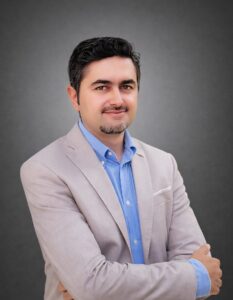
“It puts Erdoğan in an awkward position, but not an existentially dangerous one,” Öner said, arguing that Ankara has been lowering its profile on Venezuela and is now focused on damage control.
In Turkey the episode has turned into a domestic political fight over Erdoğan’s ties with both Maduro and Trump.
Erdoğan this week denied reports that Maduro had been offered exile in Turkey before the US operation after Republican Senator Lindsey Graham said such an option had been discussed.
Öner said Turkey had been mentioned as a potential refuge for Maduro “for some time” and that he had heard rumors about Erdoğan trying to play a mediating role between Venezuela and the United States.
From Washington’s perspective, Öner said, Turkey could have looked viable because Maduro has a personal affinity for Turkey and Erdoğan and “feels comfortable there.”
Öner stated that Maduro’s options were limited in part because of an ongoing International Criminal Court investigation into alleged crimes against humanity in Venezuela.
He said Turkey’s refusal to join the Rome Statute, the treaty that created the court, made Turkey more attractive from Maduro’s point of view because Ankara does not recognize the court’s jurisdiction.
According to Öner, Turkey’s diplomats had reason to expect escalation even before the raid.
Ankara was closely watching rising tensions while Turkish Airlines was still flying to Caracas.
The US Federal Aviation Administration warned carriers in November about a potentially hazardous situation when flying over Venezuela and later repeated its warning.
Turkish Airlines suspended flights around that time along with other carriers, and Venezuela later revoked operating rights for several airlines that had halted service after the US warning.
“Anyone closely following the region and the country had been expecting some form of military operation,” Öner said, adding that it was likely Turkey’s embassy warned Ankara about the risk of escalation and possible operations.
After Maduro’s capture, the Turkish Foreign Ministry issued a measured statement calling for restraint and stressing international law.
Öner said the Foreign Ministry language was “fairly standard” but that Erdoğan’s silence mattered more.
“He avoided escalating the situation and kept his options open,” Öner said.
Öner said Ankara’s priority is preserving a workable relationship with Trump and adjusting to whatever framework the Trump administration puts in place because “Venezuela isn’t an issue Ankara wants to pick a fight with Washington over.”
Turkey’s opposition has slammed Erdoğan for what they deem hypocrisy motivated by fear.
Main opposition Republican People’s Party (CHP) leader Özgür Özel has accused Erdoğan of staying silent because he fears Trump.
Öner said Erdoğan is pragmatic and “doesn’t stick with a losing side,” arguing that Erdoğan began distancing himself from Maduro after 2024 when Maduro “clearly lost political legitimacy.”
That shift, Öner said, also fuels criticism at home because Erdoğan was among the first leaders to back Maduro during Venezuela’s 2019 political crisis.
Beyond politics, Öner said the most sensitive questions for Ankara involve what happened in the shadows when US sanctions pressure on Maduro’s government peaked.
He said the lack of transparency makes Turkey-Venezuela ties hard to assess because official trade numbers “don’t tell the full story.”
Öner pointed to private jet traffic between the two countries from 2018 through 2021 as an area that “clearly deserves closer scrutiny,” saying official figures looked low while travel links appeared unusually active.
On potential legal exposure, Öner said most Turkey-Venezuela transactions were likely already on the radar of US authorities.
He said Turkey became more careful after the Halkbank case, a long-running US prosecution of Turkey’s state-owned lender over an alleged Iran sanctions evasion scheme.
Öner said Turkey officially halted the Venezuela gold trade after US pushback but warned that any continuation through unofficial channels could create serious problems for Turkey.
According to the former diplomat, Washington’s latest moves to enforce sanctions on Venezuela also raise risks for Turkey-linked private actors.
When asked about the recent US seizure of a Russia-flagged oil tanker with links to Venezuela, Öner interpreted it as a warning to shipping companies, brokers and middlemen who may be operating in gray zones.
Öner said he does not see the Turkish state getting directly involved but noted that individuals and companies with links to Turkey could still be exposed, especially if working with Chinese, Russian or Iranian partners.
Asked about claims that cocaine routes from Venezuela to Turkey became a major pipeline, including allegations leveled by fugitive Turkish mob boss Sedat Peker, Öner underlined that Turkey has been identified by European and US authorities as a transit country for cocaine while noting that research conducted at the Brussels-based think tank InstituDE found that the cocaine reaching Turkey was more commonly sourced from Colombia and Ecuador, not Venezuela.
From that perspective, Öner said, the Venezuela route claims appear to have gone no further than planning, with no solid evidence that the route was operationalized at scale.
When asked about the divergence of rhetoric between Erdoğan and his key ally, Nationalist Movement Party (MHP) leader Devlet Bahçeli, Öner said Bahçeli’s harsh rhetoric against the US fits a familiar pattern.
He said Bahçeli often uses tougher language while Erdoğan stays quiet to avoid a direct confrontation, describing it as a “good cop bad cop” setup.
Öner said that approach lets Erdoğan maintain room to maneuver with Trump while allies voice anger to satisfy domestic audiences.
“Erdoğan does not want to antagonize Trump. He has no incentive to risk a working relationship with Trump for someone like Maduro, who has already lost power and no longer offers Erdoğan any strategic benefit,” Öner concluded.