


Bünyamin Tekin
Recent German and Austrian court decisions that cite country background on Turkey compiled by Austrian authorities have triggered new warnings about the surveillance of critics of the Turkish government by Ankara-linked institutions in Europe.
Turkey has been pursuing people for their civil society activities since a failed coup in 2016, which President Recep Tayyip Erdoğan has used as a pretext to crack down on dissent.
The campaign inside Turkey resulted in the arrest of tens of thousands, and many fled in fear of prosecution. But Ankara continued to monitor them abroad, especially in Europe — and in Germany and Austria in particular — where a large Turkish diaspora has allowed the government to build institutions that serve its interests.
Legal experts consulted by Turkish Minute said organizations that present themselves as think tanks or cultural and religious groups but in reality act as propaganda arms of the Erdoğan government exceed their legal remit and commit crimes.
A German court in Cologne ruled on May 12 to grant refugee status to a Kurdish activist and cited Austrian country information to note that Turkish authorities monitor critics abroad and may use activity in German associations as grounds for prosecution upon return.
Another Cologne court on May 12 granted refugee status to a person targeted as a member of the faith-based Gülen movement and relied on the same country information to establish the risk landscape in Turkish “terrorism” cases.
Erdoğan has been targeting followers of the Gülen movement, inspired by the late Muslim cleric Fethullah Gülen, since corruption investigations in December 2013 implicated him as well as some members of his family and inner circle.
Dismissing the investigations as a Gülenist coup and a conspiracy against his government, Erdoğan began to target the movement’s members. He designated the movement as a terrorist organization in May 2016 and intensified the crackdown on it following the abortive putsch in July of the same year that he accused Gülen of masterminding. The movement strongly denies involvement in the coup attempt or any terrorist activity.
An Austrian court on June 10 stopped a person’s removal to Turkey as impermissible and reproduced the country sheet passage naming certain diaspora organizations as actors involved in identifying and monitoring government critics in Europe.
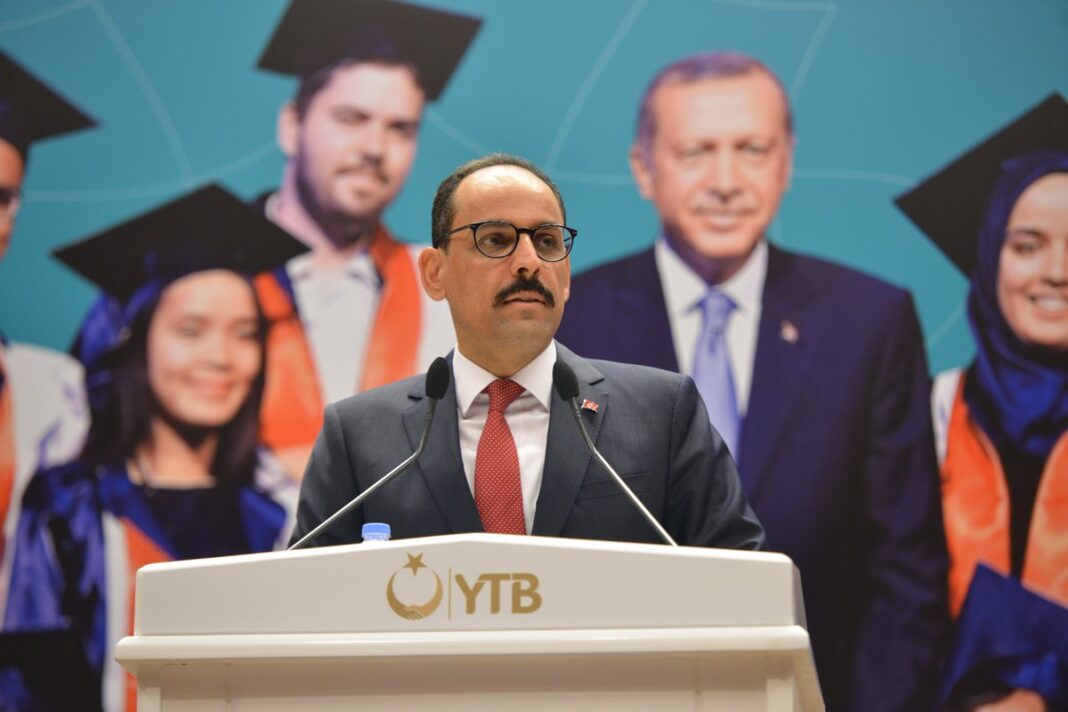
Austria’s official country background on Turkey names the Presidency for Turks Abroad and Related Communities (YTB), the Turkish Cooperation and Coordination Agency (TİKA), the Directorate of Religious Affairs (Diyanet), the Union of European Turkish Democrats, now the Union of International Democrats (UETD or UID), and the Foundation for Political, Economic and Social Research (SETA) as organizations involved in aiding Ankara’s efforts to spy on critics.
That passage states that the YTB and TİKA have taken part in covert intelligence operations abroad, that Diyanet helps identify government critics among Turks overseas and that state-funded groups such as UETD or UID and SETA collect information on critics, not only on alleged Gülen members.
German and Austrian administrative courts cite this passage when they assess risk and credibility in asylum, extradition and removal cases involving Turkish nationals.
Courts reproduce or summarize it to show the presence of these organizations in Europe and to evaluate whether diaspora activity can trigger surveillance, information gathering or prosecution on return, often read together with German Foreign Office reporting and other sources.
Dr. Hüseyin Demir, chairman of the Berlin-based Human Rights Defenders association, told Turkish Minute that recent German and Austrian judgments carry wider implications.
“German and Austrian court rulings citing this information about Turkish intelligence’s shadow and proxy structures in Europe have significant consequences,” Demir said.

“Court rulings and official reports that have come to light in recent years cite an important finding that organizations such as SETA, DITIB [Diyanet’s extension in Europe], UETD or UID, TİKA and YTB, which appear to conduct cultural, religious or civil society work, can be used by Turkey’s intelligence institutions to monitor opponents, collect information and exert pressure, and this threatens not only individual dissidents but also the freedom of expression, the right to association and the right to live in safety of entire diaspora communities,” he said.
“As a human rights defender, I want to warn the public about a serious threat to the democratic order and fundamental rights in Europe.
“These organizations have for years operated under the appearance of ‘cultural’ or ‘religious’ activity while in fact acting like subcontractors for Turkey’s intelligence service. They follow dissidents in the diaspora, gather information and put them under pressure,” he said and added, “It is now an undeniable fact that these organizations in Europe have turned into a covert surveillance network that violates human rights, suppresses freedom of expression and forces thousands to live in fear.”
According to Demir, public officials who exceed their mandate inside these structures also commit crimes.
He added that beyond the groups named in court records, the activities of Turkish consulates and Turkish language teachers assigned by consulates to spy on critics in Europe have sparked wide media debate in Germany and damage Turkish-German relations.

“Activities by SETA, DITIB, UID or UETD, TİKA, YTB and teachers assigned by Turkish consulates must be subject to independent investigation, and the finances, relationships and activities of these structures that act as subcontractors for Turkish intelligence must be made transparent and all activities that violate human rights, profile dissidents and threaten social peace must be banned,” Demir said.
Rights groups and European bodies describe a campaign by Ankara that reaches critics abroad through deportations, renditions, INTERPOL notices, surveillance and pressure on families, a pattern they call transnational repression.
In Germany police raided the homes of four Diyanet imams in 2017 over suspected espionage against Gülen movement members, but federal prosecutors later closed the probe without charges.
In the Netherland the foreign minister summoned Turkey’s ambassador in 2016 and Ankara recalled its religious affairs attaché in The Hague after he compiled lists of suspected Gülen supporters, an act the Dutch government labeled as unacceptable interference.
In Austria the interior minister said prosecutors would file charges against a suspect who confessed to spying for Turkey’s intelligence service and signaled a broader inquiry into related activities on Austrian soil.
Cases in Europe include the 2018 rendition of six Turkish nationals in Kosovo, and a Swiss criminal inquiry into political intelligence gathering and an alleged kidnap plot tied to Turkish diplomats.
These records shape legal assessments because they show that activity inside the Turkish diaspora on European soil can trigger interest by Turkish authorities and can lead to prosecution or ill-treatment upon return, which courts weigh against country background material when they test risk.