


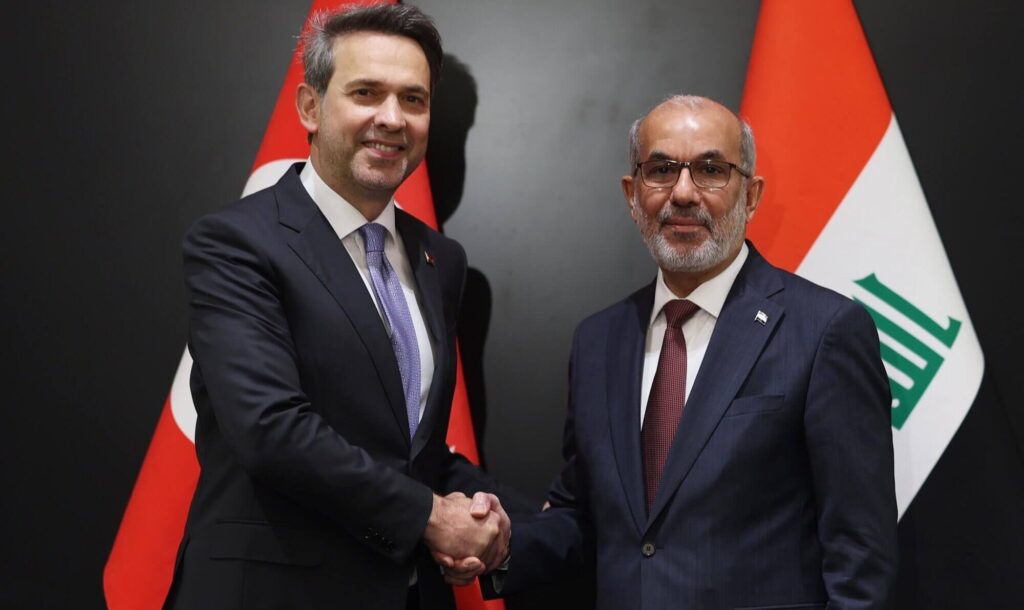
Turkey and Iraq are expected to sign a one-year agreement within days to keep crude oil flowing through the pipeline linking northern Iraq to Turkey’s Mediterranean port of Ceyhan, the state-run Anadolu news agency reported on Thursday, citing Turkish Energy Minister Alparslan Bayraktar.
The agreement would prevent a disruption when the two countries’ decades-old pipeline agreement expires on July 27 and give Ankara and Baghdad more time to negotiate a longer-term arrangement.
“We have brought the agreement covering the next 12 months to the final stage,” Bayraktar told reporters after talks in Baghdad. “We aim to sign it in the coming days and share it with the public.”
Çeşitli temaslarda bulunmak üzere Irak'ın başkenti Bağdat'tayız.
Irak Petrol Bakanı Sayın Basim Muhammed Hüdeyir ile verimli bir görüşme gerçekleştirdik. Irak-Türkiye Ham Petrol Boru Hattı başta olmak üzere petrol ve doğal gaz alanlarında geliştirebileceğimiz iş birliği… pic.twitter.com/gUx2vhFcW5
— Alparslan Bayraktar (@aBayraktar1) July 9, 2026
“Oil flow from Iraq to Ceyhan will continue,” he said.
Bayraktar met with Iraqi Prime Minister Ali Faleh al-Zaidi and Oil Minister Basim Mohammed Khudhair al-Ibadi during the visit, with the talks focusing on expanding cooperation in oil and natural gas.
The current legal framework dates to a pipeline agreement signed in 1973.
The first section of the route became operational in 1976, carrying crude from Iraq’s Kirkuk region to export terminals in Ceyhan. The agreement was renewed in 2010 for 15 years and is due to expire on July 27, 2026.
The pipeline has long provided Iraq with an export route to the Mediterranean, but political disputes, security problems and damage to infrastructure have repeatedly limited its use.
The pipeline was shut down for more than two years after a 2023 arbitration ruling by the International Chamber of Commerce in Paris, which found that Turkey had violated its agreement with Iraq by allowing independent Kurdish oil exports without Baghdad’s consent.
The ruling ordered Turkey to pay Iraq some $1.5 billion in damages for exports between 2014 and 2018. A second arbitration case covering later years and a related enforcement case in a US court are pending.
Oil flows resumed late last year but have remained far below the route’s capacity. The pipeline can carry nearly 1.5 million barrels per day, while exports from Kirkuk to Turkey stood at 177,000 barrels per day in April, Reuters reported, citing shipping data.
Baghdad had asked Ankara in June to extend the existing agreement for at least one year to allow time for further talks.
Turkey rejected an extension under the current terms, saying the old framework no longer suited the pipeline’s legal and commercial realities.
Ankara wants a new deal that would ensure fuller use of the pipeline and could include new connections, including a possible extension toward southern Iraq.
The Ceyhan route has taken on greater importance for Iraq because of pressure on southern exports through the Persian Gulf. The Basra terminal, Iraq’s main export outlet, has faced disruptions linked to the US-Israeli war on Iran that halted shipping through the Strait of Hormuz.
The deal also matters for the Kurdistan region, whose oil sector depends on access to the Ceyhan route and has been hit by years of stoppages, payment disputes and disagreements with Baghdad over control of exports and revenue.