

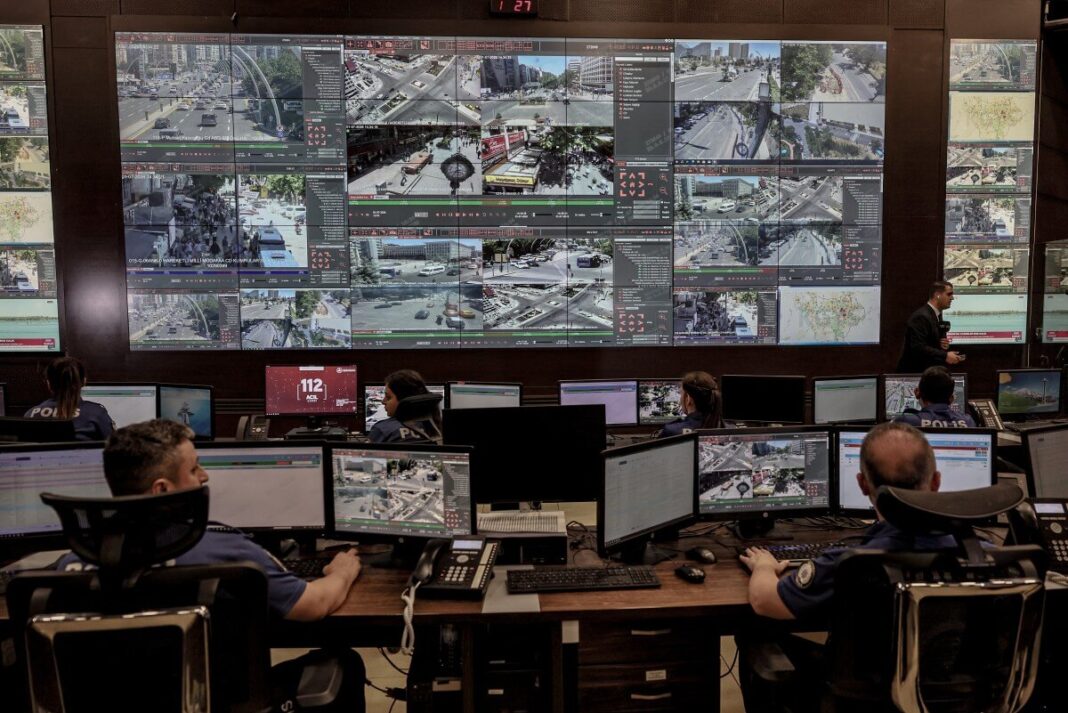

The Ankara Governor’s Office has announced new traffic and security restrictions ahead of next week’s NATO summit, adding to measures that have already begun to disrupt daily life in the Turkish capital.
The governor’s office said in a statement on Thursday that heavy vehicles, including fuel tankers, cement mixers and other large trucks, will be barred from entering the city center from July 5 to July 10.
The 36th NATO Heads of State and Government Summit will be held in Ankara on July 7-8, bringing leaders of the alliance’s 32 member states to Turkey.
Several roads used by official delegations will also be closed to the public between July 6 and 9, particularly routes linking Ankara’s airports with summit venues, delegation hotels and the presidential complex in Beştepe.
Motorcycle couriers will also be barred from some areas during the same period, while parking will be restricted along routes used by official convoys.
Vehicles left on affected roads may be towed, the governor’s office said, adding that special arrangements will be made for trucks carrying food, medicine and urgent perishable goods, although those vehicles will also face route restrictions.
The latest measures come on top of earlier restrictions announced for the summit.
The governor’s office has already banned public gatherings, demonstrations, marches, press statements, sit-ins, rallies, opening stands and similar events across Ankara from June 28 to July 10. Unauthorized drone flights are also banned during the same period.
The restrictions mean that residents in parts of Ankara are facing closed roads, parking bans, delivery disruptions and limits on public activity before and during the summit.
Opposition politicians have criticized the scale of the measures, accusing the government of putting the summit ahead of the needs and dignity of Ankara residents.
Ali Babacan, leader of the opposition Democracy and Progress Party (DEVA), said Wednesday that students, shopkeepers, farmers, retirees and workers were “more important than NATO,” criticizing what he described as extraordinary security measures across the capital.
“NATO is a system meant to protect countries from enemies,” Babacan said. “They have become concerned with protecting NATO from our own people.”
Babacan also accused the government of trying to use the summit to seek international legitimacy after losing public support at home.
“You will get your legitimacy from the people,” he said. “You will not let the dignity of your own people be crushed.”
His criticism followed similar objections earlier this week from main opposition Republican People’s Party’s (CHP) ousted leader Özgür Özel and pro-Kurdish Peoples’ Equality and Democracy Party (DEM Party) Co-chair Tuncer Bakırhan, who accused the government of turning Ankara into an “open-air prison” during the summit preparations.
The summit will be the second NATO summit hosted by Turkey, with the first held in İstanbul in 2004.
It comes as NATO members are under pressure to increase defense spending and weapons production due to Russia’s war in Ukraine.