


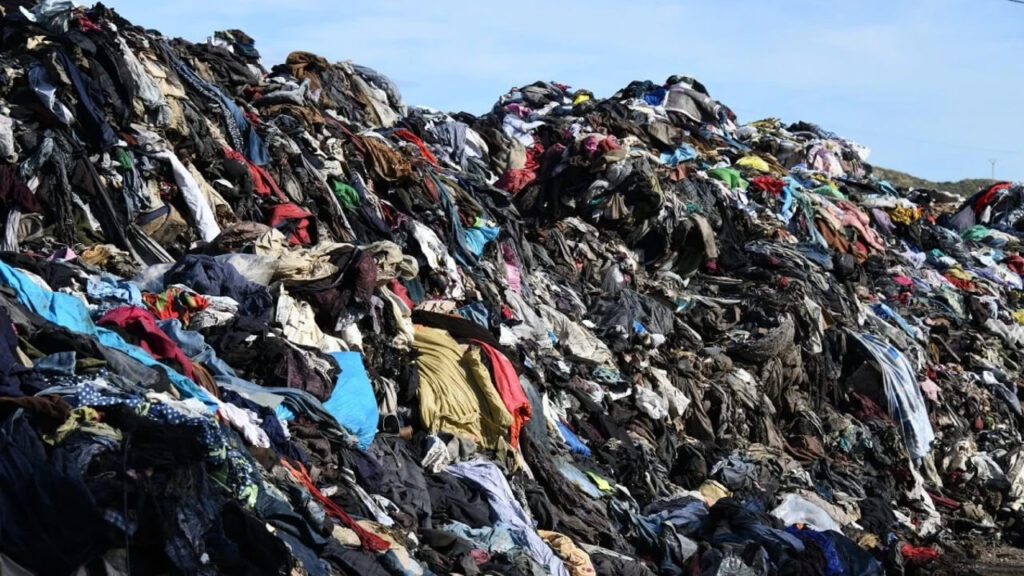
Thousands of tons of textile waste from Italy were illegally shipped to Turkey under misleading labels as part of a broader scheme to avoid costly recycling and environmental rules, the European Anti-Fraud Office (OLAF) has said.
The shipments were part of a larger investigation by Italy’s Carabinieri police into a network accused of illegally managing and storing more than 26,000 tons of textile waste. Italian media reports said the operation led to the seizure of assets worth around 12 million euros, with 20 people placed under investigation.
The Turkish leg of the operation emerged after OLAF, the Carabinieri and Turkish authorities examined trade and customs data and flagged suspicious shipments from Italy. Subsequent checks in Turkey led to the identification of around 4,200 tons of textile waste, all of which was seized by Turkish authorities.
In one inspection Turkish authorities, OLAF, the Carabinieri and specialists from the Tuscany regional environmental protection agency ARPAT found nearly 2,100 tons of textile products in a warehouse belonging to a Turkish recycling facility.
The facility was found not to be operating in compliance with Turkey’s environmental regulations and permit requirements.
OLAF intelligence also led authorities to another 768 tons of textile waste from Italy stored at the southern Turkish port of Mersin. The waste, which was linked to the same suspected network, had been incorrectly labeled and prepared for illegal disposal, according to the EU anti-fraud office.
The waste consisted largely of textiles containing high levels of acrylic fibers, which are difficult to recycle and do not biodegrade. Such materials can remain in the environment for up to 200 years.
Investigators believe the shipments were declared as recyclable material to conceal waste that would have been expensive to process properly under environmental rules.
“Schemes such as this one that offer ways to illegally avoid the cost of recycling certain kinds of textile waste or complying with environmental rules are an opportunity for organized networks to make illegal gains,” OLAF Director-General Petr Klement said.
He warned that such networks pose “a real and massive” threat to the economy and the environment.
The case adds to longstanding concerns over Turkey’s role as a major destination for European waste and recyclable raw material exports, including materials that can be difficult, costly or unprofitable to process.
According to Eurostat data released in January 2024 Turkey was the largest importer of waste from the EU in 2022, receiving around 12.4 million tons, or 39 percent of the bloc’s total waste exports to non-EU countries.
Turkey was also the top destination for EU exports of recyclable raw materials in 2025, receiving 12.8 million tons, according to Eurostat data released in May 2026.
Most of the waste sent to Turkey from the EU in 2022 consisted of ferrous metals, mainly iron and steel scrap. But the country has also faced repeated criticism over imports of plastic and other waste, with environmental groups warning that some shipments labeled as recyclable have ended up dumped, burned or improperly stored.
After a Greenpeace investigation in 2021 found European plastic waste dumped and burned in southern Turkey, Ankara announced a ban on imports of polyethylene plastic waste, a category that includes plastic bags and some packaging materials. The measure was later lifted and replaced with tighter licensing requirements for recycling companies.
Turkey has denied allegations that it has become a dumping ground for European waste, saying imports are subject to strict controls and that only recyclable materials suitable for licensed facilities are allowed into the country.
The EU introduced stricter rules on the management and shipment of textile waste in October 2025, aiming to prevent waste from being falsely labeled and exported as reusable goods.